
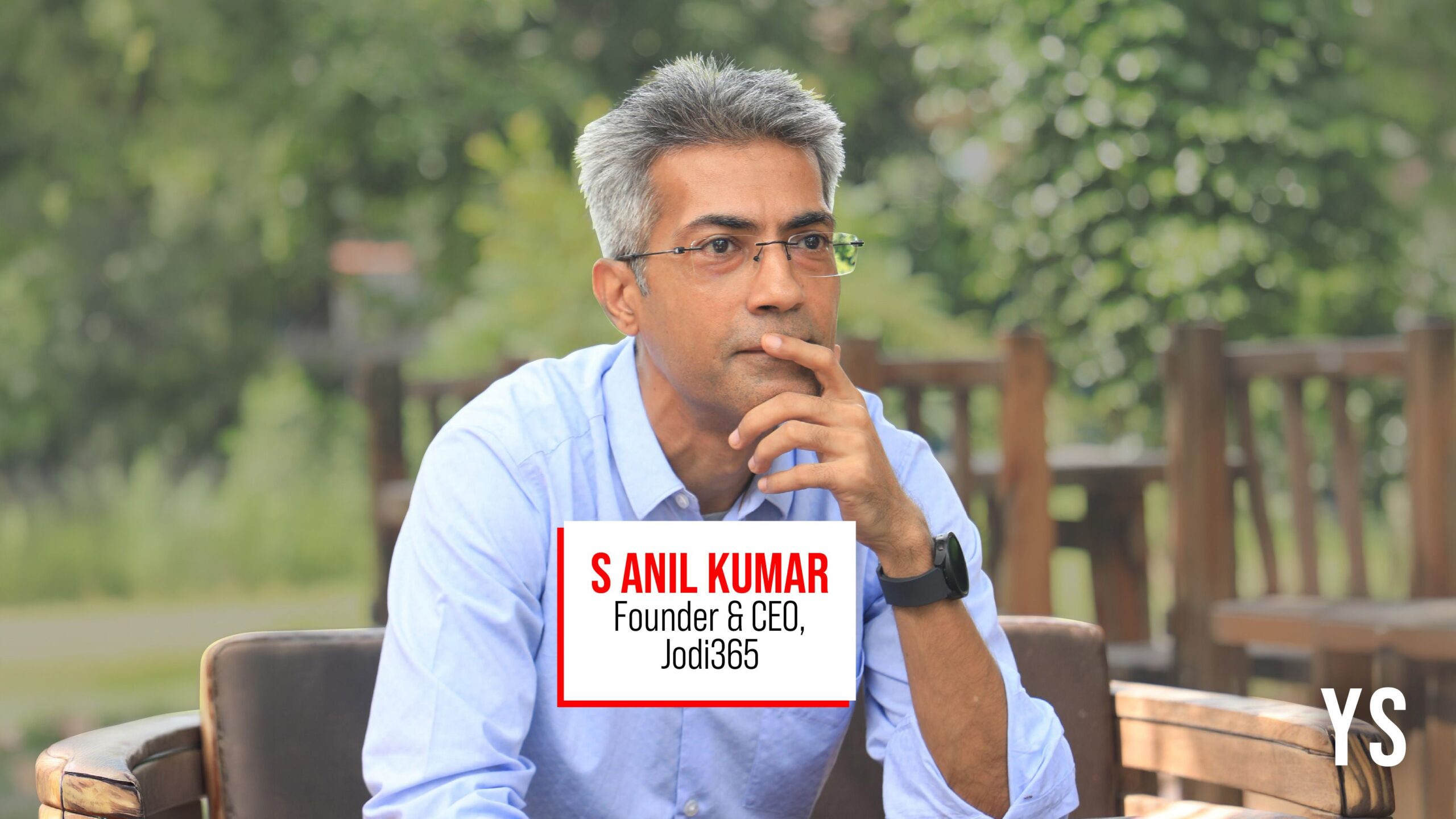
The accidental matchmaker: how a PhD in hydrodynamics built an elite matrimonial service
Anil Kumar does not look like a matchmaker. He looks like what he once was: a researcher who spent years on US Navy supercomputers solving Reynolds-Averaged Navier-Stokes equations, a consulting engineer who spent seven years advising clients in the marine industry from a boutique firm in Seattle, a Chicago Booth MBA who received the Dean’s Award of Distinction. His WhatsApp status reads: “Have an ask? Please get straight to the point. Don’t send me a plain, ‘Hi/Hello/Hey’ & expect a response. Friends know that it peeves me.”This is not a man given to small talk. And yet he has spent the better part of the last 17 years doing precisely that, peeling the layers of people’s lives in two-hour onboarding conversations, challenging clients on unrealistic expectations, and splashing cold water on faces that need it.“I’m not an elite matchmaker,” Kumar says, leaning into the phrase with relish. “I’m an accidental matchmaker. I’m an unlikely matchmaker. My dream was something completely different.”That dream, articulated in Tamil with characteristic directness, was simple: IIT-la padikkanam (get into IIT). Not just any IIT. IIT Madras. The dream came true. Then came a master’s in mechanical engineering at the University of Iowa, a PhD in computational hydrodynamics at the University of Michigan, admission to all 10 graduate programmes he applied to in the United States, and a career trajectory that pointed squarely at a tenured professorship or a senior role in engineering.Instead, Kumar found himself in his mid-30s, single, accomplished, and profoundly frustrated by every matchmaking platform on the market.The wounds that built the businessVenture capitalists like to ask founders whether there is product-market fit. They like to ask whether the dogs will eat the dog food. Kumar’s answer to both is the same, delivered with a bluntness that has become his signature: “I have lived customer pain. You want to see my wounds, my cuts, my burns and bruises?”The pain was not abstract. From his mid-20s to his mid-30s, Kumar tried every major online platform, Indian and American. He found two women he thought he would marry, both discovered online, both relationships ending in heartbreak. He once spoke to a woman for 17-and-a-half hours straight on the phone. The first 16 were wonderful. The last hour, they were screaming at each other. “It’s almost as if a 70 year relationship was compressed into not 17 months, not 17 weeks, but 17 hours,” he says. There was another call that lasted a full 24 hours. There was a woman in Los Angeles for whom he flew down on a weekend off between quarters at Chicago Booth, only to discover the interest was not mutual.Through all of it, Kumar noticed something that bothered him far more than his own romantic misfortunes. The problem was not unique to him. Across his peer group of well-educated, accomplished, single professionals, the existing platforms were failing. Half the profiles on popular matchmaking sites, by his reckoning, were managed by a parent or guardian at a time when internet penetration in India was still in single digits. The matrimonial sites felt like instant-engagement factories. The dating apps, clones of American originals, were too provocative for a society where right-wing outfits still harassed couples on Valentine’s Day. There was nothing in between.In early 2009, midway through his MBA at Chicago Booth and freshly armed with experience as the first lead associate at Hyde Park Angels, one of the Midwest’s leading angel networks, Kumar conceived of Jodi365. Not Matrimony365 or Date365 but Jodi. The word that cuts across Hindi, Tamil, Bengali, Marathi, Gujarati and many other Indian languages. Find the right match, pair, couple, at a pace that is right for you. It aims to be a sensible hybrid between the traditional matrimonial sites and the emerging dating apps. “Conceived in Chicago, created in Chennai, catering to quality Indian singles worldwide,” as the website’s footer has read from the very first day.Seventeen years of near-deathJodi365, by Kumar’s own frank admission, should have died at least half a dozen times in its first decade. That it survived is a testament to one particular quality: stubbornness.The matchmaking industry is a brutal two-sided marketplace. You need men and women in roughly equal numbers, concentrated in local markets, with enough depth that someone in Coimbatore is not being matched exclusively with someone in Chennai. Unlike an Amazon or a Flipkart, where acquiring a customer creates lifetime value through repeat purchases, a matchmaking platform’s best outcome is its worst commercial reality: the better you are at finding someone a partner, the sooner you lose a paying customer.Kumar bootstrapped for nine years before raising a few hundred thousand dollars from his personal network. He wiped out his savings. He liquidated the American equivalent of a pension fund, taking the early withdrawal penalty on the chin. He sold a custom home he had built in the United States and ploughed more than $300,000 of the proceeds into the business. His family, including a middle brother who happens to be one of Tamil cinema’s biggest stars, and his parents, stepped in when the cash ran dry.The competitive landscape was pitiless from the start. When Tinder caught fire globally, the copycat effect was immediate in India. Kumar can rattle off a dozen dating apps that launched and burned through venture money in the years that followed: Vee, Woo, TrulyMadly, Matchify, iCrushiFlush, among others. TrulyMadly raised Rs 35 crore from Helion and Kae Capital, had the credibility of a MakeMyTrip co-founder, and still found the going difficult once Tinder, Bumble, Hinge, and OkCupid entered India. “Crashed and burned,” Kumar says flatly. “The Tinder of India will be a bloody Tinder because this is an open market.”A top-tier VC came knocking. Kumar spoke with the chief for two-and-a-half hours from an airport, flew to Sand Hill Road, was told they could write a cheque in a week. He turned them down. “I didn’t think money would solve the challenges I had in growing the business right then and there,” he says.Then came the trademark fight. Bharat Matrimony launched a product called Jodii, targeting a mass-market audience of users with modest educational backgrounds. Kumar sent a cease-and-desist within 10 days. The case went to the Madras High Court. A judge was on the verge of combining a temporary and permanent injunction into a single, swift order. But then the judge was rotated out and the case remains in appeal.The pivot to high touchFor much of its early life, Jodi365 was built as a scalable platform with a difference. Where Tinder asked three questions (age, location, photo), Jodi365 asked 50 about the user and up to 30 about partner preferences. It introduced 5-second video selfie verification before Tinder did a picture one. It manually inspected every profile, investing three to four minutes per verification. It built a graph database-powered matching engine sophisticated enough to rival the systems used by the world’s top travel sites, processing hundreds of thousands of match combinations in milliseconds rather than the 35 minutes the earlier architecture required.But the market kept telling Kumar something he did not want to hear. Half the profiles that cleared verification never came back. In an age where a 30-second reel is a commitment, a consciously laborious onboarding process was haemorrhaging users faster than it was filtering out bad actors.The breakthrough, when it came, was a surrender of sorts. Kumar stopped chasing impact at scale and focused on impact. “I told myself, duffer, the keyword there is not scale. It’s impact,” he says. “I can make a difference for the top one per cent, top 10 per cent. People who have intent and the means.”Jodi365 pivoted to a purely personalised service. The self-service browsing experience was shut down. Users are still onboarded through the website and mobile app, answering a detailed questionnaire. But from there, a member of Kumar’s team takes over. When Kumar himself gets involved, at what the company calls its signature tier, the onboarding session rarely lasts less than two hours. Every question becomes a conversation. Must-haves are separated from nice-to-haves. Preferences are probed not as binary filters but as spectrums: what is ideal, what is not ideal but still acceptable, what is a hard line.“Think of me not as a shopkeeper peddling finite goods in an inventory,” Kumar says. “Think of me as a headhunter.”The comparison is not casual. Jodi365’s offering mirrors executive search in its structure: searching, screening, curating, conducting the conversations that clients may be too polite or too embarrassed to initiate themselves. How much do you earn? What is your net worth? How many past relationships? How did your marriage end? What does shared custody look like? “There are some people who underestimate the value of having a trusted intermediary,” Kumar says.The service is priced accordingly. The minimum retainer is Rs 1 lakh as an advance, with a success fee of another lakh when an engagement date is set. The signature tier, with Kumar’s personal involvement, starts at Rs 5 lakh. Despite the pricing, there is a de facto waiting list while Kumar gets more hands on deck. In the last two months alone, six new, handpicked client-facing associates have come on board. Kumar is working to expand the team capacity with six more people in client-facing and backend roles by mid-year. Kumar has, in recent years, become something of a voice on social media, posting matchmaking advice, relationship wisdom, and hard-earned lessons from a lifetime spent in the trenches.He never mentions Jodi365 in these posts. The content is not a marketing strategy so much as a compulsion to share what he has learnt. “I don’t advertise for business,” he says. That new clients find their way to Jodi365 through these posts is a happy consequence, not the design. When someone sends a direct message asking whether he serves people like them, the response is simple: “Talk to my team.”The effect, over time, has been a quiet flywheel. Organic interest compounds with word of mouth and the referrals that come from successful matches.He is cautious about predicting what Gen Z will want from matchmaking, despite fielding the question constantly. “If I have to hold on to any credibility, I’ll tell you this in all humility: I cannot claim to have the answers,” he says. “The space is still evolving.” What he does observe is that families have changed. The extended network of aunts and uncles and neighbours who once served as informal matchmakers has receded as nuclear families have turned inward. Divorce, once a source of paralysing stigma, has become common enough that most families have encountered it at close range. Parents are still involved in the search, but the decision, overwhelmingly, belongs to the children. “At most, we ask: how involved are your parents in the search and in the decision-making?” Kumar says. The answer, almost always, is that the search is collaborative but the decision is theirs.People are like onionsThe substance of what Kumar does in those two-hour sessions is part diagnostics, part therapy, part provocation. He tells women who insist on a partner earning Rs 10 to 12 lakhs a month that they are probably pricing themselves out of the market. He tells men whose checklist is too rigid that a two-dimensional profile cannot capture a three-dimensional human being. “People are like onions,” he says. “You have to peel the layers. And only then you’ll know whether they’ll make you cry at the end.”He counsels against rushing. His standard advice is blunt: do not commit until you have had a major fight. “You need to understand how the other person handles disagreements. How do they handle stress? How do they handle conflict? Do they know what relationship repair is like?”He has talked women in their mid-40s into freezing their eggs. He has turned away clients he judged not yet ready. The clientele now spans professionals and entrepreneurs across India and the diaspora.What lends credibility to all of this is that Kumar has not been spared the full range of outcomes himself. A couple of years into building Jodi365, he met his future wife at an MBA networking dinner in Chennai. Whirlwind courtship, marriage, and then a difficult divorce that left him single again at 47. “What an irony,” he says. “So much good karma, for what?” But it only strengthened his resolve to help others get it right, and it gave him a depth of empathy that no business school case study could replicate. He can sit across from a divorcee in her late 20s or a widower in his 40s and speak from a place that is not theoretical.The family and the futureKumar grew up in Chennai, the youngest of three brothers in an unusually progressive family. His father, a Tamil Brahmin from Kerala, married his mother, a Sindhi from pre-partition Karachi, in the Calcutta of the 1960s after a workplace romance that the paternal family initially boycotted. The freedom his parents gave their sons shaped everything that followed, including Kumar’s conviction that a matchmaking platform should allow users to select more than one faith, more than one community, and should never reduce identity to a single checkbox.His middle brother is the Tamil superstar Ajith Kumar, who has plastered the Jodi365 logo on the cars of his racing team across multiple circuits. The association is a source of warmth rather than commercial strategy. Kumar does not plaster the endorsement on his website. “How do you put a price on relationships?” he asks, and means it.At 53, Kumar works seven days a week. The company is profitable. He has begun writing angel cheques, appeared as a guest investor on a television show, and is exploring setting up a syndicate or a small fund. There are plans for a lighter, possibly free version of the Jodi365 platform. There is an AI project in the works to build a digital twin, trained on hundreds of hours of his matchmaking conversations, that could eventually serve as an in-app advisor.But the ambition that animates Kumar most is not technological. It is personal. He has not yet become a father. He has not given up on the possibility. And he approaches this, as he approaches most things, with a candour that can be startling in its completeness.“I remind myself more and more: health is everything,” he says. “And there is so much more ahead.”He pauses, and for a man who once talked to a stranger for 24 hours straight, the silence says everything.(The copy has been updated)
تم النشر: 2026-06-03 02:15:00
مصدر: yourstory.com