7 Perfect Double Features To Watch With ‘Obsession’
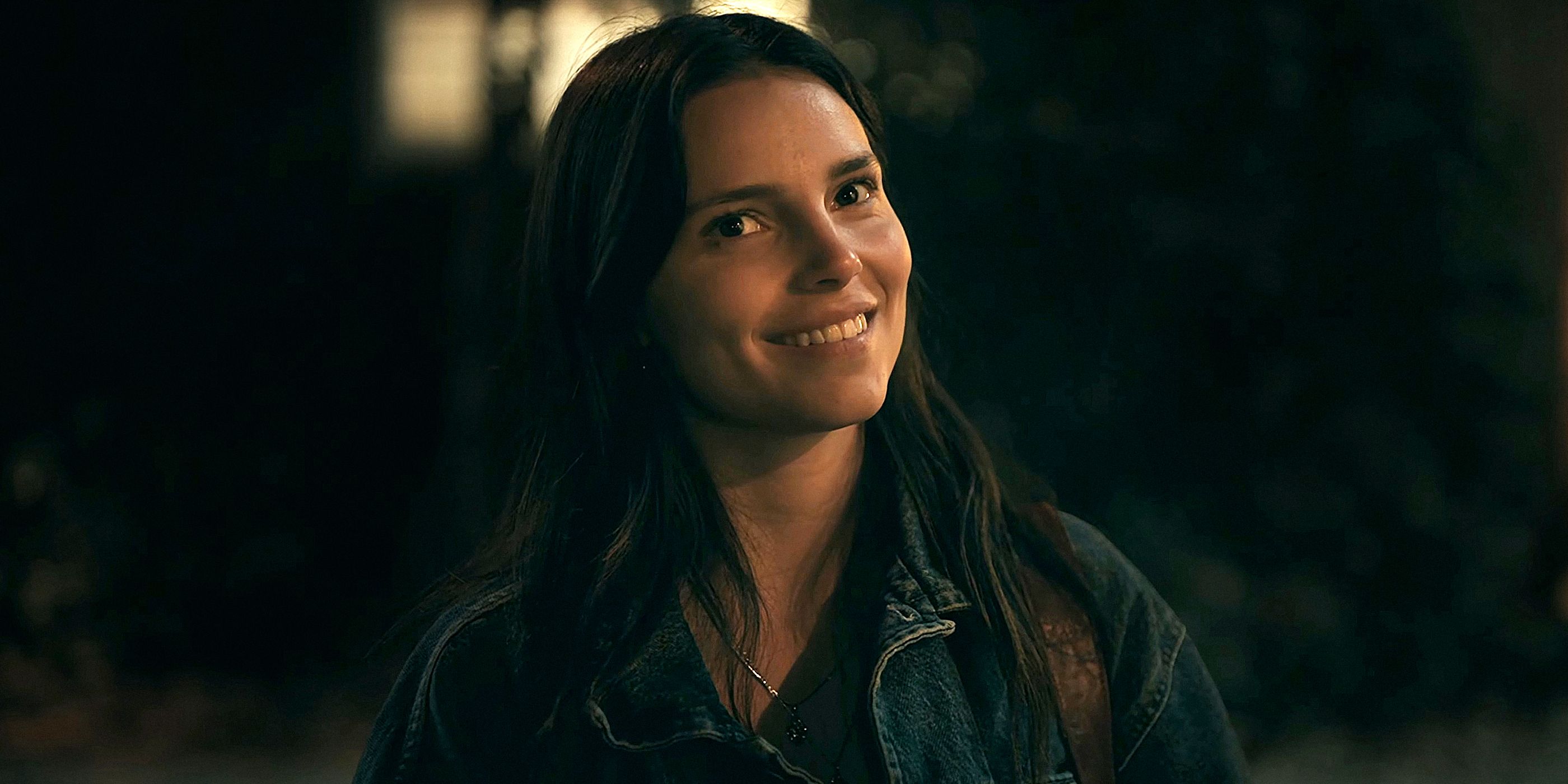
We are halfway through 2026, and many of the biggest titles — including Christopher Nolan’s most ambitious film yet, The Odyssey, and Dune: Part Three — are yet to arrive. However, that doesn’t mean we haven’t found the defining film of 2026 yet, with one release perfectly capturing the insatiable hunger from audiences for new stories, the current peak of a beloved theatrical genre, and the breakout moment for a sure-fire Hollywood superstar.
Of course, we’re talking about Focus Features’ Obsession, directed by YouTuber-turned-filmmaker Curry Barker, and starring the Oscars-bound Inde Navarrette. Not only has the film been heralded as one of the best of its kind this decade, but it has also broken numerous records in its unstoppable box office run, including becoming the highest-grossing movie with a sub-$1 million budget of all time. But all good things deserve a partner, and some of the very best films are enjoyed alongside a second feature. So, with that in mind, here are seven perfect double features to watch with Obsession.
1
‘Backrooms’ (2026)
Image via A24
There is literally no better double-feature option for Obsession than the other horror film that has gone viral at the very same time. Directed by 20-year-old Kane Parsons, who himself broke a record by becoming the youngest person ever to open at #1 at the North American box office, Backrooms follows the discovery of a labyrinthine other-world inside a furniture store, and the many evil secrets it hides. Led by Renate Reinsve and Chiwetel Ejiofor, this creepy horror is based on a viral internet story, as the online world continues to seep into our theaters with wonderful success. Both a terrifically chilling example of jaw-dropping set design and a neat exploration of accountability and self-reflection, Backrooms is the perfect double feature option for Obsession, and not just because they are both in theaters at the same time.
2
‘It Follows’ (2014)
Jay looking in shock as another girl holds her by the shoulders in It FollowsImage via RADiUS-TWC
Key to the success of Obsession is its detailed examination of the world’s current relationship with relationships, specifically how consent is understood. For another horror film that captures the sexual zeitgeist and battles with consent in its own intelligent way, look no further than David Robert Mitchell’s It Follows. Boasting a central performance that cemented Maika Monroe as a modern-day scream queen, It Follows is, at its heart, a truly terrifying film, featuring one of the most frightening jump scares of the 21st century. But its less-than-subtle metaphor for sexually transmitted disease is what helped it stand out among the horror crowd in 2014, and it is superbly relevant 12 years later.
3
‘Companion’ (2025)
Image via Warner Bros.
Relationships are the hot topic of horror films this decade, and that is indicative of a world currently fearing codependency and constantly exposed to terrifying examples of romance-gone-wrong. One of the gems of this niche sub-genre of horror arrived last year in the form of Drew Hancock’s Companion, the tale of a sentient android (Sophie Thatcher) who becomes wrapped up in her owner’s (Jack Quaid) murderous plot to secure a fortune. A domestic horror of the highest order, this clever, biting film boasts a pair of terrific lead performances and a twisting plot that isn’t satisfied with just dropping jaws. “It’s a genuinely funny comedy, a suspenseful thriller, and has some pretty gnarly gore scenes to boot,” wrote Emma Kiely in Collider’s review, with this just one of gushing critical responses to a true 2025 gem.
Collider Exclusive · Horror Survival Quiz
Which Horror Villain Do You Have the Best Chance of Surviving?
Jason Voorhees · Michael Myers · Freddy Krueger · Pennywise · Chucky
Five killers. Five completely different ways to die — if you’re not smart enough, fast enough, or self-aware enough to avoid it. Only one of them is the villain your particular set of instincts gives you a fighting chance against. Eight questions will figure out which one.
Jason
Michael
Freddy
Pennywise
Chucky
TEST YOUR SURVIVAL →
01
Something feels wrong. You can’t explain it — you just know. What do you do?
First instincts are the difference between the survivor and the first act casualty.
ALeave immediately. I don’t need to understand a threat to respect it.
BStay quiet and observe. If I can see it, I can understand it. If I can understand it, I can avoid it.
CStay awake. Whatever this is, I am not going to sleep until I feel safe again.
DConfront it directly. Fear grows in the dark — I’d rather know what I’m dealing with.
ECheck everything, trust nothing. The threat might be closer than I think — and smaller.
NEXT QUESTION →
02
Where are you most likely to find yourself when things go wrong?
Setting is everything in horror. Where you are determines which rules apply.
ASomewhere remote — a cabin, a campsite, off the grid and away from people.
BA quiet suburban neighbourhood where nothing ever happens. Except tonight.
CIn my own head — the most dangerous place of all, depending on what’s already in there.
DWherever children are — because something about this place attracts the worst things.
ESomewhere ordinary — a house, a toy store, a place where the last thing you’d expect is a threat.
NEXT QUESTION →
03
What is your most reliable survival asset?
Every survivor has a quality the villain didn’t account for. What’s yours?
APhysical fitness — I can run, I can swim, I can outlast something that relies on brute persistence.
BSpatial awareness — I always know the exits, the hiding spots, the fastest route out.
CPsychological resilience — I’ve faced my worst fears before. They don’t have the same power over me.
DEmotional steadiness — I don’t panic. Panic is what gets you caught.
EScepticism — I don’t underestimate threats because of how they look. Size is irrelevant.
NEXT QUESTION →
04
What kind of fear is hardest for you to fight through?
Knowing your weakness is the first step to not dying because of it.
AThe unstoppable — something that will not stop, cannot be reasoned with, and is always getting closer.
BThe invisible — a threat I can feel but can’t locate, watching from somewhere I can’t see.
CThe psychological — something that uses my own mind and memories against me.
DThe unknowable — something ancient, shapeless, that feeds on the fear itself.
EThe mundane — a threat so ordinary-looking that no one will believe me until it’s too late.
NEXT QUESTION →
05
You’re with a group when things start going wrong. What’s your role?
Horror movies are brutally clear about who survives group situations and who doesn’t.
AThe one who says “we need to leave” first — and means it, even when no one listens.
BThe one who stays quiet, watches the others, and figures out the pattern before anyone else does.
CThe one who holds the group together when panic sets in — because someone has to.
DThe one who asks the questions nobody wants to ask — because ignoring them gets people killed.
EThe one who takes the threat seriously when everyone else is laughing it off.
NEXT QUESTION →
06
What’s the horror movie mistake you’re most likely to make?
Honest self-assessment is a survival skill. Denial is not.
AGoing back for someone — I know I shouldn’t, but I can’t leave them behind.
BAssuming I’m safe once I’ve found a hiding spot. That’s when it finds me.
CFalling asleep when I absolutely cannot afford to. Exhaustion is its own enemy.
DLetting my curiosity override my instincts — I always need to understand what I’m dealing with.
EDismissing the threat because of how it looks. That’s exactly what it wants.
NEXT QUESTION →
07
What’s your best weapon against something that can’t be stopped by conventional means?
Every horror villain has a weakness. The survivors are always the ones who find it.
AThe environment itself — I use the terrain, the water, the geography against it.
BPatience — I wait, I watch, and I strike at the one moment it doesn’t expect.
CLucidity — if I can stay in control of my own mind, it loses its primary weapon.
DCourage — facing it directly, refusing to run, taking away the fear it feeds on.
EImprovisation — I use whatever’s at hand, however unconventional. Creativity over brute force.
NEXT QUESTION →
08
It’s the final scene. You’re the last one standing. How did you make it?
The final survivor always has a reason. What’s yours?
AI kept moving. I never stopped, never hid for too long, never let it corner me.
BI figured out the pattern before anyone else did — and I used it against the thing following it.
CI stayed awake, stayed lucid, and refused to give it the one thing it needed most.
DI stopped being afraid of it. And the moment I did, everything changed.
EI took it seriously from the start — and I never once made the mistake of underestimating it.
REVEAL MY VILLAIN →
Your Survival Odds Have Been Calculated
Your Best Chance Is Against…
Your instincts, your strengths, and your particular way of thinking under pressure point to one villain you actually have a fighting chance against. Everyone else — good luck.
Camp Crystal Lake · Friday the 13th
Jason Voorhees
Jason is relentless, but he is also predictable — and that is the gap you would exploit.
He moves in straight lines toward his target. He doesn’t strategise, doesn’t adapt, doesn’t outsmart. He simply pursues.
Your ability to keep moving, use the environment, and resist the panic that freezes most victims gives you a genuine edge.
The Crystal Lake survivors were always the ones who stopped running in circles and started thinking about terrain, water, and distance.
You think like that. Which means Jason, for all his indestructibility, would face someone who simply refused to be where he expected.
Haddonfield, Illinois · Halloween
Michael Myers
Michael watches before he moves. He is patient, methodical, and almost impossible to detect — until it’s too late for anyone who isn’t paying close enough attention.
But you are paying attention. You notice the shape in the window, the car parked slightly wrong, the silence where there should be sound.
Michael’s power lies in the invisibility of ordinary suburbia — the fact that nothing ever looks wrong until it already is.
Your spatial awareness and instinct to map every room, every exit, and every shadow before you need them is precisely the quality Laurie Strode had.
You are not a victim waiting to happen. You are someone who already suspects something is wrong — and acts on it.
Elm Street · A Nightmare on Elm Street
Freddy Krueger
Freddy wins by getting inside your head — using your own fears, your own memories, your own subconscious as weapons against you. That strategy requires a target who can be destabilised.
You are harder to destabilise than most. You’ve faced uncomfortable truths about yourself and you haven’t looked away.
The survivors on Elm Street were always the ones who understood what was happening and chose to face it rather than flee from it.
Freddy’s greatest weakness is that his power evaporates in the presence of someone who refuses to give him the fear he feeds on.
Your psychological resilience — the ability to stay grounded when reality itself becomes unreliable — is exactly the quality that keeps you alive here.
Derry, Maine · It
Pennywise
Pennywise is ancient, shapeshifting, and feeds on terror — but it has one critical vulnerability: it cannot function against someone who genuinely stops being afraid of it.
The Losers Club didn’t survive because they were braver than everyone else. They survived because they faced their fears together, and faced them honestly.
You ask the questions others avoid. You look directly at what frightens you rather than turning away.
That directness — the refusal to let fear fester in the dark — is Pennywise’s worst nightmare.
It chose the wrong target when it chose you. You are exactly the kind of person whose fear tastes like nothing at all.
Chicago · Child’s Play
Chucky
Chucky’s greatest advantage is that nobody takes him seriously until it’s already too late. He exploits the gap between how something looks and what it actually is.
You don’t have that gap. You take threats seriously regardless of how they present — and you never make the mistake of underestimating something because of its size or appearance.
Chucky relies on surprise, on the delay between recognition and response. You close that delay faster than almost anyone.
Your instinct to treat every unfamiliar thing with appropriate scepticism — rather than dismissing it because it seems absurd — is the exact quality that keeps you breathing.
Against Chucky, not laughing is already winning. You are very good at not laughing.
↻ RETAKE THE QUIZ
4
‘Possession’ (1981)
Close-up of Sam Neill as Mark’s doppelgänger and Isabelle Adjani as Anna with manic looks on their faces in PossessionImage via Gaumont
The spiritual predecessor to Obsession, Possession, the 1981 horror favorite by Andrzej Żuławski, explores the downfall of a marriage, as a woman spirals out of control following her husband’s request for divorce. However, when infidelity is uncovered, a hunt for the truth soon exposes something much more sinister, ripped straight from the most gruesome of sci-fi horror stories. One of the most viscerally captivating horror experiences of all time, Possession might not have literally inspired Obsession, but its tone is felt throughout. Director Żuławski had been through a bitter, upsetting divorce of his own, and used the film as a cathartic expression of his pain, with the raw, unfiltered mind of the man exploding into horror gold.
5
‘Black Swan’ (2010)
Image via Fox Searchlight Pictures
Who knew ballet could be so scary? Well, clearly, Darren Aronofsky did when he crafted one of the most intense movies of the century so far in Black Swan. Led by Natalie Portman, the film follows a ballerina’s pursuit of perfection in her craft, as her position as the prima ballerina in Swan Lake is threatened by the arrival ofa newcomer, Lily (Mila Kunis). The desperate hunt for perfection can quickly turn into an obsession, with Nina becoming detached from reality and engaging in self-abusive behavior as a result. This should sound like a familiar concept to Obsession fans, with Nikki and Nina oddly similar. Black Swan was nominated for an impressive five Academy Awards in early 2011, with Portman swanning away with the prize for Best Actress in one of the most well-earned wins of the decade.
6
‘Pearl’ (2022)
Image via A24
Just the above image alone is reminiscent of Navarrette’s already iconic grin, pained by the reality that hides behind it. The smile is that of Pearl (Mia Goth), who beams from ear to ear as her husband returns home to a gory crime scene, much like Bear’s arrival from work to see that Nikki has quite literally waited in situ for him in Obsession.
The second installment in Ti West’s X film series, Pearl is one of the shining lights of 2020s horror. Goth’s performance as the titular serial killer is perfectly unhinged, but, like Navarrette, she doesn’t simply rely on the chaos of her actions to be watchable. Instead, Goth imbues the character with deeply tragic emotion, with her and Navarratte delivering two of the defining female horror performances this decade so far.
7
‘Misery’ (1990)
Kathy Bates and James Caan in ‘Misery’.Image via Columbia Pictures
When it comes to the cinematic depiction of obsession, have any ever been better than Annie Wilkes in Misery, the adaptation of Stephen King’s 1987 novel? Kathy Bates’ performance is pitch-perfect, walking the tightrope between disturbing and darkly humorous. For her trouble, she became the first woman ever to win the Best Actress Oscar for a performance in a horror movie, something that Navarrette herself might just replicate next year. Bates’ Annie is seemingly harmless and almost mouse-like when we first meet her. However, behind the quiet smile is the terrifying mind of an obsessed fan, who transforms from the rescuer of James Caan’s Paul Sheldon into his, well, biggest fan. A masterful adaptation that has since defined the horror genre, Misery is a must-watch and a perfect double feature with Obsession.
Release Date
November 30, 1990
Runtime
107 minutes
Producers
Andrew Scheinman
تم النشر: 2026-07-03 05:51:00
مصدر: collider.com