
How Do We Truly Engage in Our Civic Duties? We Asked the Former US Archivist
Colleen Shogan is taking her passion for political science to a massive stage: keeping Americans inspired and informed. Here’s how.
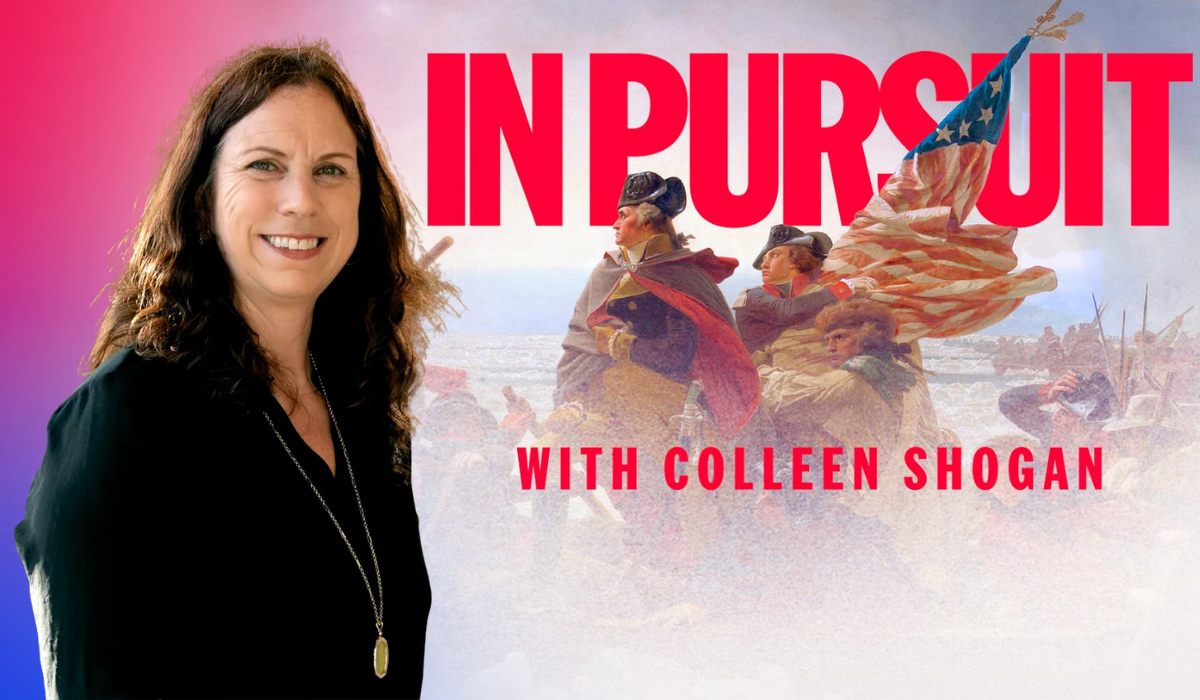
“Don’t ever let people tell you that they want a sanitized version of American history.”Such a bold statement might prompt one to ask, “How do you know?” But for Colleen Shogan, a political scientist, it comes from experience.Shogan has spent her career studying and teaching our nation’s history, civics, and leaders. She focused her PhD dissertation and her first book on the presidency, and she carried revered leadership roles at the White House Historical Association and the Library of Congress. She served as the 11th Archivist of the United States, becoming the first woman in US history to head the National Archives and Records Administration—a role she carried proudly until President Trump fired her without citing cause or reason in early 2025.American civics is the air Shogan breathes. Throughout her career, she’s spoken with citizens across the country, “from all political persuasions, with all kinds of different backgrounds and beliefs,” and she’s found a universal appetite to learn about our true history.“People understand that American history is complex,” she says, “and they want you to deliver to them an accurate rendition of American history and let them draw their own conclusions after they learn the facts and understand the story itself.”The accurate rendition Shogan is giving us citizens is In Pursuit. Launched in 2025 by More Perfect, In Pursuit publishes thought-provoking essays about presidents and first ladies, penned by journalists, historians, and former presidents. It’s a way to learn lessons about leadership and character from America’s first 250 years to help inform the democratic challenges and stakes of our next 250.The essays are immense in subject. The first focus is on George Washington, written by President George W. Bush. It centers on humility and Washington’s complex character, which contained moral lightness and darkness, and all the in-between.Hence, the un-sanitized truth.“We were really careful with the In Pursuit essays, particularly with the Presidents, to be sure that we are not simply lionizing these individuals,” says Shogan, who serves as In Pursuit’s CEO and hopes the essays encourage readers to think critically and see the nuance of our nation’s history. “We need to be able, as citizens in a democracy, to hold competing thoughts in our minds at the same time.”Ahead of our America’s 250th, The Sunday Paper sat down with Shogan to talk more about In Pursuit and the engagements she’s seeing in Americans today. She makes the case clearly: by looking to our past and its moral wins and losses with discernment and curiosity, we can move forward empowered.
A CONVERSATION WITH COLLEEN SHOGAN
As a political scientist, how are you seeing people interpreting civic resilience and engagement in ways that are giving you hope?We see a lot of examples of civic engagement. We see it extensively at the local level, with people trying to solve problems in their communities, on the ground. We see this in disaster relief: neighbors helping neighbors, and people trying to figure out ways to prevent catastrophes in the future. We see civic engagement in libraries, which are having a renaissance. People are in libraries all the time to participate in programming, so they can interact with their neighbors and others interested in intellectual matters similar to theirs. And (we see it) with local news. Local news has been such a devastating story for so many years. We’ve seen local newspapers shutter, as well as local news stations losing funding, but there have been nonprofit solutions trying to help. In my hometown of Pittsburgh, the newspaper shuttered, and a nonprofit stepped in to resuscitate it. So, I see a lot of those examples happening on a day-to-day basis, which tells me that people are civically engaged, that they care about the people they live around, and that they care about norms concerning democracy.The big thing—and I’ve started talking about this as a political scientist—is: Why do we see some of the things working on the local level, but then we see some of our national institutions either struggling or failing? We know from (Alexis de) Tocqueville and other democratic theorists that energy at the local level was supposed to then rise up, and then invigorate our national institutions and guarantee that they work appropriately. But we’re starting to see a disconnect between the local and what’s happening at the national and federal levels, and I think that’s up to people to figure out. Why, in previous periods in American history, did we see that flow of energy from the localities to the national level, and that seemed to be what kept democracy revitalized, and why does that link seem to be broken right now? And how can we fix it? That’s the puzzle we need to solve.Education is the anchor of In Pursuit, and its website reads, “The United States is an evolving experiment in democracy.” Tell us about this “evolving experiment.”The only way the American experiment works is if it’s not static, if it’s constantly in motion. The Declaration of Independence is our principal document. The Constitution is how we’re going to do it, the rules of the game, but really, the principles that we live by are contained in the Declaration. We know that in 1776, when Thomas Jefferson and others wrote that document, they knew that, in theory, all men are created equal, but they weren’t being treated equally —that’s for sure—and we need to have that discussion and debate. How far have we come in these promises, the rights that are guaranteed to us in the Declaration, and then enumerated in the Constitution? Have we gotten this right? Is this what we’re satisfied with? What are the fulfillment of those rights that we haven’t lived up to yet? And how do we get from point A to point B?The United States will not survive if it is viewed as one moment in time; that the mission is accomplished, and that’s it. So, the fact that we are having this dialogue and that many people are fighting for the idea that we need to keep moving forward, we need to keep reevaluating these ideals and principles, and continue to try to live up to them, means that democracy still has a lot of vitality in the United States. So, with In Pursuit, we’re going back to the Presidents and First Ladies and using them as the entry point to American history, so we can surface practical lessons relevant to us all.What have you been hearing from average Americans who have been reading and listening to the essays?Every week, I hear from people. Sometimes I hear from people who are reading or listening to these essays with their kids, together in the car, maybe driving back from school or from soccer practice, and then they’re having discussions about what they learned. I just heard from someone the other day who said they listened to the Franklin Pierce essay, and then the Jane Pierce essay, and they tried to figure out how Jane Pierce influenced Franklin Pierce. It’s great to know that we’re tapping into that spark.When I was the archivist, I would go into the Rotunda and see people looking at the founding documents, or I would travel to a presidential library, and all the Americans that I talked to, from all across the country and all political persuasions, were all excited to learn about American history. Don’t ever let people tell you that they want a sanitized version of American history. That’s not true at all. People understand that American history is complex, and they want you to deliver an accurate rendition of American history, letting them decide and draw their own conclusions after they learn the facts and understand the story itself.As we approach the nation’s 250th anniversary, how do you view this moment as a civic opportunity, and do you feel there’s a swell of civic interest in America and its history?This is a once-in-a-lifetime moment, the 250th anniversary. For many people, this will be the moment when we focus on things like history and the origins of our democracy, and a way to look backward at how far we’ve come up until this point in 2026. It’s an opportunity for people who are receptive and listening in. They’re paying more attention. Ken Burns found this out with his timing of the American Revolution documentary: People were just starting to think about 2026, and his documentary became available on PBS (in late 2025), so many people watched the documentary and continue to watch it because they’re thinking about learning something about the origins of our country. So, it’s definitely a civic moment that we want to capitalize on.But it’s not just one year, and this is something that More Perfect and other organizations are adamant about: We view this as a 10-year commitment, all the way up to the 250th anniversary of the Constitution, which will take place in 11 years. We’re viewing this as the civic decade between the Declaration and the Constitution.President Obama wrote an essay about President Lincoln, in which he wrote “That union is not simply a matter of law or accident of geography, but a moral commitment we make to our fellow citizens and to our shared future.” What does a “moral commitment” look like for America today?President Obama’s essay is tremendous. It’s really important to read several essays before President Obama’s, for example, the essay on Franklin Pierce and on James Buchanan, because those essays, all written by different people, have a similar lesson, which is: You must have a moral, ethical commitment in order to solve a moral problem. This is what Lincoln finally realized: that the Union could not be partially free and partially enslaved. It had to be wholly free, or it wouldn’t exist anymore. We weren’t going to solve it geographically. What Lincoln said is, at a certain point in time, that just doesn’t work. We can’t make these compromises. We have to make a moral commitment, and I think that there are some issues in American politics today, and readers decide which ones they are, that require us to make a truly moral commitment in order to be able to solve them.And we see that there is so much nuance.American history is nuanced. It’s not black or white. It’s not up or down. It’s not left or right. We need to be able, as citizens in a democracy, to hold competing thoughts in our minds at the same time. For example, we have not always lived up to the promises of the Declaration of Independence through episodes in American history. The Reconstruction era started off with a lot of promise, then ended up disenfranchising and preventing equality for African Americans. We have seen examples in Jim Crow and Japanese internment, and in the fact that women didn’t vote until 1920 and weren’t full citizens, all these examples in American history where we have not lived up to the ideals and the promises in the Declaration. But then we have moments in which we surge forward and enact constitutional amendments, we have great periods of social change in which we do realize these ideals, and we are able to really answer to the better angels of our nature. So we have to understand that both of those ideas are true. It’s not one or the other, it’s actually both, and we have to be able to hold those two complex ideas in our minds at the same time.This can be challenging, especially in today’s world where people can have a tendency to see things in binaries. What do you say to that?We were really careful with the In Pursuit essays, particularly with the Presidents, to be sure that we are not simply lionizing these individuals. Now, there’s a lot of good to be said about many presidents, and it’s worth emphasizing some of their character strengths, like President Bush talking about George Washington’s humility. But if you read President Bush’s essay on George Washington, he also talks about the fact that George Washington was an owner of enslaved people, and although he put in his will to free the enslaved people that were under his control, he did not do that earlier in his life, when other people were freeing enslaved people. He chose to do that upon his death. So, there’s all kinds of things we have to say to acknowledge that there are things that we would view as being shortcomings and moral shortcomings alongside the fact that he was also someone who did extraordinary things and walked away from power when people wanted him to become a king, and that rejection of power actually strengthened the democratic executive that we call the President of the United States, and made that institution possible.So, we have to be able to hold both of those facts in our heads at the same time about George Washington, and everybody’s going to reconcile those two facts differently. We don’t have to agree on how to reconcile these facts, but we do have to hold them in mind and make analytical, informed decisions about them.
Colleen J. Shogan, PhD, is the CEO of In Pursuit who served as the 11th Archivist of the US. She is also an author, educator, and political scientist.
Editor’s Note:New essays are released weekly at both inpursuit.org and on its Substack, In Pursuit: Lessons from the American Experiment. While you can start reading any essay, Shogan recommends starting with the first essay on George Washington and reading them in chronological order. “It’s a little bit of a soap opera,” she says. “You can pick up a soap opera in the middle, but you know it’s going to take you a while to understand the cast of characters. So, it’s better to start at the beginning.”
If you liked this article, share it with a friend!
تم النشر: 2026-06-27 23:00:00