How Putin Turned Japan Into a Den of Spies
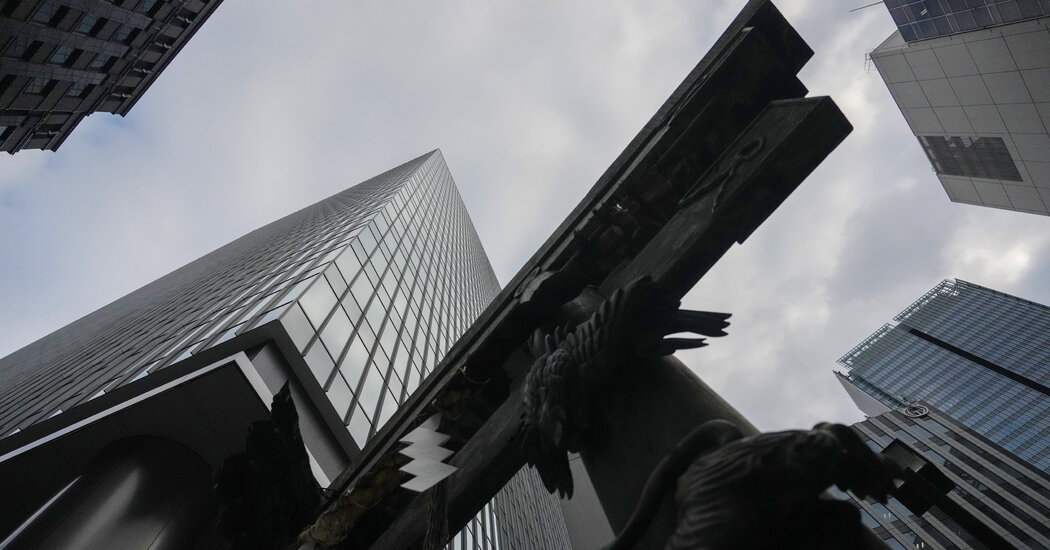
Soon after troops invaded Ukraine in February 2022, Western leaders expelled hundreds of Russian spies from their capitals and blacklisted companies with ties to the Kremlin.The coordinated effort was intended to make it harder for the Kremlin to collect intelligence and buy equipment like microchips, transmitters and the machinery used to make weapons.Since then, officials say, dozens of those banished spies have turned up in an unexpected place: Japan.The country’s weak espionage laws and flourishing high-tech industry have made it a crucial piece of the Russian war effort. Ninety percent of Russian missiles and drones contain Japanese components, according to Ukrainian government estimates.At the heart of the operation in Tokyo is a secretive Russian military intelligence unit known as the 20th Directorate, whose role has never been publicly disclosed. Posing as diplomats or businesspeople, its officers work to buy or steal battlefield technology and smuggle it into Russia, according to current and former officials at five Western intelligence agencies.The man overseeing the 20th Directorate’s operation in Tokyo maintains a cover identity as an employee of the Russian state airline Aeroflot, according to current officials from four of those intelligence agencies. He plays a crucial role in supplying Russia’s war machine.The toll of this effort is clear in the nightly attacks on Ukrainian cities and in the slog of the battlefield. Four years into a war that has killed hundreds of thousands and wiped whole cities off the map, Russia persists in part, officials say, because of its continued access to technologies like those it acquires from Japan.After a Russian Kh-101 cruise missile destroyed a residential tower block in Kyiv and killed at least 24 people in May, investigators sifted through the debris. They found that the missile had been guided by Japanese components that have been widely banned from export to Russia, according to a Ukrainian assessment.Using confidential government documents, corporate records and interviews with dozens of intelligence and government officials across three continents, The New York Times began piecing together how the 20th Directorate operates and the crucial role the Tokyo station plays in supporting the war that President Vladimir V. Putin of Russia is waging on Ukraine. Most of the officials spoke on condition of anonymity because they were not authorized to disclose intelligence publicly.Ukrainian officials have presented Japan with evidence that its technology is being used in Russian attacks, according to documents and interviews. But the Japanese government, despite vocal support for Ukraine, has been slow to act.Japan has long been known as a spy paradise, in part because of post-World War II constraints, designed by the war’s victors, that keep the country’s intelligence services weak. Japan does not even have a foreign intelligence agency. Officials say that they recognize the espionage threat and are working to remove decades-old restrictions on intelligence gathering.“We have a sense of crisis about this situation,” said Akihisa Shiozaki, a lawmaker in the governing Liberal Democratic Party and a former lawyer who prosecuted industrial espionage cases.The Japanese Ministry of Foreign Affairs did not respond to detailed questions about espionage but said that the government had worked with Western allies to ban the export of military-related items to Russia.“Russia’s aggression against Ukraine is an outrageous act that shakes the very foundations of the international order,” the ministry said in an written statement.Nevertheless, Russian spies appear to be operating right under the noses of the Japanese authorities.Aeroflot’s office in Tokyo is a 10-minute walk from the headquarters of the National Police Agency, which investigates espionage. Western intelligence officials say that it is there, in the airline office, on the 22nd floor, that the 20th Directorate’s man in Tokyo runs his deadly operation.His name is Maksim Vladimirovich Filchenkov.A Spy Arrives in TokyoRussia was in dire need of high-tech components when Mr. Filchenkov, 49, took up his post in Tokyo in February 2024. The war in Ukraine was shifting from World War I-style artillery battles to drone warfare, and the Ukrainians were gaining a technological edge.To stay in the fight, Russia needed to augment its conventional might with new technology. China could help, but for the military’s most advanced weaponry, there was no replacement for the high-tech gear, machine tools and other components that many companies were suddenly prohibited from selling to Russia.Enter Mr. Filchenkov, a veteran officer with Russia’s military intelligence agency, the G.R.U. With one tour in Japan under his belt, intelligence officials said, he had the expertise to find the necessary gear and move it to Russia.Mr. Filchenkov began developing relationships with logistics companies that ship goods from Japan to Russia, according to business records and interviews. Western officials have warned Japan that relationships like these help G.R.U. officers buy sensitive technology under false pretenses and send it to Russia, sometimes using bogus shipping records.This, current and former intelligence officials say, is where the 20th Directorate excels. While the unit’s history is unclear, the officials said that it predated the war in Ukraine. Since that fight began, they said, it has been central to the Kremlin’s effort to obtain military technology.G.R.U. spies have used Aeroflot jobs as cover since the Soviet era as they hunted for Western technology.The entrance to Aeroflot’s Tokyo office looks like a prison door, with a narrow slit of window and a doorbell. A middle-aged woman with straw-colored hair and a Russian Orthodox cross around her neck answered the door earlier this year. She appeared surprised to have visitors.Mr. Filchenkov, the woman said, was not there. She could not say when he would return.Aeroflot is not specifically blacklisted by Japan, but it has effectively been grounded because it cannot obtain necessary parts and services there. Aeroflot’s official partners, however, remain active.One of them, Proco Air, advertises itself as a “bridge between Japan and Russia.” Proco rents cargo space on airlines that fly to countries where Aeroflot operates, like Sri Lanka or Uzbekistan. Aeroflot picks up the cargo there and flies it to Russia. There is nothing illegal or even unusual about this. Plenty of goods are still allowed to flow to Russia, and partnerships like this allow that to happen.Western intelligence officials say such arrangements are also essential to the 20th Directorate’s operations.Japan is the world’s largest exporter of the sensitive dual-use technology that the Kremlin is seeking, shipping records show. Smugglers do not need to get that equipment to Russia directly; they just need to get it somewhere that’s willing to sell to Russia.The largest destination for Japan’s sensitive technology, for example, is Vietnam, which in turn is the largest exporter of sensitive technology to Russia.Proco Air sits in Tokyo’s industrial port neighborhood, a 20-minute drive from Aeroflot’s office. Mr. Filchenkov was not there, either, but the company’s owner, Takehiko Miki, and his wife were willing to talk.Mr. Miki, who is Japanese, said he met Mr. Filchenkov around 2018, but did not begin working with him in earnest until Mr. Filchenkov returned to Tokyo six years later. Mr. Miki’s wife described their Russian business partner as an unsmiling man who only showed the “business side” of his face.Last year, Mr. Miki contacted an associate based in China whom Mr. Filchenkov had introduced him to, according to two people with direct knowledge of the episode. Mr. Miki specifically asked for help shipping items that he acknowledged were prohibited from being sent to Russia, the people said.In the interview and follow-up communications, Mr. Miki denied knowing that Mr. Filchenkov had ties to Russian intelligence. He also strongly denied ever seeking help transporting prohibited items to Russia. Proco Air ships only authorized goods, he said, “mostly medical equipment and a few cosmetics.”As proof, he asked his wife to fetch a copy of a recent air bill. Before handing it over, Mr. Miki tried to black out the names of the companies involved with a pen.The document backed up Mr. Miki’s assertion. They showed a March 12 shipment of medical equipment to Russia, via Sri Lanka.But the redaction did not work, and the document showed that Mr. Miki was doing business with a company with ties to the Kremlin. The document clearly identified the recipient as R-Pharm, a Moscow pharmaceutical company.R-Pharm is not under sanctions but its founder, Aleksei Repik, has been sanctioned by Australia, Britain and Canada (though not Japan) over his extensive ties to Mr. Putin. Mr. Repik has repeatedly appeared beside Mr. Putin and recounted efforts to support the war, including a May 2025 meeting in which he described mobilizing Russian businesses to “provide unprecedented support to the front.”“I think it is now important to express on the part of all Russian businesspeople our huge thanks to our defenders of the fatherland,” Mr. Repik said last year.Proco Air has not been charged with any wrongdoing, and Mr. Miki said that the Japanese authorities had never contacted him about his shipments. He said he had never “knowingly facilitated transportation to any sanctioned person.”Diplomatic WarningsForeign governments have repeatedly warned Japan that its technology was being smuggled to Russia.In one month alone, April 2025, Ukraine sent at least eight formal diplomatic letters to the Japanese Foreign Ministry on the topic. The messages detailed evidence of Japanese components in Russian weapons and military equipment that had been recovered from civilian attacks.They sent roughly eight more diplomatic notes over the year, one Ukrainian official said. The letters provided lists and photos of dozens of recovered Japanese-made components including circuit boards, transmitters and semiconductors. Times reporters reviewed one of those letters, which said that Japanese components had been found in ballistic missiles.“I hope you take this information into account when considering further restrictions against Russia, or strengthening the export control on transfers of sensitive goods and technology to third countries,” read the letter to officials at the Japanese Foreign Ministry.Ukraine provided Japan with lists of recovered components that had been manufactured by some of Japan’s biggest companies: Nippon Electric Corporation, Panasonic, Toshiba and others. There was no evidence in those documents that the companies knowingly sold their products to Russia, as opposed to being shipped to other countries and resold.All companies denied wrongdoing and said that they were committed to complying with Japan’s economic sanctions and trade restrictions. Nippon said the electric components that Ukraine had identified were old and had not been sold by the company in years.The Ministry of Economy, Trade and Industry said it had issued warnings to companies and industry groups about sanction evasion efforts. It has also blacklisted dozens of overseas entities it suspects of helping Russia circumvent export bans.Western officials beyond Ukraine have warned the Japanese government about Russian intelligence efforts to procure its technology. They also provided the Japanese authorities with information about the network of companies, including Proco, that intelligence officials suspected of helping spies ship sanctioned goods to Russia, according to two people familiar with the discussions.Though they have not acted against Mr. Filchenkov, Japanese officials have hardly been unsympathetic to Ukraine’s cause. On the day Mr. Putin launched the invasion, Japan joined the United States and European Union in imposing sanctions. It later broke with post-World War II precedent and began sending military aid like bulletproof vests and helmets to Ukraine.Under Japan’s prime minister, Sanae Takaichi, the country has embarked on an ambitious program to bolster intelligence capabilities, in part to better prevent illegal exports and thwart spies.In January, the Tokyo police announced that they had uncovered a Russian intelligence officer who posed as a Ukrainian and tried to steal trade secrets from a Japanese worker. In the absence of espionage legislation, the police brought a case against the worker for violating competition laws. The spy had left Japan long before the charges were brought.When Times reporters returned to the Aeroflot office a second time, Mr. Filchenkov was again not available. Messages to his Telegram and email accounts went unanswered.On a third drop-in, the woman who answered the door agreed to call him.The office was stuffed with large filing cabinets, each topped with a model Aeroflot jet. The venetian blinds were down. The woman appeared to be the only one there.After a brief phone conversation in Russian, she returned. Mr. Filchenkov, she said, did not want to talk.
تم النشر: 2026-07-12 05:01:00
مصدر: www.nytimes.com