10 Heaviest ‘The Sopranos’ Episodes
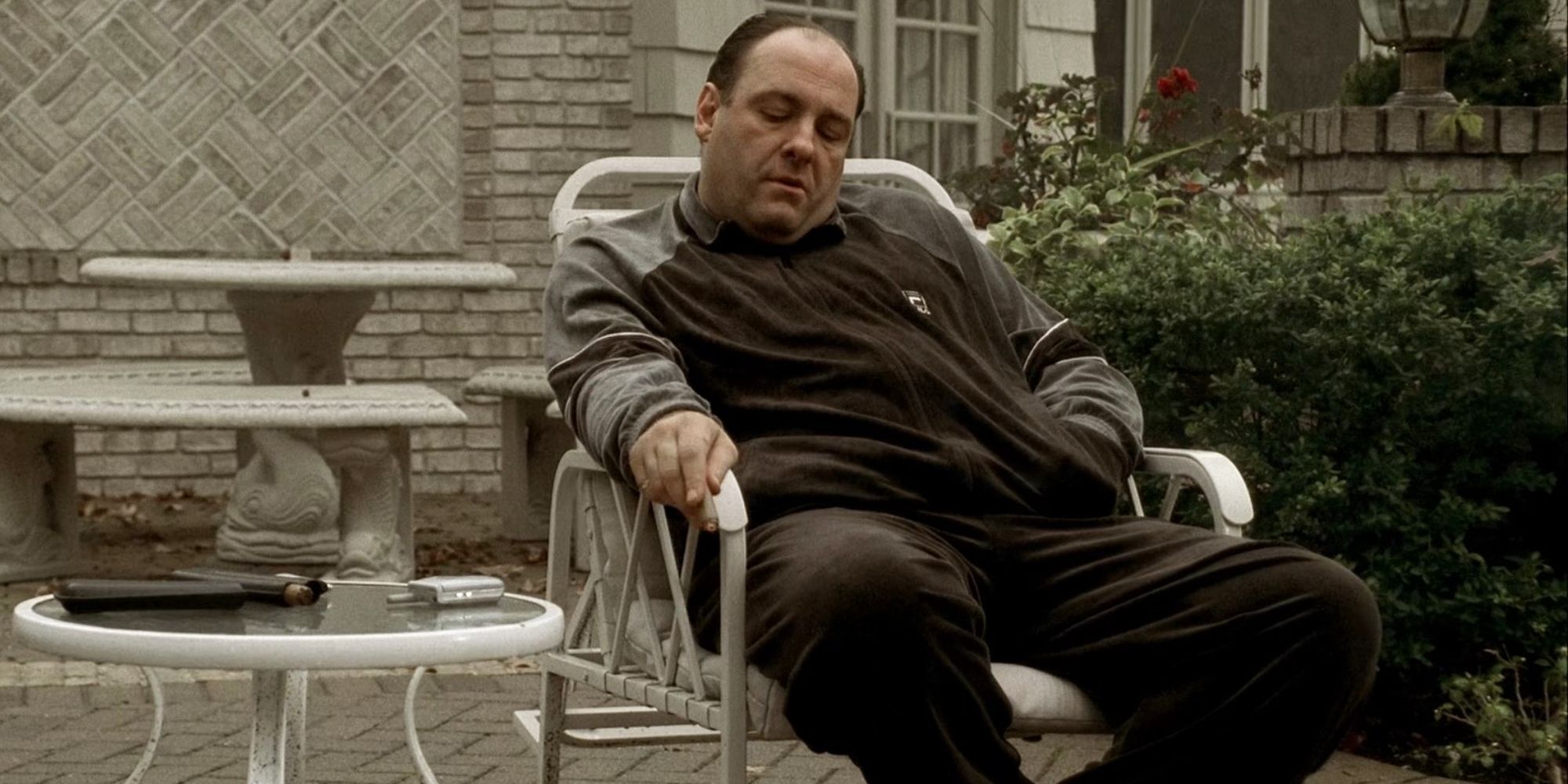
To get the hopefully obvious out of the way, The Sopranos is a beyond-iconic show, and one that’s endured a great deal in the nearly 20 years it’s been off the air (or off cable, if “on the air” and “off the air” only apply to when you’re talking about network TV). It is obligatory to mention its influence, and the way it reshaped what television was capable of doing narratively, visually, and (especially) thematically.
It was a thematically dense show, to put it mildly, and one that bounced between being funny, sad, strange, and quite intense at times. The Sopranos is about a guy named Tony trying to balance his life in the mob with being a father and a husband, with everyone around him (and Tony himself) being tremendously flawed, with conflict, terror, and even darkly amusing misery being constants in the show. The following episodes are more focused on the frightening and downbeat parts of the show, all of them ranking among the very heaviest episodes of The Sopranos. There will be some spoilers discussed for the relevant episodes, as details are hard to avoid.
10
“Join the Club” (2006)
Season 6, Episode 2
Edie Falco stands by James Gandolfini laying in a hospital bed unconscious from the episode Join the Club in The SopranosImage via HBO
“Join the Club” is hard to separate from the two episodes on either side of it. It’s the second of the show’s final season, and together with the first and third episodes, it is mostly about Tony’s closest brush with death in the show proper. Yes, some subscribe to the idea that he died at the end of the show, which is technically a closer brush of death, if death indeed happened, but you don’t necessarily see it. Also, you could argue anyway that a brush with death is different from one’s actual death. Tony is shot by his uncle in the season premiere, then spends most of episodes 2 and 3 in a coma, with his friends and family clearly distressed by the whole situation, as they wait to see if he pulls through, and then, while unconscious, he goes through an extended and vaguely unsettling dream as a man named Kevin Finnerty. Honorable mentions should go out to the rather heavy ending of the first episode, and then some of the sadness found in the third, but “Join the Club,” episode 2, is the rawest, and the one where Tony’s life seems to hang the most in the balance, so it’s technically a tiny bit more heavy-going.
9
“Cold Stones” (2006)
Season 6, Episode 11
Image via HBO
Later in season 6, or technically right near the end of season 6A, as the final season was split in two (with one half airing in 2006 and the other in 2007), things slow down quite a bit. There is a fair amount of time spent on Vito, who’s a member of Tony’s crew, and it’s not like he didn’t make any impression before season 6, but he becomes a character a little closer to the center of things here, after his fellow mobsters find out he’s gay. That’s a no-no in their way of life, to put it mildly, so he flees Jersey, seemingly finds brief happiness in a small town, but then, in “Cold Stones,” goes back to where he’s in danger anyway (partly due to, apparently, just really hating the act of doing honest work). When he gets back, Phil kills him, as Phil hates Tony and Phil’s also particularly homophobic… and especially toward Vito, since Vito’s married to one of Phil’s cousins. Phil’s murder of Vito is one of the more emotionally brutal ones on the show; not necessarily one of the most graphic, but it is a nasty scene, and further drives home just how awful and antagonistic Phil can be.
8
“Funhouse” (2000)
Season 2, Episode 13
There are some strange and intensely surreal moments in “Funhouse,” to a maybe even greater degree than some of the dream sequences found in the aforementioned “Join the Club.” This episode sees Tony battling food poisoning, and then, while he’s having a bunch of fever dreams, a fish – with the voice of his crew member, Big Pussy – tells him that Big Pussy is wearing a wire and working for the government. And wearing a wire is as much a no-go in the mob as being gay, so Tony, Silvio, and Paulie drive Big Pussy out to sea, and he gets whacked. He is the first main character who’s not villainous (he’s more of a tragic character, and someone who got forced by the Feds to work for them) to get killed in the show, and such a death sets a precedent, because it turns out he’s very far from the last.
7
“The Blue Comet” (2007)
Season 6, Episode 20
Steven R. Schirripa as Bobby Bacala shops for toy trains from the episode The Blue Comet in The SopranosImage via HBO
The penultimate episode of the entire show, “The Blue Comet” is the one where war well and truly breaks out between Tony and Phil’s crews. And sure, it doesn’t last particularly long, given how long it was seemingly right on the edge of bubbling over, but it makes up for that by putting pretty much everyone in danger, with it being one of the show’s deadliest episodes. There are five casualties all up, including – quite devastatingly – Bobby Bacala.
“The Blue Comet” is dark and heavy-going because of all the death, and also because it ends with the conflict still technically ongoing.
Silvio also gets shot, ending up in a coma that he might not wake up from, since it’s uncertain during the series finale. There is a sense of doom and things crashing down here, maybe not to quite the same extent as “Ozymandias,” in Breaking Bad, but it’s a lot for a show like The Sopranos, which was generally more character than narrative-focused (while Breaking Bad has a tighter sense of plotting). “The Blue Comet” is dark and heavy-going because of all the death, and also because it ends with the conflict still technically ongoing (it does get wrapped up almost comically fast in the finale, but that episode is bleak for other reasons).
6
“Made in America” (2007)
Season 6, Episode 21
Uncle Junior scene in the finale of The SopranosImage via HBO
As mentioned before, The Sopranos ends in a way that could signify Tony dying, or maybe something else. If you subscribe to the idea of him dying, “Made in America” would probably place higher than it is here, since the idea of Tony getting shot in the head in public, and in front of his family, is horrifying (that does happen to Phil earlier in the episode, but he probably had it coming to a greater extent). Even if you don’t subscribe to him dying, then that paranoia of the final scene is heavy in another way, laying out how Tony’s always going to feel uneasy – and keep looking over his shoulder – even if he keeps on trucking, since he’s lost so many people and still probably has some enemies. There’s also an emptiness to “Made in America” that’s very somber, as so many characters are gone by this point, and familiar locations are framed in ways that make you really feel their absences. There’s also the final scene with Uncle Junior, showcasing how much his dementia has progressed (even worse since he got confused at the start of season 6 and shot Tony), which is one of the most emotionally devastating and haunting scenes in the entire show.
5
“Whitecaps” (2002)
Season 4, Episode 13
James Gandolfini as Tony Soprano in The Sopranos episode Whitecaps.Image via HBO
The fourth season of The Sopranos is an odd but undeniably interesting one, with the one major death happening fairly early, and being a character who had it coming… but he is given a somewhat sympathetic storyline in the episode in which he does die. And then when it comes to disposing of his body, that whole sequence is weirdly/darkly funny (this is Ralph, by the way, in the episode “Whoever Did This”). Once he’s out of the way, the family drama side of The Sopranos really takes center stage for the remainder of the season, all building to “Whitecaps.” This is a phenomenal season finale that showcases Tony and Carmela’s marriage breaking down, and moving into a period of separation that lasted until near the end of season 5. “Whitecaps” feels a bit like Marriage Story condensed into an episode of TV, with the rawness of the acting – plus the incredible writing – going far in making it especially intense and heavy-going (both James Gandolfini and Edie Falco are at their absolute bests throughout this whole episode).
4
“The Second Coming” (2007)
Season 6, Episode 19
Image via HBO
There’s one scene in “The Second Coming” that’s sort of funny, but more because it contains copious lines that have been referenced in so many memes over the years. It involves Phil ranting about compromise, spending 20 years in the can, and “eating grilled cheese off the radiator.” It is ridiculous, and funny because Phil thinks he’s being menacing, and has no idea how funny he sounds. It’s a small part of the episode, though. Most of “The Second Coming” is emotionally brutal, as an episode that has a large focus on Tony’s family, with A.J. going through a severe depressive episode, to the point of almost taking his life, and then being subsequently hospitalized. It’s obviously sad he’s in that state, and then it’s further sad seeing his family react, especially Tony, with one of his only surviving redeeming qualities at this stage in the show being the fact he still loves his two children (so his guilt, believing he passed down depression directly to A.J., effectively cursing him, is devastating to hear him talk about).
3
“Long Term Parking” (2004)
Season 5, Episode 12
Silvio driving a terrified Adriana in season 5 of The SopranosImage via HBO
As a part of the ongoing saga of The Sopranos, “Long Term Parking” is essential, and then it’s also so brutally sad for hopefully obvious reasons. Putting it up high in a ranking like this feels like a no-brainer, because this is infamously the episode where Adriana gets whacked, and she was arguably the person technically within the mob life who seemed the most decent overall, maintaining some morals and a devotion to Christopher he really didn’t ever deserve.
The FBI targeting her was even crueler than them going after Big Pussy, since she hadn’t committed the sorts of crimes he had, but they were able to make her fold more easily because she wasn’t prepared to be targeted. It’s so easy to imagine Adriana living a long life and thriving with someone who actually treats her properly, had she never fallen in with Christopher and tried so hard to support him. Her story might well be the most tragic of any main character in the show’s entire run, just because of how well the audience gets to know her, and because of how she deserved much, much better.
2
“University” (2001)
Season 3, Episode 6
Image via HBO
At the center of “University” is another young woman who’s a victim: a pole dancer at the Bada Bing named Tracee. She’s only introduced in “University,” and then “University” is the episode where she dies horrifically. Tracee gets involved with Ralph, and he sinks to a new low here with how he treats her, and then sinks even further when he brutally murders her in front of Tony and his crew. Since Ralph’s a made guy, he gets away with it, at least for a while. All the while, Tracee’s sad life and early demise are brutally contrasted with Meadow’s, since Tony’s eldest child is going off to the titular university, and has her whole life ahead of her. Tracee is not nearly as well-developed a character as Adriana, but her death being shown in graphic detail, being so pointless (the mob can justify Adriana’s murder because their code involves doing that to informants… it is the way of life within the mafia, even if horrifically unfair), and being done without any real consequence for Ralph makes it perhaps even harder to watch happen. And it gets worse when you think about how the other dancers at the Bada Bing are treated, and whether comparably grim instances of abuse – fatal or otherwise – have happened before, and been similarly dismissed with a strange and deeply distressing collective shrug.
1
“Employee of the Month” (2001)
Season 3, Episode 4
Dr. Melfi in her office after being attacked in season 3 of The Sopranos – Employee of the Month (2001)Image via HBO
Shortly before “University,” season 3 also had “Employee of the Month,” which is being counted here as the heaviest episode of The Sopranos because it’s probably the hardest to watch and/or rewatch, should you find yourself going through the series for a second (or third, or fourth, etc.) time. It’s an episode that centers on a moral dilemma Dr. Melfi, Tony’s therapist, finds herself going through. She wants justice after being victimized in an unspeakably violent crime where the perpetrator walks free, even though she’s very much aware of his identity. Melfi seems on the brink of telling Tony, since Tony is the kind of guy who can – and will – enact the sort of justice the law didn’t, but she decides not to tell him about the details. It’s hard to watch one of the rare decent characters in the show go through what she goes through, and then even if it makes sense why she sticks to her morals, it’s hard being deprived of the catharsis of seeing a guy getting what he deserved. And that’s all very intentional, with Melfi not getting that cathartic sense of revenge, either, being one of the more challenging – and important – episodes of The Sopranos overall.
The Sopranos
Release Date
1999 – 2007
Network
HBO
Showrunner
David Chase
Directors
Tim Van Patten, John Patterson, Alan Taylor, Jack Bender, Steve Buscemi, Daniel Attias, David Chase, Andy Wolk, Danny Leiner, David Nutter, James Hayman, Lee Tamahori, Lorraine Senna, Matthew Penn, Mike Figgis, Nick Gomez, Peter Bogdanovich, Phil Abraham, Rodrigo García
تم النشر: 2026-06-10 21:54:00
مصدر: collider.com