
10 Movies That Clearly Influenced Christopher Nolan’s ‘The Odyssey’
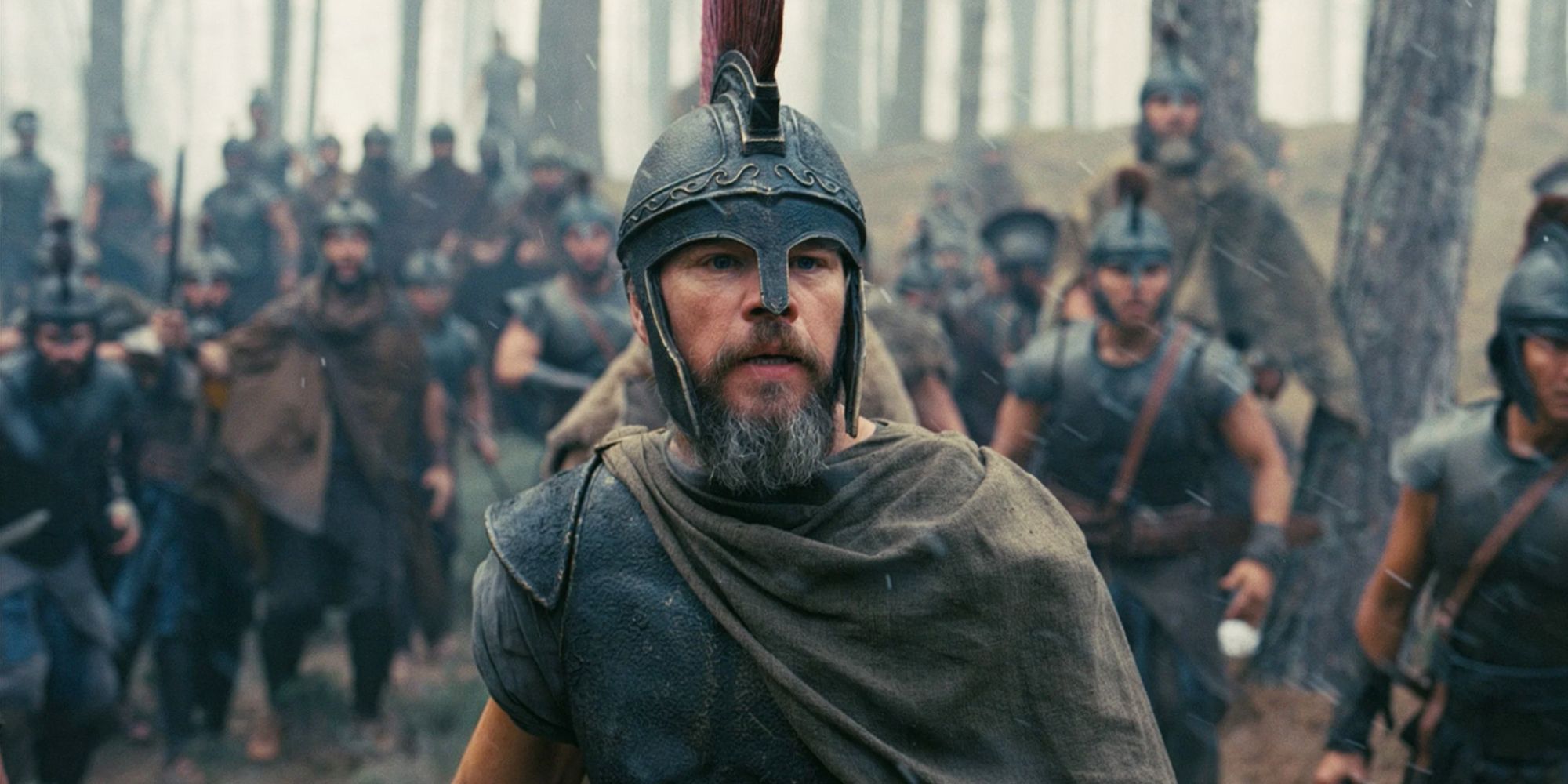
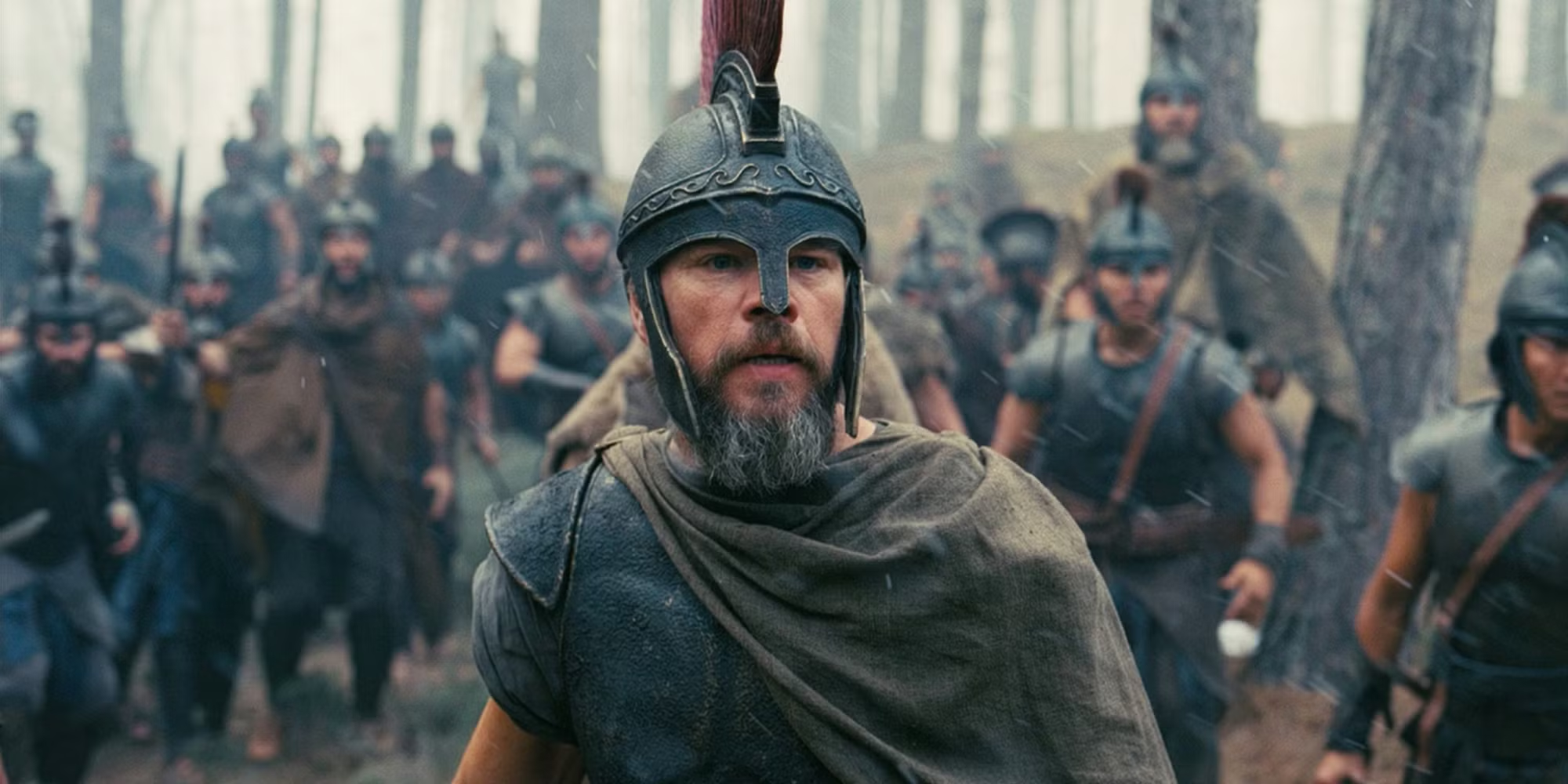
With The Odyssey, Christopher Nolan spent a reported $250 million and every available inch of IMAX 70mm film to drag Homer into the multiplex. But, before a single frame rolled, Nolan did the thing every serious director does with a star-studded cast and a story burdened by big expectations: he handed out homework. Three films, specifically, that he wanted stars like Matt Damon, Tom Holland, Anne Hathaway, Robert Pattinson, and Zendaya to sit with before they picked up a spear.
The Odyssey is dense with the influence of other films, and Nolan has been unusually open about where some of it comes from. Those three assigned titles are the ones he’s shared on record. Look closely, and you can find plenty more: David Lean’s boundless deserts, the sword-and-sandal epics that made a Greek myth bankable again, one of the director’s own recent blockbusters, even a monster movie still warm from a Netflix-backed Oscar run. The list of must-watch movies below traces all of it, starting with the three films Nolan named himself.
‘Andrei Rublev’ (1966)
Andrei Rublev in a medieval church, in Andrei Tarkovsky’s ‘Andrei Rublev’ (1966)Image via Mosfilm
Andrei Tarkovsky’s three-hour-plus film, Andrei Rublev, follows a medieval icon painter drifting through a Russia that’s coming apart at the seams. It takes two decades, famine, and a brutal Tatar raid to set the stakes for Rublev (Anatoly Solonitsyn) to lose faith in his art and stop painting. But then, he watches a young man strain to cast an enormous church bell and finds his reason to begin again. It’s all shot in long, patient takes that hold on mud and faces, and Nolan screened it for his cast because of that texture. With The Odyssey, Nolan wanted an ancient world with weight to it, where the light and the faces belong to the era and not to a green screen. Odysseus (Damon), like Rublev, is a man ground down by cruelty and by the sheer length of his own road, and the film needs you to believe he has lived through every brutal year of it.
‘Ran’ (1985)
Men riding their horses in battle in Ran.Image via Toho
With Ran, Akira Kurosawa took King Lear to feudal Japan and set it on fire. An aging warlord hands his kingdom to his sons and then watches his family and his country tear each other apart, in some of the largest and most punishing battle scenes ever filmed. The armies march in blocks of pure color, and the wind moves through everything, bending grass and banners and smoke. Nolan zeroed in on exactly that, praising the movie’s use of “landscape” and the “banners flapping in the wind.” It’s a natural fit. Nolan builds his films out of real places at real scale, and The Odyssey is about a hero at the mercy of forces far larger than himself. Kurosawa supplies the template for how to translate that on-screen.
‘The Last Temptation of Christ’ (1988)
Willem Dafoe as Jesus in The Last Temptation of ChristImage via Universal Pictures
Martin Scorsese’s sweaty, doubt-ridden, once-scandalous take on Jesus (a raw Willem Dafoe) tells a familiar myth from the inside out, as the story of a man arguing with his own destiny. It was protested and picketed on release. It’s also one of the boldest things Scorsese ever made. Nolan called it “a fresh and accessible window into history” and admitted the technical work Scorsese was doing struck him as “quite inspiring.” The connection isn’t hard to trace. Odysseus is a hero who lies, cheats, and stalls his way home, and Scorsese’s blueprint for a flawed legend given a human pulse is key to making The Odyssey’s sheer density palatable.
‘Interstellar’ (2014)
Sometimes the biggest influence on a Nolan movie is another Nolan movie. Interstellar sends a father into space to save the human race and loses him in time, so that every hour out there costs him years with the children he left on Earth. The whole movie yearns for a homecoming that always feels heartbreakingly out of reach. Swap the wormhole for the wine-dark sea, and you’re most of the way to The Odyssey. Both follow a man desperate to get back, and both let time do the cruelest work, piling up while he is powerless to stop it. Odysseus loses ten years to the gods; Cooper (Matthew McConaughey) loses decades in the span of an afternoon. Nolan has clearly been mapping this particular journey for a while.
Collider Exclusive · Sci-Fi Personality Quiz
Which Sci-Fi Hero Are You Most Like?
Paul Atreides · Captain Kirk · Princess Leia · Ellen Ripley · Max Rockatansky
Five iconic heroes. Five completely different ways of facing an impossible universe. One of them shares your instincts, your values, and your particular way of refusing to back down. Eight questions will tell you which one.
Paul Atreides
Capt. Kirk
Princess Leia
Ellen Ripley
Max Rockatansky
FIND YOUR HERO →
01
How do you lead when the stakes couldn’t be higher?
The way you lead under pressure is the most honest thing about you.
AI absorb everything — every variable, every pattern — and move only when I know the path forward.
BI read the room, make the call, and own the consequences. Hesitation costs more than mistakes.
CI rally people. A cause needs a voice, and I refuse to let fear be louder than conviction.
DI assess the threat, establish what needs doing, and get it done without waiting for permission.
EI don’t lead. I act. Others can follow or not — I’m already moving.
NEXT QUESTION →
02
What is your greatest strength in a crisis?
The quality that keeps you alive when everything else fails.
APrescience — the ability to see further ahead than anyone else and plan accordingly.
BImprovisation — I’m at my best when the plan falls apart and I have to invent a new one.
CConviction — I know what I’m fighting for, and that certainty doesn’t waver under fire.
DComposure — I stay functional when everyone around me is falling apart. Panic is a luxury.
EEndurance — I outlast things. I take the hit and keep moving long after others have stopped.
NEXT QUESTION →
03
What is the thing you’d sacrifice everything else for?
Your deepest motivation is your truest compass.
AThe survival and dignity of my people — even if I have to become something frightening to ensure it.
BThe safety of my crew — every single one of them. No one gets left behind.
CFreedom — for my people, for every world still crushed under the weight of an empire.
DThe truth — what actually happened, what’s actually out there, whether anyone believes me or not.
EThe one person — or the one memory — that still makes any of this worth surviving for.
NEXT QUESTION →
04
How do you relate to the people around you?
Who you are to others under pressure is who you really are.
AWith intensity and distance — I care deeply, but the weight I carry makes closeness complicated.
BWith warmth and irreverence — I take the mission seriously, not myself.
CWith directness and trust — I say what I mean, and I expect the people I work with to rise to it.
DWith professional care but clear limits — I’ll protect you, but I won’t pretend we’re family.
EWith wariness that slowly becomes loyalty — I don’t trust easily, but when I do, it holds.
NEXT QUESTION →
05
You’re facing a threat that no one else believes is real. What do you do?
How you respond when you’re the only one who sees it defines everything.
APrepare in silence. If they won’t listen, I’ll be ready when they finally have to.
BKeep pushing until someone listens — and if no one does, handle it myself.
CBuild the case, find the allies, and make the threat impossible to ignore.
DDocument everything. The truth matters even if no one believes it yet.
EStop trying to convince anyone. Survive it. That’s the only argument that counts.
NEXT QUESTION →
06
What has your heroism cost you personally?
Every hero pays. The question is what — and whether they’d pay it again.
AMy innocence — I’ve seen what I’m capable of, and I can’t unsee it.
BPeople I loved — the command chair has a view, but it’s a lonely one.
CA normal life — I gave up everything ordinary the moment I chose the cause.
DMy sense of safety — I know exactly what’s out there now, and I can’t pretend otherwise.
EAlmost everything — and I’m still not sure what I’m carrying it all for. But I keep going.
NEXT QUESTION →
07
How do you feel about the rules of the world you’re in?
Every hero has a relationship with the system. What’s yours?
AI understand them deeply — and I know exactly which ones must be broken, and why.
BI respect the spirit of them and bend the letter when the situation demands it.
CThe system is the problem. I’m not here to work within it — I’m here to dismantle it.
DI follow protocol until protocol stops being useful. Then I make the call myself.
EThe rules collapsed a long time ago. What’s left is instinct, and mine are reliable.
NEXT QUESTION →
08
When everything is on the line, what keeps you going?
The answer is the most honest thing about you.
ADestiny — or something that feels so much like it that the difference no longer matters.
BThe people on my ship — their faces, their trust, the fact that they’re counting on me.
CThe belief that what we’re fighting for is worth every sacrifice, including this one.
DSheer refusal to let it win — whatever it is. I don’t stop. That’s just who I am.
EI’m not sure anymore. But the road is still there, and I’m still on it.
REVEAL MY HERO →
Your Hero Has Been Identified
Your Sci-Fi Hero Is…
Your answers point to the iconic sci-fi hero who shares your instincts, your values, and your particular way of facing the impossible.
Arrakis · Dune
Paul Atreides
You carry a weight most people would crumble under — the knowledge of what you’re capable of, and the burden of what you might have to become.
You see further ahead than others and you plan accordingly, even when the vision frightens you.
You are driven by loyalty to your people and a sense of destiny you didn’t ask for but can’t escape.
Paul Atreides is not simply a hero — he is someone who understands the cost of power and chooses to bear it anyway.
That gravity, that willingness to carry what others won’t, is exactly you.
USS Enterprise · Star Trek
Captain Kirk
You lead with instinct, warmth, and an absolute refusal to accept a no-win scenario — because you’ve always believed there’s a third option nobody else has thought of yet.
You take the mission seriously without ever taking yourself too seriously.
Your crew would follow you anywhere, not because you demand it, but because you’ve earned it.
Kirk’s genius isn’t tactical — it’s human. He reads people, bends rules with purpose, and wills outcomes into existence through sheer conviction.
That combination of warmth, audacity, and relentless optimism is unmistakably yours.
The Rebellion · Star Wars
Princess Leia
You are the kind of person who holds the line when everyone else is losing faith — not because you’re fearless, but because giving up simply isn’t something you’re capable of.
You lead through conviction. Your voice carries because your belief is unshakeable.
You gave up everything ordinary the moment you chose the cause, and you’ve never looked back.
Leia is not a supporting character in her own story — she is the moral centre of the entire rebellion.
That same fierce, principled, unbreakable core is what defines you.
The Nostromo · Alien
Ellen Ripley
You are not reckless, not grandiose, and not particularly interested in being anyone’s hero — you just refuse to stop when it matters.
You see threats clearly, you document the truth even when no one listens, and when the time comes you handle it yourself.
Ripley’s heroism is earned, not performed. She doesn’t have a speech — she has a flamethrower and a plan.
You share her composure under the worst possible pressure, and her refusal to pretend the monster isn’t there.
When it counts, you don’t flinch. That’s everything.
The Wasteland · Mad Max
Max Rockatansky
You have been through fire that would break most people — and what came out the other side is something the world underestimates at its peril.
You don’t ask for help, don’t need validation, and don’t wait for anyone to tell you the rules no longer apply.
Your loyalty, when it finally arrives, is absolute — but it’s earned in silence and tested in action, not in words.
Max is not a nihilist. He is someone who lost everything and found, against his will, that he still has something worth protecting.
That bruised, stubborn, ultimately human core is exactly yours.
↻ RETAKE THE QUIZ
‘Gladiator’ (2000)
Russell Crowe stars as Maximus in Ridley Scott’s Gladiator.Image via Universal Pictures
“Are you not entertained?” turned out to be a rhetorical question with a very obvious answer in this Ridley Scott banger. The director dragged the sword-and-sandal epic out of the grave and stood it back on its feet with Russell Crowe playing a betrayed Roman general fighting through the blood and sand of the arena toward home… and revenge. The film became a sensation, winning Best Picture and reminding Hollywood that the ancient world could still fill a theater. Every toga-draped blockbuster since has walked through the door Gladiator opened. Without its success, no studio would hand Nolan a quarter of a billion dollars to put a Greek myth on IMAX screens 26 years later.
‘Troy’ (2004)
Brad Pitt on a horse in TroyImage via Warner Bros.
This is the most obvious comparison on the list, and the one Nolan may be subtly answering. Wolfgang Petersen took The Iliad, cast Brad Pitt as an oiled, sulking Achilles, and swung for grand, star-driven spectacle. Because of that, Troy landed somewhere between genuinely stirring and faintly ridiculous. The Odyssey picks up the very next chapter of the same story, which makes the contrast feel almost pointed. Where Troy went for beefcakes and battlefields, Nolan seems to be after the interior wear of the myth, the psychology of a man who can’t stop scheming even when scheming is what keeps him from his wife and son. It is the same source material approached from the opposite direction.
‘Lawrence of Arabia’ (1962)
T.E. Lawrence and another man in The Lawrence of ArabiaImage via Columbia Pictures
If Nolan has a sacred text, this is it. Lean drops Peter O’Toole’s unreadable T. E. Lawrence into a vast desert and shoots it on 70mm, until the sheer size of the landscape presses down on you in your seat. Nolan has cited it for years as the film that shaped the way he thinks about scale. In fact, the whole IMAX 70mm bet of The Odyssey comes straight from Lawrence of Arabia: set a single small figure against an overwhelming world and let the size of the image do the work. Even the heroes at the center of these two films feel connected. Both men are magnetic and evasive, half-turned into legend but never fully known by the people who follow them. You don’t really need a reason to watch this, one of the greatest films ever made, but Nolan just gave you one anyway.
‘Spartacus’ (1960)
Kirk Douglas holding a sword with men beside him in ‘Spartacus’Image via Universal International
Stanley Kubrick’s Roman masterpiece gave us Kirk Douglas as a slave leading a doomed revolt, and the famous moment when a captured army rises one man at a time to claim his name. Spartacus is a huge, crowd-filling spectacle with a real brain behind it. It’s not the Kubrick entry most associate with Nolan’s work, but it’s the one that connects best here.
The balance between cerebral and crowd-pleasing is what The Odyssey is after. Spartacus carries weighty ideas without ever shrinking from the size of its audience, which is the same line Nolan walks, in every film really, but especially here.
‘Mad Max: Fury Road’ (2015)
Furiosa, played by Charlize Theron, screams after falling to her knees on sand dunes in Mad Max: Fury Road.Image via Warner Bros. Pictures
George Miller made two hours of near-wordless road chase with real vehicles hurled across real desert and virtually nothing faked that could instead be built and crashed for the camera. His Mad Max: Fury Road is a journey film that runs on pure motion and a myth told at full speed. Put it next to Nolan’s newest film and the fit is closer than you’d expect. The director is a practical-effects true believer, and Fury Road is the modern peak of that faith. When The Odyssey puts its monsters and shipwrecks on screen, this is the tradition it draws from, the conviction that an audience can always feel when something on screen is tangible on set.
‘Frankenstein’ (2025)
Jacob Elordi as the Creature examines a moss-covered skull in the woods in Guillermo del Toro’s Frankenstein (2025; Netflix)Image via Netflix
The outlier here, and the newest by a wide margin. Guillermo del Toro finally made the film he had chased for more than a decade, with Oscar Isaac as an obsessive Victor Frankenstein and Jacob Elordi as the creature he abandons. It’s a creation myth staged at full operatic scale and sent to Netflix last November. It shares nothing with Homer and everything with the moment Nolan is working in. Frankenstein and The Odyssey arrived barely a year apart, two celebrated directors wagering enormous budgets on the idea that audiences still want an old myth told seriously, with real craft and real feeling behind it. And del Toro’s approach to his monsters — his love for them, his compassion, and his commitment to displaying their grotesque, awe-inspiring physicality — is echoed in how Nolan depicts his own mythic beasts. If The Odyssey has one clear peer in the current landscape, this is it.
Frankenstein
Release Date
October 17, 2025
Runtime
149 Minutes
تم النشر: 2026-07-25 14:41:00
مصدر: collider.com