5 Perfect Book-to-Movie Adaptations That No One Talks About Anymore
Many movies are adapted from books, and some are among the best ever made, such as The Godfather and The Shawshank Redemption. Some of those adaptations are remarkably faithful to their source material, while others retain almost nothing from them. Regardless of how accurate each of those individual films is to the books they’re based on, they are all well remembered and have inspired spirited debate about whether they improve upon their respective novels or not. However, some perfect movie adaptations are rarely subject to the same discussion and have otherwise fallen out of the public consciousness.
The reasons why these great movies have all but been completely forgotten are mysterious, especially since accurate adaptations that satisfy both film and book fans are a special commodity. While they range from romantic dramas to family-friendly films to gonzo black comedies, these films are all equally successful adaptations that suffer from the same collective amnesia regarding their existence. These are five perfect book-to-movie adaptations that no one talks about anymore.
‘The Age of Innocence’ (1993)
May Welland (Winona Ryder) and Newland Archer (Daniel Day Lewis) in a carriage in The Age of InnocenceImage via Columbia Pictures
Based on Edith Wharton’s Pulitzer Prize-winning novel set during the Gilded Age in New York City, Martin Scorsese’s The Age of Innocence is as meticulously made as his greatest films. It accurately represents not only Wharton’s novel but also the time in which it is set. Despite the fact that the film was richly rewarded for its efforts of authenticity with critical acclaim and several Academy Award nominations, of which it won for Best Costume Design, it quickly became regarded as an admirable adaptation that was handsomely produced, but otherwise regarded as minor within its director’s career. It has since faded even further from memory and is rarely ever mentioned in the same breath as Scorsese’s other masterpieces, though it is just as deserving of praise for how it proves his skills far beyond the crime genre, and for being a perfect adaptation. Newland Archer (Daniel Day-Lewis) is a successful lawyer living among the wealthy elite in the 1870s in New York City. His status among the highest social class is perched precariously between his marriage to the conventionally sophisticated May (Winona Ryder) and his extra-marital passion for her cousin, Countess Ellen Olenska (Michelle Pfeiffer). The film diligently transposes much of Wharton’s text in its representation of the time period, but also elegantly adapts the unspoken tensions between its characters with transfixing performances by its three key actors. The Age of Innocence is a detailed film adaptation that fully immerses the audience with its minute details, but is also far more bracingly fervent than many romantic period dramas of the time. It does Wharton proud, and should be regarded with the same estimation as Scorsese’s more celebrated classics.
‘Fear and Loathing in Las Vegas’ (1998)
Johnny Depp as Duke in ‘Fear and Loathing in Las Vegas’Image via Universal Pictures
Hunter S. Thompson’s gonzo style of journalism is more experiential than many kinds of writing. Accurately adapting it to film requires not only following the facts, real or imagined, of the story, but also effectively translating the surreal experience of reading it. Thankfully, director Terry Gilliam excels in surrealism, and his adaptation of Thompson’s seminal novel Fear and Loathing in Las Vegas is still the only representation of Thompson’s work that has come close to replicating his signature style. Shot with extreme camera angles, and with a garish color palette, the film is a bold love it or hate it experience anchored by two go-for-broke performances. In the film, Thompson surrogate Raoul Duke (Johnny Depp) and Dr. Gonzo (Benicio del Toro) head into Las Vegas with a suitcase full of drugs so that Duke can cover the Mint 400 motorcycle race. What follows is one long visual drug trip that strains narrative convention and coherence, which made many critics despise the film, but which also garnered it a cult following of fans who appreciated its adherence to Thompson’s gonzo insanity. Additionally, the film transposes much of Thompson’s text verbatim, and, barring a few notable diversions, is a perfect adaptation of both the writing and the writer.
‘Wonder Boys’ (2000)
Michael Douglas and Tobey Maguire looking at someone off camera in Wonder Boys.Image via Paramount Pictures
Curtis Hanson is best known for adapting James Ellroy’s novel L.A. Confidential and Eminem’s life in 8 Mile. In between those two films, he adapted the Michael Chabon novel Wonder Boys into a film that best captures the essence of its novel, if not the specifics of its narrative or characters. The adaptation unfortunately failed at the box office, even after an attempt to resurrect it with marketing for a second release, and it remains a relatively obscure dark comedy of campus life. Despite some positive critical notices and a pair of Oscar nominations, the film hasn’t earned a strong cult following, aside from among a very specific cross-section of cinephiles and literary fans. Grady Tripp (Michael Douglas) is a novelist and creative writing instructor at a college in Pennsylvania. He’s developed writer’s diarrhea trying to follow up his first novel, crafting a sprawling, unfocused work as his personal life becomes ever more complicated over one weekend. Dealing with a pushy, oversexed editor, an emotionally unstable student with a gun, and a dead dog in his trunk, the character goes on a strange odyssey of discovery. While many details from the book are streamlined or outright excised, the film captures the absolute mood and spirit of the novel with its muted, damp visuals and characterization of campus life among the academics. While the setting and character may only appeal to a very specific demographic, there’s enough dark, witty humor within the film to warrant other viewers seeking it out.
‘Holes’ (2003)
Shia LaBeouf as Stanley and Khleo Thomas as Hector sitting in the grass in Disney’s Holes.Image via Walt Disney Studios Motion Pictures
Louis Sachar wrote the screenplay for the film Holes, adapting his novel and retaining many of its more complex themes for one of the most underappreciated Disney films of all time. Directed by Andrew Davis, who has often been overlooked as a director despite his ability to elevate pulp with emotional intelligence, the film is both an entertaining adventure and a surprisingly deep drama with themes of generational hatred and historic injustice. Maybe it has been overshadowed by the problematic reputation of its star, Shia LaBeouf, whose personal and legal troubles extend far past those of the more innocent lead character, creating a larger dissonance in watching the film than there is with something like Depp’s unhinged performance in Fear and Loathing.
The film follows Stanley Yelnats (LaBeouf), who is wrongfully convicted of theft and sent to a juvenile labor camp where he and his fellow prisoners are ordered to dig in the desert that surrounds their camp. Both the nature of those holes and the history around the camp itself are slowly revealed, with the film capturing the fable-like quality of Sachar’s novel. The cast surrounding LaBeouf is all uniformly excellent, from his fellow young stars to seasoned veterans like Patricia Arquette, Jon Voight, and Sigourney Weaver. Aside from holding a special place in the hearts of many viewers of a certain age who grew up with it and its source material, Holes deserves a greater appreciation from audiences of all ages.
‘The Road’ (2009)
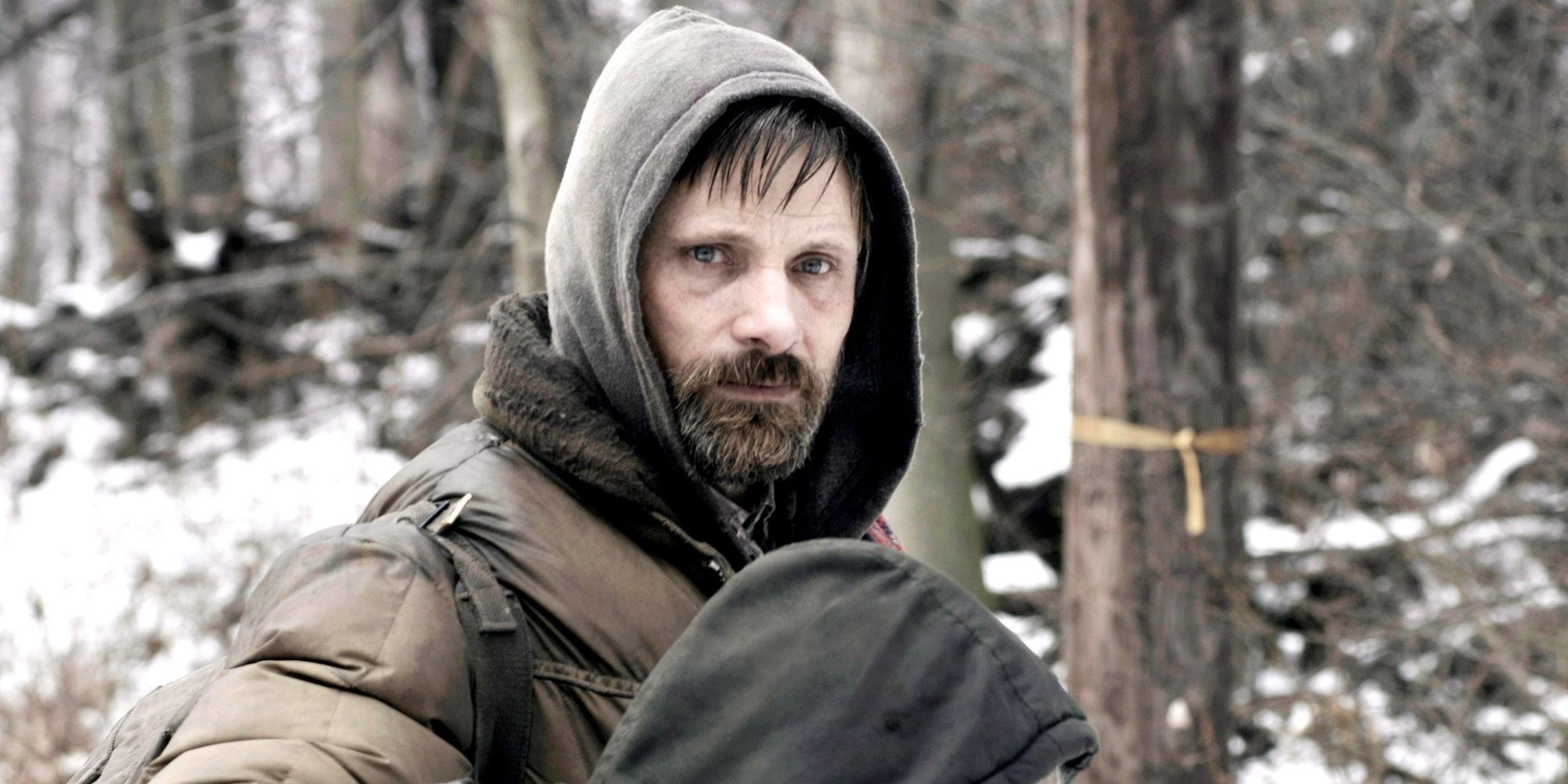
Viggo Mortensen as Man and Kodi Smit-McPhee as Boy walk down an abandoned highway in The Road.Image via Dimension Films
Cormac McCarthy’s nihilistic prose has been adapted multiple times on film. While most attention is, understandably, given to the Coen Brothers’ perfect adaptation of No Country for Old Men, far less talked about, but still worthy of discussion, is the John Hillcoat-directed adaptation of The Road. The post-apocalyptic drama is sometimes painfully accurate to the book in its bleak tone and often un-cinematic narrative, but adds the depiction of dramatic backstory, which adds more sunken flesh to the bones of Viggo Mortensen’s lead performance. In a future following an unexplained extinction-level event, a man (Mortensen) travels the wasteland with his son (Kodi Smit-McPhee), trying to survive amid the decay of the natural world and human morality. While the film may be too dour for some viewers, and perhaps can’t quite accurately capture the power of McCarthy’s dark prose, it is an uncompromised translation. It refuses to indulge in more exploitative elements to broaden its audience appeal in order to capitalize on the novel’s more mainstream success. That, in itself, makes it a purer and more perfect adaptation than any other that has similarly been forgotten in common film conversation.
تم النشر: 2026-06-01 20:41:00
مصدر: collider.com