
8 R-Rated War Movies That Can Be Called Masterpieces
War cinema can lose its nerve in two opposite directions. Some films turn combat into clean hero worship. Others pile on misery until soldiers become symbols instead of people. The masterpieces stay close to the confusion. Orders clash with instinct, courage sits beside terror, and survival often depends on choices nobody should have to make.
These eight films understand that war changes shape depending on where a person stands. It can be a street full of gunfire, a muddy trench, or a bomb hidden under rubbish. None of them let the audience leave with an easy answer. Let’s figure why they’re widely regarded as masterpieces, and how we’ve chosen to rank them. Scroll down slowly.
8
‘Black Hawk Down’ (2001)
Josh Hartnett as Eversmann hiding and looking to the distance in Black Hawk Down (2001).Image via Sony Pictures Releasing
A United States military operation in Mogadishu is supposed to capture senior figures connected to warlord Mohamed Farrah Aidid and end quickly. But that doesn’t happen in Black Hawk Down. Two Black Hawk helicopters are shot down, trapping American soldiers across a hostile city while rescue teams struggle through blocked streets and relentless fire. The film is adapted from Mark Bowden’s nonfiction book and is helmed by Ridley Scott. It follows the 1993 Battle of Mogadishu through overlapping squads rather than one traditional hero. That choice turns the mission into a constantly shifting map of injuries, wrong turns, radio calls, and men trying to reach one another before ammunition runs out. The sound is overwhelming. The geography remains clear enough to understand how one failed movement creates another crisis. Eversmann (Josh Hartnett) begins with confidence and ends the night carrying the weight of people he could not save. Hoot (Eric Bana) treats danger with professional calm, though his closing thoughts strip away any illusion that soldiers fight for speeches delivered far from the street. They keep moving for the person beside them. The film has been criticised for narrowing the Somali perspective, and that limitation deserves attention. But overall, it’s brilliant.
7
‘1917’ (2019)
George MacKay as Lance Corporal William “Will” Schofield, looking stunned and being held back by other soldiers in a trench in 1917Image via Universal Pictures
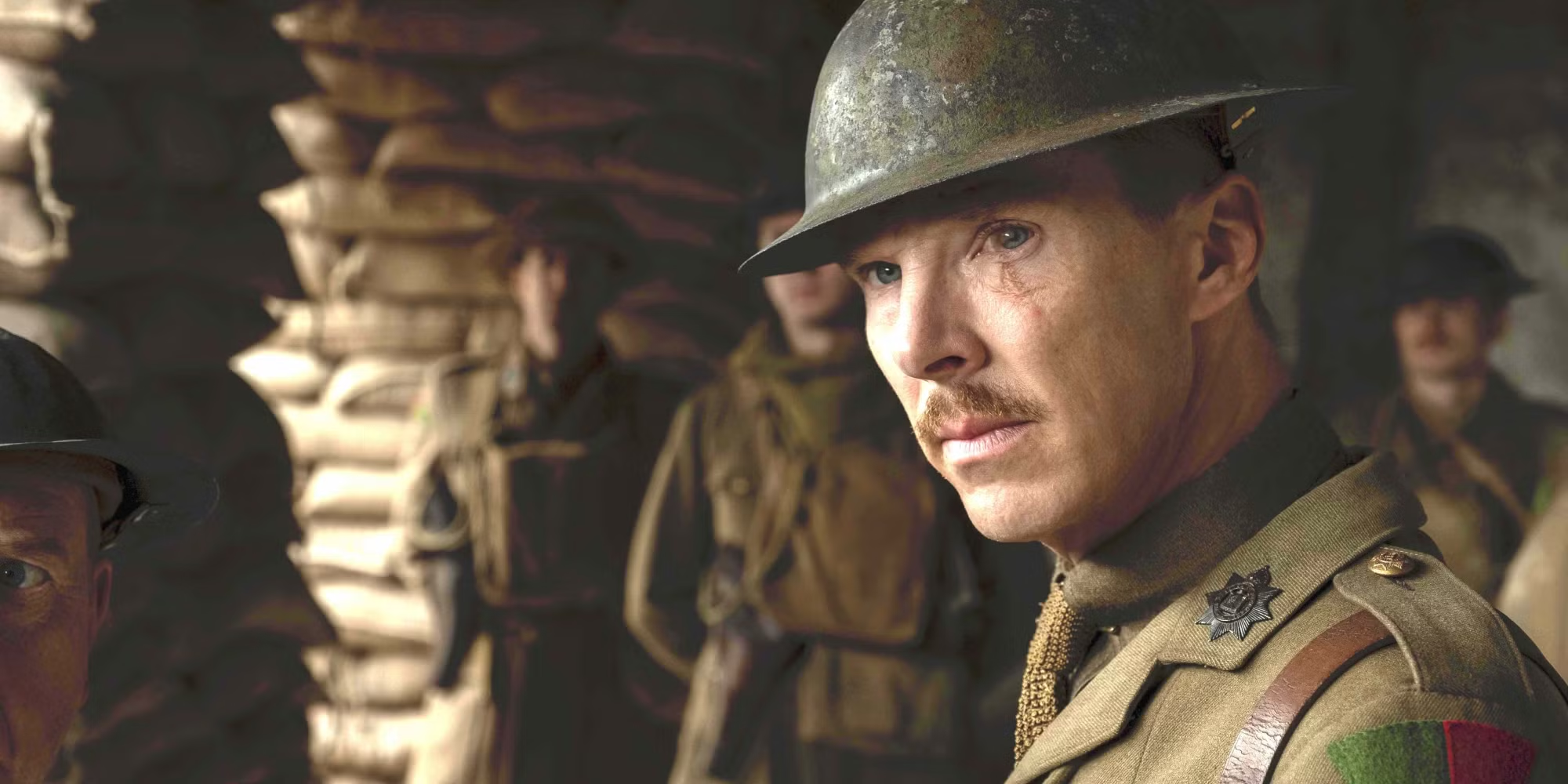
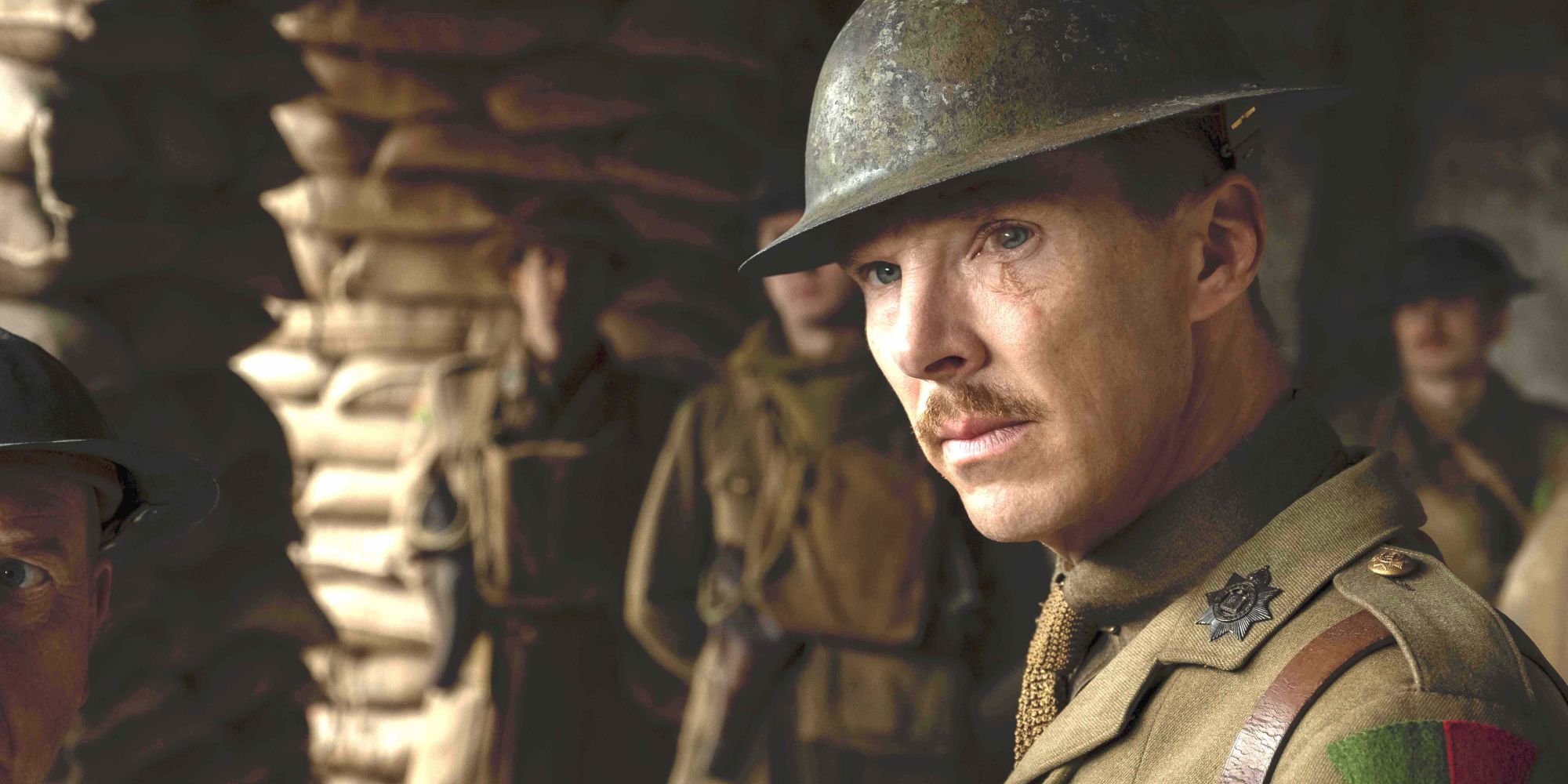
In 1917, two young British soldiers receive an order that sounds impossible even before they leave the trench. Blake (Dean-Charles Chapman) and Schofield (George MacKay) must cross abandoned enemy territory and reach another battalion before dawn, warning them that a planned attack is a German trap. Blake’s brother is among the men preparing to advance, so the mission is urgent long before the first bullet appears. It’s said that Sam Mendes drew partly from stories told by his grandfather, Alfred Mendes, and built the film around the feeling of a journey unfolding almost without interruption. That visual approach could have become a technical showpiece with little underneath it. Instead, the camera keeps forcing the audience to experience distance the way Schofield does. Mud slows him down. A collapsed tunnel steals time. A burning town destroys every clear route. Blake’s death arrives with shocking speed, leaving Schofield to finish a mission that began as someone else’s family emergency. His run across the battlefield is unforgettable partly due to the accidents left in the take, including soldiers colliding with him as explosions continue. He reaches Colonel Mackenzie (Benedict Cumberbatch), delivers the warning, then finds Blake’s brother. The victory is real, painfully small, and surrounded by thousands of lives that could still disappear the next day. 1917 is undoubtedly a masterpiece.
6
‘The Hurt Locker’ (2008)
Jeremy Renner as William in The Hurt LockerImage via Summit Entertainment
The Hurt Locker’s premise follows an Army bomb disposal team serving in Baghdad during the Iraq War, where every pile of rubbish, parked vehicle, and watching civilian could conceal a device. Staff Sergeant William James (Jeremy Renner) takes command after the death of the previous team leader and quickly unsettles Sanborn (Anthony Mackie) and Eldridge (Brian Geraghty) with his appetite for risk. He removes protective gear, ignores protocol, and approaches bombs with an intimacy that looks close to addiction. And the film comes from Kathryn Bigelow (Vikings). The Hurt Locker avoids turning James’ recklessness into uncomplicated bravery. James is exceptional at the job, and the job has damaged his ability to exist anywhere else. The tension, instead, comes from waiting beside the team while ordinary surroundings become impossible to trust. A man holding a phone may be frightened, curious, or preparing to detonate a bomb. A dead child may have been turned into a weapon. A deserted street can contain dozens of eyes and no reliable information. Beautiful hooks all the way till the end.
5
‘The Thin Red Line’ (1998)
Jim Caviezel looking ahead with teary eyes in The Thin Red Line – 1998Image via 20th Century Studios
American soldiers land on Guadalcanal with orders to take a heavily defended hill from Japanese forces. The military objective is simple enough to explain on a map, yet Terrence Malick approaches the campaign through fragments of thought, memory, fear, nature, and spiritual doubt. Witt (Jim Caviezel) sees beauty in the island and wonders whether violence comes from one shared darkness. Welsh (Sean Penn) trusts nothing beyond immediate survival. Captain Staros (Elias Koteas) refuses to throw his men into a frontal assault that he believes will destroy them. Colonel Tall (Nick Nolte) sees the hill as the opportunity that may finally justify his career. The Thin Red Line keeps asking what war looks like beside a world that continues growing, swimming, nesting, and shining around it. Grass moves while soldiers crawl through it. Birds scatter after gunfire. A captured Japanese soldier laughs and cries in the same breath while armed men stare back without knowing what to do with his grief. Malick returned to filmmaking after a twenty-year absence for this adaptation of James Jones’s novel, and the result rejects the usual rhythm of combat drama. Victory on the hill brings relief, shame, rage, and no permanent understanding. Witt eventually dies distracting enemy soldiers so others can escape.
Matthew Modine as Joker Davis crawling on the floor in Full Metal JacketImage via Warner Bros.
Full Metal Jacket, is based on The Short-Timers by Gustav Hasford. Before the Marines reach Vietnam, they are rebuilt inside Parris Island. Gunnery Sergeant Hartman (R. Lee Ermey) strips the recruits of privacy, language, and identity, reducing them to bodies that must obey before they can think. There are two parts to this film. It is divided between training and war. It shows that the violence overseas begins with a system designed to break civilian instincts. And all that has consequences on the soldiers and duty officers. Joker (Matthew Modine) protects himself through humour. Cowboy (Arliss Howard) learns the rhythm of command. Leonard Lawrence (Vincent D’Onofrio), renamed Gomer Pyle, falls behind and becomes the target of Hartman’s humiliation as well as the platoon’s anger. The soldiers march away singing the Mickey Mouse Club song, and childhood sounds obscene after everything required to make them men.
3
‘Platoon’ (1986)
Charlie Sheen, Willem Dafoe, and Tom Berenger as soldiers look at the camera with a burning building behind in Platoon.Image via Orion Pictures
Platoon follows Chris Taylor (Charlie Sheen) who drops out of college and volunteers for Vietnam. He’s convinced that serving beside working-class soldiers will give his life purpose. The jungle quickly destroys that romantic idea. Exhaustion, insects, fear, racism, drug use, and poor leadership divide the platoon long before the enemy can finish the job. Sergeant Elias (Willem Dafoe) still believes a soldier can retain some moral boundary. Sergeant Barnes (Tom Berenger) sees mercy as a weakness that gets people killed. Oliver Stone based the screenplay on his own service in Vietnam, and the conflict between those two men becomes the battle for Chris’s conscience. The village raid is where that struggle becomes unbearable. Frustrated soldiers terrorise civilians after finding weapons and suspected collaborators. Chris lashes out, then recoils from what he is becoming. Barnes kills an unarmed woman and later murders Elias during a chaotic withdrawal, knowing the jungle will hide the truth. Willem Dafoe’s raised arms as Elias is shot from behind became the film’s defining image, but its power comes from everything leading there. Chris eventually kills Barnes after the climactic battle and survives long enough to understand that neither side of the platoon has left him. The war may be fought against an external enemy, but his closing reflection admits the harder fight was always among themselves.
Collider Exclusive · Oscar Best Picture Quiz
Which Oscar Best PictureIs Your Perfect Movie?
Parasite · Everything Everywhere · Oppenheimer · Birdman · No Country
Five Oscar Best Picture winners. Five completely different visions of what cinema can be — and what it can do to you. One of them is the film that was made for the way your mind works. Ten questions will figure out which one.
Parasite
Everything Everywhere
Oppenheimer
Birdman
No Country for Old Men
FIND YOUR FILM →
01
What kind of film experience do you actually want?
The best movies don’t just entertain — they leave something behind.
ASomething that pulls the rug out — that makes me think I’m watching one kind of film and then reveals I’m watching another entirely.
BSomething overwhelming — funny, sad, absurd, and genuinely moving, all at once.
CSomething grand and weighty — a film that makes me feel the full scale of what I’m watching.
DSomething formally daring — a film that pushes what cinema can even do.
ESomething lean and relentless — pure tension with no wasted frame.
NEXT QUESTION →
02
Which idea grabs you most in a film?
Great films are driven by a central obsession. What’s yours?
AClass, inequality, and what people are willing to do when desperation meets opportunity.
BIdentity, family, and the chaos of trying to hold your life together when everything is falling apart.
CGenius, moral responsibility, and the catastrophic weight of a decision you can never take back.
DEgo, legacy, and the terror of becoming irrelevant while you’re still alive to watch it happen.
EEvil, chance, and whether moral order actually exists or if we just tell ourselves it does.
NEXT QUESTION →
03
How do you like your story told?
Form is content. The way a story is shaped changes what it means.
AGenre-twisting — I want it to start in one lane and migrate into something completely different.
BMaximalist and genre-blending — comedy, action, drama, sci-fi, all in one ride.
CEpic and non-linear — cutting between timelines, building a mosaic of cause and consequence.
DA single unbroken flow — I want to feel like I’m living it in real time, no cuts to safety.
ESpare and precise — every scene doing exactly what it needs to do and nothing more.
NEXT QUESTION →
04
What makes a truly great antagonist?
The opposition defines the protagonist. What kind of opposition fascinates you?
AA system — invisible, structural, and almost impossible to fight because it has no single face.
BThe self — the ways we sabotage, abandon, and fail the people we love most.
CHistory — the unstoppable momentum of events that no single person can stop or redirect.
DThe industry — the machinery of culture that chews up talent and spits out irrelevance.
EPure, implacable evil — a force so certain of itself it becomes almost philosophical.
NEXT QUESTION →
05
What do you want from a film’s ending?
The final note is the one that lingers. What do you want it to sound like?
AShock and inevitability — a conclusion that recontextualises everything that came before it.
BEarned emotion — I want to cry, laugh, and feel genuinely hopeful, even if the world is a mess.
CDevastation and grandeur — an ending that makes me sit in silence for a few minutes after.
DAmbiguity — something that leaves enough open that I’m still thinking about it days later.
EBleakness — an honest refusal to pretend the world is tidier than it actually is.
NEXT QUESTION →
06
Which setting pulls you in most?
Where a film takes place shapes everything — mood, stakes, what’s even possible.
AA gleaming modern city with a hidden underside — beauty masking rot, wealth masking desperation.
BA collapsing suburban life that opens onto something infinite — the multiverse of a single ordinary person.
CThe corridors of power and science at a world-historical turning point — where decisions echo for decades.
DThe grimy, alive chaos of New York and Hollywood — fame as both destination and trap.
EVast, indifferent landscape — desert and highway where violence arrives without warning or reason.
NEXT QUESTION →
07
What cinematic craft impresses you most?
Every great film has a signature — a technical or artistic element that makes it unmistakable.
AProduction design and mise-en-scène — every frame composed to carry meaning beneath the surface.
BEditing and tonal control — the ability to move between registers without losing the audience.
CScore and sound design — music that becomes inseparable from the dread and awe of what you’re watching.
DCinematography as performance — the camera not recording events but participating in them.
ESilence and restraint — what’s left unsaid and unshown doing more work than any dialogue could.
NEXT QUESTION →
08
What kind of main character do you root for?
The protagonist is the lens. Who you choose to follow says something about you.
ASomeone smart and resourceful who makes increasingly dangerous decisions under pressure.
BSomeone overwhelmed and ordinary who turns out to be capable of something extraordinary.
CA brilliant, tortured figure whose gifts and flaws are inseparable from each other.
DA self-destructive artist whose ego is both their superpower and their undoing.
EA quiet, principled person trying to make sense of a world that has stopped making sense.
NEXT QUESTION →
09
How do you feel about a film that takes its time?
Pace is a choice. Some films sprint; others let tension accumulate slowly, deliberately.
AI love a slow build when I know the payoff is going to be seismic — patience for a devastating reveal.
BGive me relentless momentum — I want to feel breathless and emotionally spent by the end.
CEpic runtime doesn’t scare me — if the material demands three hours, give me three hours.
DI want it to feel propulsive even when nothing is technically happening — restless energy throughout.
EDeliberate and unhurried — I want dread to accumulate in the spaces between the action.
NEXT QUESTION →
10
What do you want to feel walking out of the cinema?
The best films leave a mark. What kind of mark do you want?
AUnsettled — like I’ve just seen something I can’t fully explain but can’t stop thinking about.
BMoved and energised — like the film reminded me what actually matters and gave me something to hold onto.
CHumbled — like I’ve been in the presence of something genuinely important and overwhelming.
DExhilarated — like I’ve just seen cinema doing something it’s never quite done before.
EHaunted — like a cold, quiet dread that stays with me for days.
REVEAL MY FILM →
The Academy Has Decided
Your Perfect Film Is…
Your answers have pointed to one Oscar Best Picture winner above all others. This is the film that was made for the way your mind works.
Parasite
You are drawn to films that operate on multiple levels simultaneously — that begin in one genre and quietly, brilliantly migrate into another. Bong Joon-ho’s Parasite is a film about class, desire, and the architecture of inequality that manages to be darkly funny, deeply suspenseful, and genuinely shocking across a single extraordinary running time. Your instinct is for cinema that hides its true intentions until the moment it’s ready to reveal them. Parasite is exactly that — a film that rewards close attention and punishes assumptions, right up to its devastating final image.
Everything Everywhere All at Once
You want it all — and this film gives you all of it. The Daniels’ Everything Everywhere All at Once is one of the most maximalist films ever made: action comedy, multiverse sci-fi, family drama, existential crisis, and a genuinely earned emotional core that sneaks up on you amid the chaos. You are someone who responds to ambition, who doesn’t want cinema to choose between being entertaining and being meaningful. This film refuses that choice entirely. It is overwhelming by design, and its overwhelming nature is precisely the point — because the feeling of being crushed by infinite possibility is exactly what it’s about.
Oppenheimer
You are drawn to cinema on a grand scale — films that understand history not as a backdrop but as a force, and that place their characters inside that force and watch what happens. Christopher Nolan’s Oppenheimer is a film about the terrifying gap between what we can do and what we should do, told with the full weight of one of the most consequential moments in human history behind it. You want your films to feel important without feeling self-important — to earn their ambition through sheer craft and the gravity of their subject. Oppenheimer does exactly that. It is enormous, complicated, and refuses easy comfort.
Birdman
You are drawn to films that foreground their own construction — that make the how of the filmmaking part of the what it’s about. Alejandro González Iñárritu’s Birdman, shot to appear as a single continuous take, is cinema examining itself through the cracked mirror of a fading actor’s ego. You respond to formal daring, to the feeling that a film is doing something that probably shouldn’t be possible. Michael Keaton’s performance and Emmanuel Lubezki’s restless camera create something genuinely unlike anything else — a film that is simultaneously about creativity, relevance, self-destruction, and the impossibility of ever truly knowing if your work means anything at all.
No Country for Old Men
You are drawn to cinema that trusts silence, that refuses to explain itself, and that treats dread as a form of meaning. The Coen Brothers’ No Country for Old Men is a film about the arrival of a new kind of evil — implacable, arbitrary, and utterly indifferent to the moral frameworks we use to make sense of the world. It is one of the most formally controlled films ever made, and its controlled restraint is what makes it so terrifying. You want your films to haunt you, not comfort you. You are not interested in resolution if resolution would be dishonest. No Country for Old Men is honest in a way that most cinema never dares to be.
↻ RETAKE THE QUIZ
2
‘Saving Private Ryan’ (1998)
Tom Hanks as Captain John Miller in a ruined town wearing his army helmet in Saving Private Ryan.Image via DreamWorks Pictures
Captain John Miller (Tom Hanks) and a small group of Rangers survive the Normandy landings, then receive an order to find Private James Ryan (Matt Damon) after his three brothers are killed in combat. The Army wants to spare one family from losing every son, but the men sent to retrieve him immediately question the cost. Why should several soldiers risk their lives for one stranger simply because his grief has become politically visible? Steven Spielberg places that argument after the Omaha Beach landing, where survival already feels random and every order carries bodies behind it.
The opening assault remains horrifying due to its refusal to organise death into inspiring images. Men drown under the weight of their equipment. A medic tries to hold a wounded soldier together. Miller’s hearing fades while chaos continues around him. The later journey gives each member of the squad enough personality for the mission’s arithmetic to become more painful. Wade (Giovanni Ribisi) dies calling for his mother. Mellish (Adam Goldberg) is slowly stabbed while Upham (Jeremy Davies) freezes nearby. Miller reaches the bridge and tells Ryan to earn what others spent for him. Decades later, the older Ryan asks whether he became a good man. The question has no fair answer, which is exactly why it breaks him, and the viewers. This is what makes it a masterpiece.
1
‘Apocalypse Now’ (1979)
Martin Sheen is muddy and looks anxious in Apocalypse Now.Image via United Artists
In Apocalypse Now, Captain Benjamin Willard (Martin Sheen) is sent upriver through Vietnam and Cambodia to assassinate Colonel Walter Kurtz (Marlon Brando), a decorated officer who has rejected military command and built his own violent kingdom. Willard studies Kurtz’s record during the journey, reading evidence of brilliance, disobedience, and growing horror while the war around him becomes more surreal. The best part? It comes from Francis Ford Coppola (The Godfather). Lieutenant Colonel Kilgore (Robert Duvall) orders a helicopter assault so his men can surf. A USO show turns women into objects before the crowd loses control. The Do Lung Bridge is rebuilt each night even though nobody knows who commands it. The photojournalist (Dennis Hopper) worships Kurtz through broken sentences, while Kurtz speaks about terror with the calm of someone who believes he has passed beyond ordinary judgment. There is no clean triumph waiting downriver. The film only reflects the knowledge that the system calling Kurtz insane created the road that led to him.
Apocalypse Now
Release Date
August 15, 1979
Runtime
147 minutes
Director
Francis Ford Coppola
Writers
Joseph Conrad, John Milius, Francis Ford Coppola, Michael Herr
تم النشر: 2026-08-04 05:05:00
مصدر: collider.com