
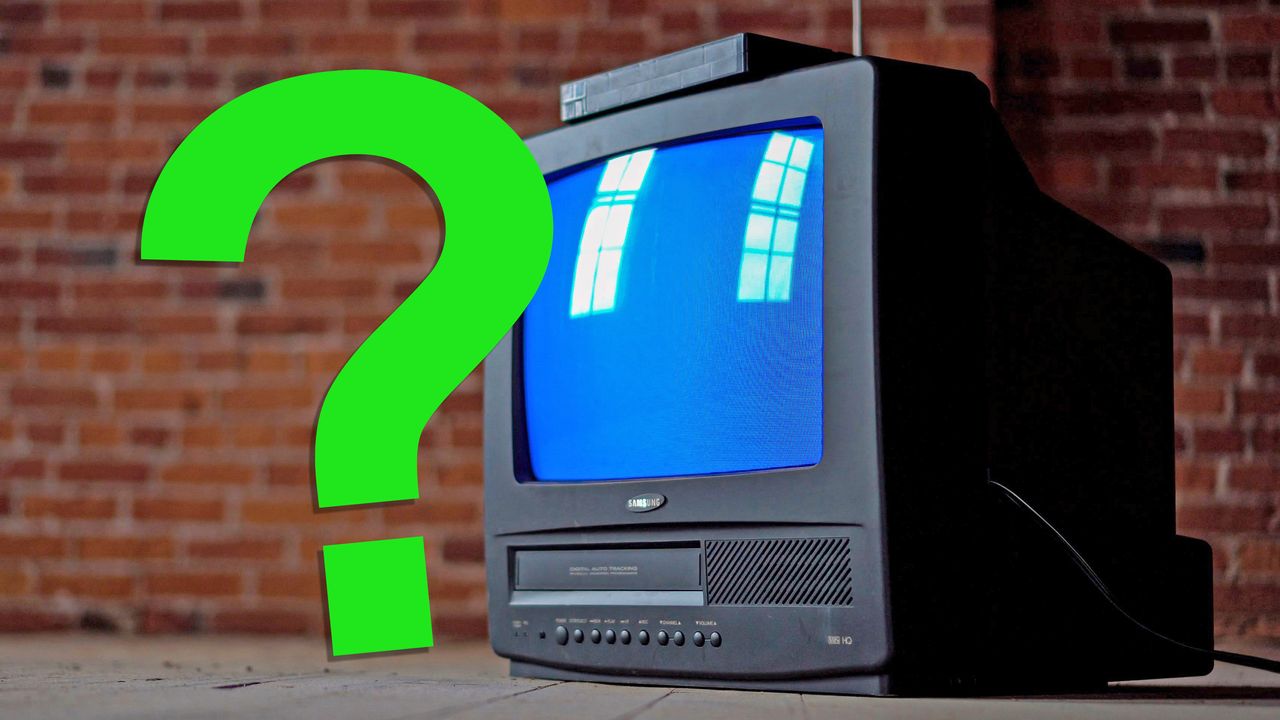
‘Technologies don’t usually die because consumers move on, they die because the inputs disappear’: I asked CRT TV experts if the technology could ever make a comeback — the biggest obstacle wasn’t what I expected
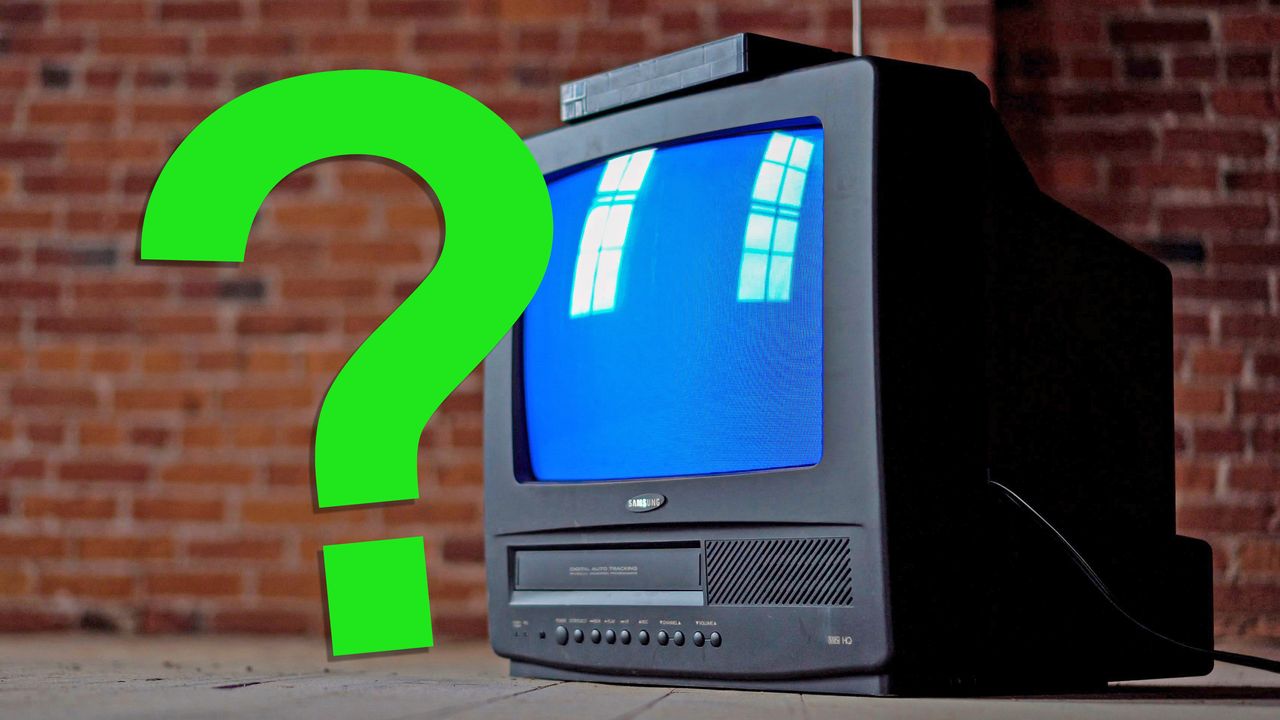
Long before today’s wafer-thin OLED TVs became commonplace on our living room walls, televisions were big, bulky boxes built around cathode ray tubes, known as CRTs. They were heavy, deep and, for decades, they were everywhere.But then back in the 2010s, manufacturers stopped making them, and now most people would consider CRT TVs to be an outdated technology — a stepping stone in the evolution of television before they were replaced with flatter, lighter and more capable displays took over.But for a growing number of collectors, enthusiasts and retro gaming fans, these CRT TVs are far more than relics of the past. Browse Reddit, specialist forums or YouTube, and you’ll find people hunting for rare models, restoring decades-old sets, and swapping advice on how to keep their ageing televisions alive.Latest Videos FromSome enthusiasts travel hundreds of miles to collect a particular screen. One of my favorite YouTube documentaries about CRT TVs tells the story of an enthusiast who obtained the biggest CRT TV ever made: the Sony PVM-4300, weighing a huge 200kg (440lb), shipped from Japan over to the US.
What Happened to the World’s Largest Tube TV? – YouTube
Watch On
At a time when almost every piece of consumer technology is designed to become thinner, lighter and packed with smart features, CRT TVs have developed an unusually devoted following.
You may like
I think that raises an interesting question. If people still want CRT TVs, and if enthusiasm for them remains strong long after manufacturers stopped making them, why aren’t companies building new ones?To find out, I spoke to display engineers, industry analysts and a former Sony CRT expert. What I discovered challenged my assumptions about why technologies disappear. The biggest obstacles aren’t a lack of demand or even the technology itself. They’re the factories, materials, regulations and supply chains that disappear around them.Sign up for breaking news, reviews, opinion, top tech deals, and more.But before we get there, it’s worth understanding what CRT TVs are and why people continue to love them decades after manufacturers stopped making them.What are CRT TVs/monitors — and why do people still love them?
It’s interesting to note that we will mainly make tech in black or off-white… (Image credit: Getty Images)CRT stands for cathode ray tube. It’s a display technology that creates images by firing streams of electrons at a phosphor-coated screen. The phosphors gain energy from the electrons and generate light, creating the image.Although the underlying tech dates back to the late 19th century, it’s safe to say that CRTs were the dominant display tech of the 20th century. For decades, if you owned a TV or a computer monitor, it almost certainly used cathode ray tube.
What to read next
The popularity of CRT TVs peaked around the turn of the millennium. Global CRT PC monitor sales reached around 90 million units in 2000, and CRT TV sales peaked at around 130 million units in 2005.Then, remarkably quickly, they disappeared. As LCD and other flat panel tech improved throughout the late 1990s and early 2000s, most manufacturers began shifting production away from CRTs.Which is why, within little more than a decade, the TV tech that had once dominated homes and offices for generations had vanished from retailers.But just because you can’t buy new CRT TVs anymore doesn’t mean enthusiasm for them has completely disappeared.
For many retro gaming fans, a CRT set is still an essential item to have in the house (Image credit: Getty Images)Part of the appeal for enthusiasts and collectors is nostalgia. These are the same screens many people grew up with. They’re the televisions that sat in your living room, your bedroom, maybe even your classroom.At a time when tech feels defined by algorithms, smart features, subscriptions and AI, it’s no surprise that some people are drawn to older devices that feel simpler and more tangible. It’s the same reason there’s been a continuous interest in the best record players and vinyl over the years — an interest that’s grown over the last decade.But nostalgia isn’t the whole story. Retro gaming enthusiasts argue that older games look better on CRT TVs because that’s how they were originally designed to be played. The way CRTs display images can soften pixel edges, blend colors together and create visual effects that developers wanted players to see, and actually designed their imagery around.
If you haven’t played Mortal Kombat on one of these, have you really even played it? (Image credit: Pexels / Kaplanart)Others appreciate characteristics that are difficult to fully recreate on modern displays, including their motion handling, deep blacks and analogue look. While today’s OLED and LCD screens are sharper, brighter and more efficient, some enthusiasts argue that older games, films and video formats can feel more natural on the technology they were originally created for.For some collectors, owning a CRT is as much about preserving an important piece of technological history as it is about using it.There’s no single reason that people love CRT TVs. But whatever the motivation, communities dedicated to CRT restoration, repair and preservation continue to thrive.So, if people still care enough to hunt down ageing CRTs, restore them and keep them running long after manufacturers stopped making them, why aren’t companies building new ones?As someone with a reasonable understanding of modern display tech but very little knowledge of how CRTs were actually made, I became fascinated by that question. And it turns out the answer has surprisingly little to do with whether people still want CRT TVs and far more to do with how technologies actually disappear.To build a CRT, we’d need to rebuild a whole industry
A CRT manufacturing line for Philips — these sets were being made in Brazil as late as 2008 (Image credit: Getty Images)You might assume the story of why CRT TVs disappeared is fairly straightforward. Something like: flat screen TVs arrived, they were better than what came before them and consumers moved on. But the experts I interviewed painted a much more complicated picture.I spoke to Hugues Orgitello, an engineer, electronics expert and founder and CEO of electronic design house Aes Techno, who told me that CRTs weren’t necessarily replaced because they suddenly became inferior.”It wasn’t just because flat screens looked better. Late CRTs were excellent,” Orgitello says. “In fact, flat screens weren’t as good initially. They improved after new regulations.”That’s a surprising thing to hear given how often technological progress is presented as a simple story of old being replaced by new.So if better picture quality wasn’t the whole story, what happened? To answer that, we need to look beyond the screen itself.When I first began researching why manufacturers don’t start producing CRTs again, I naively imagined they might just need to secure some funding, dust off some old blueprints, and turn the lights back on at an old factory. But the reality is way more daunting.
This is a Samsung worker checking checking the glass, ready to head to the production line to be assembled (Image credit: Getty Images)”CRT production required massive specialized glass fabrication, vacuum tube assembly, phosphor coating, shadow mask or aperture grille alignment, electron gun manufacturing, high-voltage electronics, and precision calibration,” explains Mark Vena, the CEO and Principal Analyst at SmartTech Research “Much of that supply chain has disappeared.”Modern display manufacturing is built around very different technologies. So that means the factories, suppliers and expertise that once supported CRT production have largely all gone.According to Orgitello, many of the specialist components required to build CRTs are no longer being made at all either. “Leaded CRT-grade glass isn’t made anymore. The specialty plants closed or converted. Same for shadow masks, deflection yokes, and electron guns.”And for this reason, even repairs to existing CRT TVs can be difficult. “New deflection yokes are no longer produced; technicians have to salvage them from donor units,” Orgitello tells me. Deflection yokes are the coils that steer the CRT’s electron beam across the screen to create an image.That means that if a company were to attempt to manufacture CRTs in 2026, they wouldn’t simply be launching a new product. “You’d be rebuilding an entire industrial base,” Orgitello says.Considering the environmental regulationsOne of the recurring themes that came up in my conversations with display experts was how technologies don’t just compete on performance. It’s just as much about cost, regulation, manufacturing and environmental impact. And that’s where CRT TVs run into serious trouble.Even if someone managed to rebuild the factories, suppliers and specialist expertise needed to make them, another obstacle would be modern environmental regulations.”Could it pass today’s regulations? In the EU, almost certainly not,” Orgitello explains. The problem comes down to the materials that made CRTs possible in the first place.Those challenges extend far beyond Europe. Mark Vena describes CRTs as “a nightmare by modern product standards.””They are heavy, fragile, power-hungry, high-voltage devices that often contain leaded glass and other materials that trigger regulatory, shipping, repair, and recycling challenges,” Vena says.Few people understand display technology better than Gary Mandle. Now a consultant and owner of Outtahand Displays, he previously spent decades at Sony, where he worked as both an engineer and product manager during the CRT era.”I would say there’s no chance of CRT returning,” he tells me “The reason is that the materials used in manufacturing are not very environmentally friendly. That’s what killed CRT.”The materials list does read like a catalogue of substances that modern manufacturers generally try to avoid. “A CRT carries lead in the glass to inhibit X-ray emissions from exiting the glass envelope. The CRT gun uses cadmium, so it would also be a problem to manufacture, and the face uses phosphors, which were also very nasty,” Mandle tells me.It’s difficult to imagine any regulators enthusiastically welcoming the return of products built around materials like these.But could engineers solve these problems?
Sony’s CRT TVs were legendary — especially its Trinitron tech (Image credit: Pexels / Isaure Devic)Of course, engineering has overcome plenty of seemingly impossible challenges before. So what would happen if a company genuinely wanted to build a CRT TV today and had the time, money and resources to solve some of the biggest problems in making them?”Could engineers solve this? Partly,” Orgitello tells me. He says that some elements would be relatively straightforward.”The electronics around the tube are easy to modernize,” he says. But other parts would be much harder. “The know-how for glass and guns could be reconstructed at high cost.”But there are limitations here that have less to do with engineering and more to do with physics. “CRT depth grows with screen size (no flat 50-inch CRT is physically possible),” Orgitello says. And this is one of the reasons CRTs became so bulky. The larger the display, the deeper and heavier the tube needed to be.Which means there were also safety concerns. “Very large screens require a thick glass face for safety since there is a vacuum inside the CRT. If the CRT were to implode, then the CRT gun could exit out the front of the face and hurt the viewer,” Mandle explains.Even if manufacturers were willing to tackle these challenges, Mandle says that the costs would be substantial. “The most difficult technical problem is building the CRT gun,” he tells me. “The most expensive part would be building the assembly line.””The TV industry is now built around flat panel scale economics,” Vena explains on this same point. Today’s display supply chains support televisions, but they also support smartphones, laptops, tablets, cars, digital signage and all sorts of other products with a screen. And those enormous production volumes help drive costs down. Whereas CRTs would be operating in the opposite direction.”CRTs would essentially be a boutique product with high tooling costs, low production volume, difficult shipping economics, and limited retail appeal,” Vena says.So while a surprisingly large audience of enthusiasts and collectors may be passionate about CRT TVs, passion doesn’t necessarily translate into a viable manufacturing business. “That math is ugly, even if the enthusiast’s passion is real,” Vena says.The CRT experience isn’t dead
This is the window of Harvey Norman, showing off the latest flat-screen CRT sets (Image credit: Getty Images)Despite all of this, CRT enthusiasts may not be entirely out of luck. Vena believes the future isn’t likely to involve reopening CRT factories. Instead, it’ll be about recreating the experience using modern technology.”The more realistic market opportunity is better CRT-like experiences through modern displays, FPGA gaming hardware, low-latency scalers, scanline filters, shader engines, and display modes optimized for retro content,” he tells me.We’re already seeing examples of this approach emerge, with specialist hardware, apps and display modes designed specifically to recreate the look and feel of CRT displays — even down to simulating the physics in some cases.The collector market clearly demonstrates that demand for authenticity still exists. But, at least for now, the industry appears more interested in simulating CRTs than manufacturing them.What CRT TVs teach us about technological progressWhen I started researching this article, I assumed the story of CRT TVs was a fairly simple one. A new technology arrived, it was better than what came before it, people upgraded and the old technology disappeared. But after speaking to engineers and display experts, I realized the reality is far more interesting.As Mandle explains, CRTs weren’t immediately outclassed by the displays that followed them. “At the time, other technologies, such as LCD, were in their infancy, so CRT was always preferred since it didn’t have color shifts when you viewed it at an angle, and of course, it had much better black performance,” he tells me.Of course, modern displays have improved enormously since then. “LCD has improved by leaps and bounds since then. OLED is another technology that outperforms CRT. It has blacks even better than CRT, and no geometry issues since it’s a matrix, not a raster. Then you have microLED on the horizon, which has even more improvements,” Mandle says.So yes, in many ways, today’s display technology is better. But that’s only part of the story. What fascinated me most about CRT TVs is that they reveal something we often overlook when we talk about technological progress. Because we tend to focus on the products themselves and assume technologies live or die based on whether consumers want them.But every technology actually sits on top of a much larger ecosystem of factories, materials, regulations, expertise, suppliers and investment. And sometimes that ecosystem starts to fall apart before interest in the technology does.That’s exactly what happened with CRTs. “Technologies don’t usually die because consumers move on, they die because the inputs disappear,” Orgitello tells me. “Specialty supply chains consolidate and shut down, regulators tilt toward the cleaner substitute, and capital and engineering talent flow elsewhere.”This felt like the real answer to my original question. Why don’t we make CRT TVs anymore? Because enthusiasm can outlive an industry. The passion for CRT TVs remains, but the factories, materials, expertise and supply chains that sustained it do not.Thinking of buying a new TV?Try our TV size and model finder! You tell it how far you sit from your TV, we’ll tell you what size to buy based on viewing angle advice from image quality experts, and we’ll recommend our three top TVs at that size for different prices.
Follow TechRadar on Google News and add us as a preferred source to get our expert news, reviews, and opinion in your feeds.
تم النشر: 2026-07-02 02:00:00
مصدر: www.techradar.com