
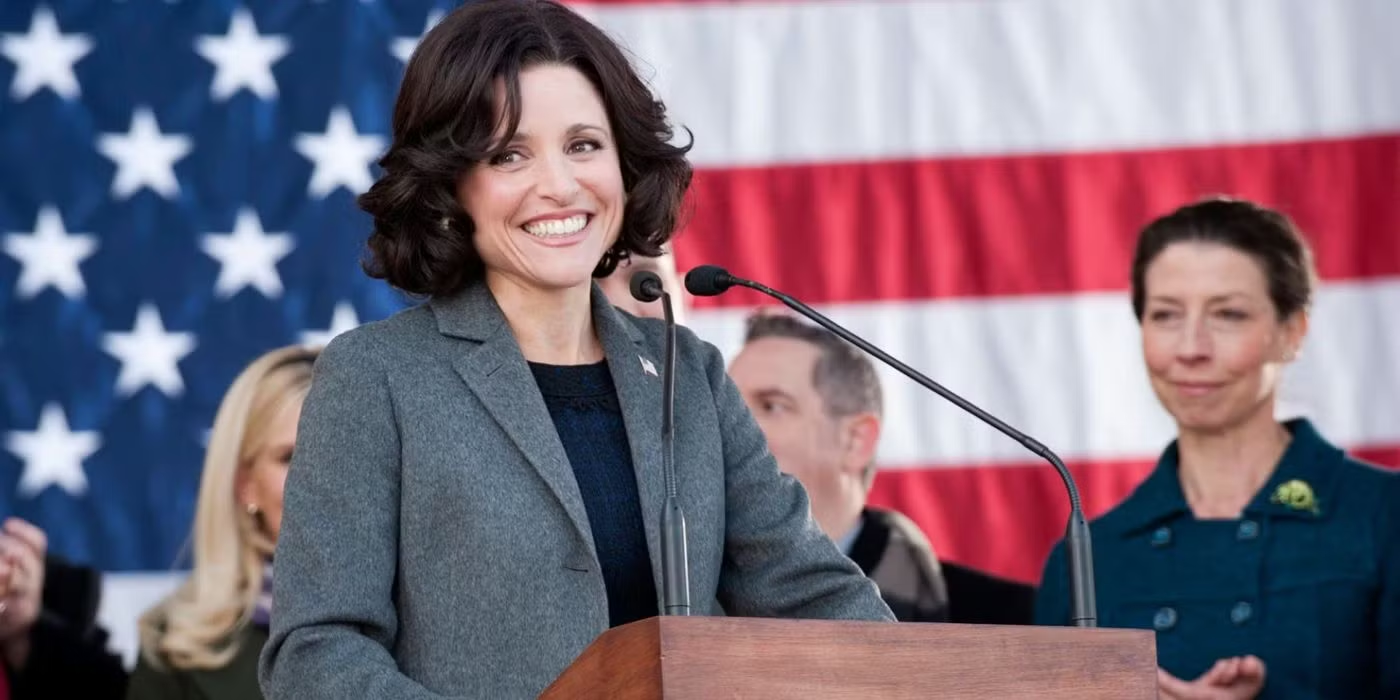
10 American Sitcoms Where Every Season Is Perfect
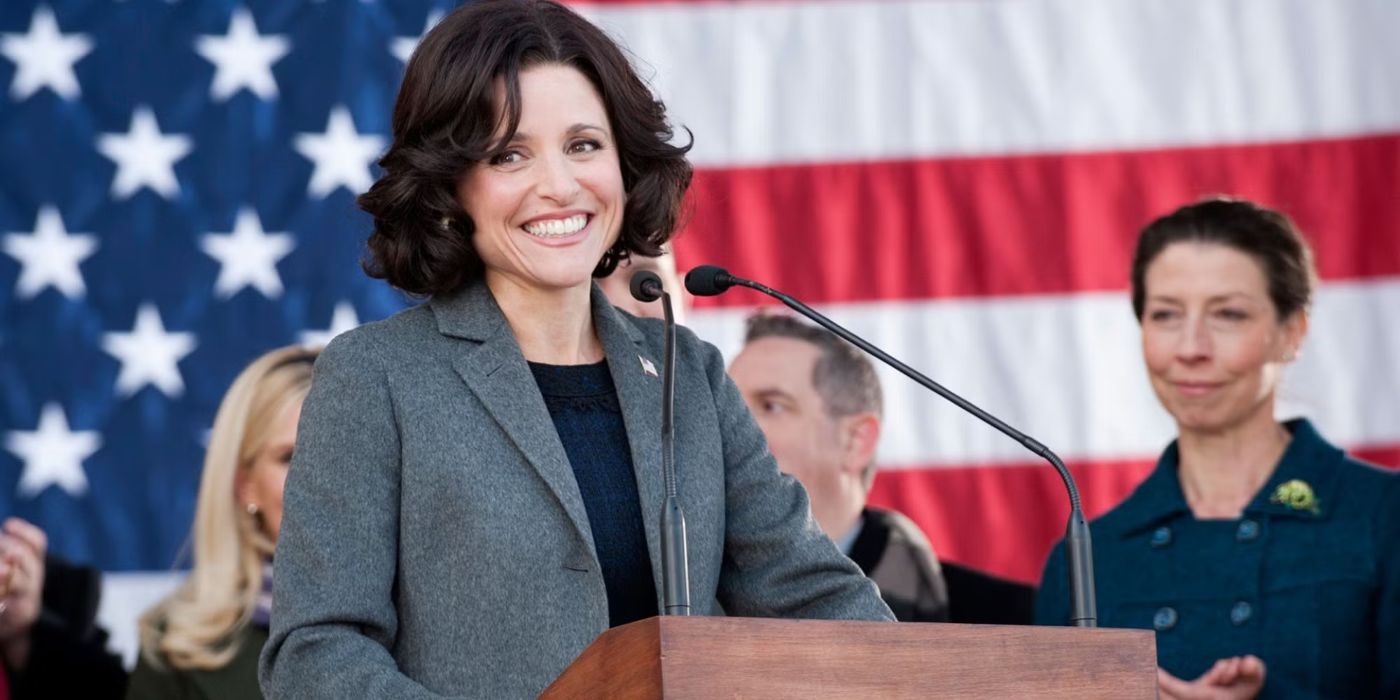
When a sitcom can sustain a high level of quality over multiple seasons, it’s nothing short of amazing. Producing a half-hour comedy show is hard work, challenging even the brightest team of writers and performers to create a high volume of self-contained stories that are also genuinely funny.
Many sitcoms find their way around the second season, while others start strong and fizzle out, but a select few shows come out strong and leave on a high note. The following comedies can all claim such an accomplishment, boasting the television equivalent of pitching a perfect game. Listed in no particular order, here are 10 sitcoms with zero weak seasons.
1
’30 Rock’ (2006–2013)
Tina Fey as Liz Lemon talking to someone during the Leap Year Episode in 30 Rock.Image via NBC
The chaotic struggle to produce a live sketch comedy series is the focus of the NBC sitcom 30 Rock. Tina Fey stars as Liz Lemon, the head writer of a fictional sketch show, whose life is disrupted (even further) by the arrival of new NBC executive Jack Donaghy (Alec Baldwin). His first order of business is to add controversial comedian Tracy Jordan (Tracey Morgan) to the show, a move Liz hates until she sees the results. 30 Rock episodes moved at a relentless, breakneck speed, packing as many clever jokes as possible into every moment. 30 Rock was frequently on the bubble of cancellation, but those who watched did so with a fanaticism that allowed them to remember every inside joke or callback to an obscure reference. The humor of 30 Rock was unafraid to be weird or ultra-specific to a niche group, and that spirit remained until the last episode of the show.
2
‘Frasier’ (1993–2004)
Kelsey Grammer’s Frasier in the booth on Frasier.Image via NBC
Although the sitcom Frasier was a spin-off of the highly acclaimed Cheers, the high quality of the writing and acting made viewers immediately forget about Boston. The series followed Dr. Frasier Crane (Kelsey Grammer) as he moved from Boston back to his hometown of Seattle to host a radio call-in show. When his estranged father, Martin (John Mahoney), injures himself, the two men get an accelerated reunion after Frasier reluctantly takes him on as a roommate. It’s somewhat inconceivable that Frasier could regularly produce hilarious episodes that resembled mini-farcical stage plays that were intricate comedies of errors. A distinctly different style and tone from Cheers allowed Frasier to avoid comparison and a chance to explore Dr. Crane from new perspectives. Grammer knew his character inside out by the time his spin-off started, but characters like his tightly-wound brother Niles (David Hyde Pierce) or his blue-collar father Martin allowed Frasier new opportunities for growth.
3
‘The Golden Girls’ (1985–1992)
Bea Arthur as Dorothy, Rue McClanahan as Blance, Betty White as Rose, and Estelle Getty as Sophia watch TV on The Golden Girls.Image via NBC
A witty and smart sitcom that never had a weak season is The Golden Girls. The NBC sitcom followed the lives of four older women, Dorothy (Bea Arthur), Rose (Betty White), Blanche (Rue McClanahan), and Dorothy’s mother, Sophia (Estelle Getty), who lived together in a Miami home. Their initial arrangement is done out of necessity, but the roommates quickly become a found family to draw support from as they enjoy their retirement years. Where many sitcoms begin to decline after numerous years of being on the air, later seasons of The Golden Girls increased in quality. The chemistry between the cast was so strong, and they each played their part with such a high level of expertise, that any topic could have been introduced to the quartet, and they would have spun it into a must-watch episode. The spin-off series, The Golden Palace, didn’t hold the same magic for viewers, but it had little impact on diminishing the memory of the seven-season hit.
4
‘The Fresh Prince of Bel-Air’ (1990–1996)
Will Smith and James Avery in ‘The Fresh Prince of Bel-Air’Image via NBC
The sitcom that introduced many to future superstar Will Smith still holds up decades later. The Fresh Prince of Bel-Air followed Will (Smith), a charismatic teen from Philadelphia who is sent to live with his aunt and uncle in the affluent neighborhood of Bel-Air for the chance at a better life. His upbringing immediately introduces a culture clash to his extended family’s household, but they soon learn from each other and grow close bonds. Even in the first episodes where the chemistry of the cast was forming, Smith’s dynamic presence carried the show along as the sitcom found its footing. The Fresh Prince of Bel-Air boasts one of the strongest casts of a ’90s sitcom, with everyone on stage from Uncle Phil (James Avery) to cousin Hilary (Karyn Parsons) contributing in a meaningful way. There have been sitcoms built around less than the odd couple chemistry between Will and his cousin Carlton (Alfonso Ribeiro), so it’s no surprise the show ended on a high note after six seasons.
Collider Exclusive · Taylor Sheridan Universe Quiz
Which Taylor SheridanShow Do You Belong In?
Yellowstone · Landman · Tulsa King · Mayor of Kingstown
Four worlds. All of them brutal, complicated, and built on power, loyalty, and the price of survival. Taylor Sheridan doesn’t write heroes — he writes people who do what they have to do and live with the cost. Ten questions will reveal which one of his worlds you were made for.
Yellowstone
Landman
Tulsa King
Mayor of Kingstown
FIND YOUR WORLD →
01
Where does your power come from?
In Sheridan’s world, everyone has leverage. The question is what kind.
ALand, legacy, and a name that’s been feared and respected for generations.
BKnowing the deal better than anyone else in the room — and being willing to walk away first.
CReputation. I’ve earned it the hard way, and everyone in the room knows it.
DBeing the only person both sides will talk to. That makes me indispensable — and dangerous.
NEXT QUESTION →
02
Who do you put first, no matter what?
Loyalty in Sheridan’s universe is always absolute — and always costly.
AFamily — blood or chosen. The ranch, the name, the people who carry it with me.
BThe company — or whoever’s signing the cheques. Loyalty follows the contract.
CMy crew. The men who stood with me when it counted — I don’t abandon them for anything.
DMy community — even when my community is a powder keg and I’m the only thing stopping it from blowing.
NEXT QUESTION →
03
Someone crosses a line. How do you respond?
Every Sheridan protagonist has a line. What matters is what happens after it’s crossed.
AQuietly, decisively, and in a way that sends a message to everyone watching.
BI outmanoeuvre them legally, financially, and politically before they even know I’ve moved.
CDirectly. Old school. You cross me, you hear about it to your face — and then you deal with the consequences.
DI absorb it, calculate the fallout, and find the move that keeps the whole system from collapsing.
NEXT QUESTION →
04
Where do you feel most in your element?
Sheridan’s worlds are as much about place as they are about people.
AWide open land — mountains, sky, silence. Somewhere you can see trouble coming from a mile away.
BThe oil fields of West Texas — brutal, lucrative, and indifferent to whoever happens to be standing on top of them.
CA mid-size city where the rules haven’t quite caught up yet — fertile ground for someone with vision and nerve.
DA rust-belt town built around a prison — where everyone’s life is shaped by what’s inside those walls.
NEXT QUESTION →
05
How do you feel about operating in the grey?
Nobody in a Sheridan show has clean hands. The question is how they carry the dirt.
AI do what has to be done to protect what’s mine. I’ll answer for it eventually — but not today.
BGrey is just business. The line moves depending on what’s at stake, and I move with it.
CI have a code — it’s not the law’s code, but it’s mine, and I don’t break it.
DI’ve made peace with it. Keeping the peace requires compromises most people don’t have the stomach for.
NEXT QUESTION →
06
What are you actually fighting to hold onto?
Every Sheridan character is fighting a war. The real question is what they’re defending.
AA way of life that the modern world is doing everything it can to erase.
BMy position — and the leverage that comes with being the person everyone needs to close a deal.
CRelevance. I’ve been away, I’ve been written off — and I’m proving that was a mistake.
DWhatever fragile order I’ve managed to build — because without it, everything burns.
NEXT QUESTION →
07
How do you lead?
Authority in Sheridan’s world is never given — it’s established, maintained, and constantly tested.
ABy example and force of will. People follow me because they believe in what I’m protecting — and because they know what happens if they don’t.
BThrough negotiation and leverage. I don’t need people to like me — I need them to need me.
CBy being the smartest, most experienced person in the room and making sure everyone quietly knows it.
DBy being the calm centre of a situation that would spiral without me — and accepting that nobody thanks you for it.
NEXT QUESTION →
08
Someone new arrives and tries to change how things work. Your reaction?
Every Sheridan show has an outsider disrupting an established order. Sometimes that outsider is you.
AThey’ll learn. Or they won’t. Either way, the land was here before them and it’ll be here after.
BI figure out what they want, what they’re worth, and whether they’re an asset or a problem — fast.
CI was the outsider once. I give them a chance — one — to show they understand respect.
DNew players destabilise everything I’ve built. I assess the threat and manage it before it manages me.
NEXT QUESTION →
09
What has your position cost you?
Nobody gets to where these characters are without paying for it. The bill is always personal.
AMy family’s peace — maybe their innocence. The ranch demands everything, and I’ve let it take too much.
BRelationships, time, any version of a normal life. The job eats everything that isn’t nailed down.
CYears. Decades in some cases. Time I can’t get back — but I’m not done yet.
DMy conscience, mostly. And the ability to ever fully trust anyone on either side of the wall.
NEXT QUESTION →
10
When it’s over, what do you want people to say?
Sheridan’s characters all know the ending is coming. The question is what they leave behind.
AThat I held the line. That the land is still ours and everything I did was worth it.
BThat I was the best at what I did and that no deal ever got closed without me at the table.
CThat I built something real, somewhere nobody expected it, and I did it on my own terms.
DThat I kept the peace when nobody else could — and that the town is still standing because of it.
REVEAL MY SHOW →
Sheridan Has Spoken
You Belong In…
The show that claimed the most of your answers is the world you were built for. If two tied, both are shown — you’re complicated enough to straddle two Sheridan universes.
Yellowstone
Landman
Tulsa King
Mayor of Kingstown
You are a Dutton — or you might as well be. You understand that some things are worth protecting at any cost, and that the modern world’s indifference to history, to land, to legacy, is not something you’re willing to accept quietly. You lead from the front, you carry your family’s weight without complaint, and when someone threatens what’s yours, you don’t escalate — you finish it. You’re not cruel. But you are absolute. In Yellowstone’s world, that combination of ferocity and loyalty doesn’t make you a villain. It makes you the only thing standing between everything that matters and everyone who wants to take it.
You thrive in the chaos of high-stakes negotiation, where the money is enormous, the margins are thin, and the wrong word in the wrong room can cost everyone everything. You’re a fixer — the person called when a situation is already on fire and needs someone with the nerve to walk into it. West Texas oil country rewards exactly what you are: sharp, adaptable, unsentimental, and absolutely clear-eyed about what people want and what they’ll do to get it. You’re not naive enough to think this world is fair. You’re smart enough to be the one deciding who it’s fair to.
You are a Dwight Manfredi — someone who has served their time, paid their dues, and arrived somewhere unexpected with nothing but their reputation and their wits. You adapt without losing yourself. You build loyalty through respect rather than fear, though you’re not above reminding people that the two aren’t mutually exclusive. Tulsa King is for people who are still standing when everyone assumed they’d be finished — who find, in an unfamiliar place, that they’re more capable than the world gave them credit for. You don’t need a throne. You build one, wherever you happen to land.
You carry the weight of a system that is broken by design, and you do it anyway — because someone has to, and because you’re the only one positioned to do it without the whole thing collapsing. Mike McLusky’s world is for people who are comfortable operating where there are no good options, only less catastrophic ones. You speak every language: law enforcement, criminal, political, human. That fluency makes you invaluable and it makes you a target. You’ve made your peace with both. Mayor of Kingstown belongs to people who understand that keeping the peace is not the same as being at peace — and who do the job regardless.
↻ RETAKE THE QUIZ
5
‘The Larry Sanders Show’ (1992–1998)
Garry Shandling as Larry Sanders in his office during ‘The Larry Sanders Show.’Image via HBO
Years before shows like The Studio were satirizing the business of Hollywood, HBO’s The Larry Sanders Show was pulling back the curtain on late-night television. Garry Shandling starred as late-night talk show host Larry Sanders, a man unable to enjoy his accomplishments from behind a mountain of insecurities. Always available to tell Larry what he wanted to hear were his producer Artie (Rip Torn) and his on-air sidekick Hank (Jeffrey Tambor). The Larry Sanders Show aimed its comedy at the specific peculiarities of the entertainment business, with a long line of guest stars playing themselves, but the heart of the show was the complicated relationships between Larry and his co-workers/friends. Predating mainstream hits like The Sopranos or Sex and the City, The Larry Sanders Show was an early example of HBO cultivating its reputation as a destination for quality storytelling.
6
‘Everybody Loves Raymond’ (1996–2005)
Ray Romano as Ray Barone in the ‘Everybody Loves Raymond’ episode “Favors”Image via CBS
Ray Romano transitioned from a respected stand-up comedian to sitcom star when Everybody Loves Raymond debuted on CBS. The series followed the lives of Ray (Romano) and his wife Debra (Patricia Heaton) as they raised their children in a quiet Long Island suburb. At least, it would be quiet if Ray’s parents, Marie (Doris Roberts) and Frank (Peter Boyle), weren’t living across the street with his older brother Robert (Brad Garrett). Everybody Loves Raymond was a traditional family sitcom executed perfectly, mining humor from the relatable occurrences of life with a voice that felt familiar and honest. The show was a reliable ratings draw for CBS, but series creator Phil Rosenthal decided to conclude Everybody Loves Raymond after nine seasons, wishing to end on a high note. The goal was accomplished, as Everybody Loves Raymond remains a timeless piece of comedy.
7
‘The Mary Tyler Moore Show’ (1970–1977)
Mary Tyler Moore and Betty White laugh together on The Mary Tyler Moore Show.Image via CBS
The Mary Tyler Moore Show is one of the greatest sitcoms of all time, delivering a near-flawless run of comedy. Mary Tyler Moore starred as Mary Reynolds, a woman who moves to Minneapolis looking for a fresh start after a broken engagement. There, she finds a job as an associate producer for a local news station and friends who will become her new family. The Mary Tyler Moore Show is frequently cited for its progressive approach to focusing a series on a single woman who was focused on an independent, career-oriented life. While the sitcom was groundbreaking for television, those accomplishments wouldn’t be remembered as well if the show had not been incredibly funny. One-liners were thrown out with ease, but it was the relationships between the characters that drove the humor and kept The Mary Tyler Moore Show a fan favorite until its iconic finale at the end of Season 7.
8
‘Sanford and Son’ (1972–1977)
The cast of Sanford and Son Image via NBC
Sanford and Son is one of the most influential sitcoms that remained a staple of the NBC lineup until reaching its unexpected finale. The sitcom followed the day-to-day lives of Fred Sanford (Redd Foxx) and his son Lamont (Demond Wilson) as they ran a junkyard in Los Angeles. The father and son duo were prone to extended bickering, but they always came together to work an angle for a big payday or look out for each other.
Although Sanford and Son was based on the long-running British sitcom Steptoe and Son, Foxx and Wilson were able to make the show their own by modeling the series to their specific personality traits. Sanford and Son, along with All in the Family, helped usher in a new form of edgy comedy that reflected a more realistic depiction of the world viewers knew. Sanford and Son ended after Foxx accepted an offer to host a variety show on ABC, and when Wilson didn’t want to continue without Foxx, one of America’s best sitcoms ended without a proper finale.
9
‘Cheers’ (1982–1993)
Carla, Coach, and Sam behind the bar laughing in the pilot episode of Cheers.Image via NBC
Set in the bar where everyone knew your name, Cheers set a high standard for comedic brilliance. The series followed the staff and regulars of the Boston-located bar Cheers, run by ex-professional baseball player Sam Malone (Ted Danson). Episodes would explore the characters’ love lives, professional worries, and occasionally, both at the same time. Cheers’ ability to maintain a funny and engaging sitcom for 11 seasons is a testament to the talent of the cast and crew. It may not have been planned by the show’s creators, but new cast members such as Woody Harrelson as new bartender Woody and Kelsey Grammer as Frasier Crane kept Cheers feeling energized without disrupting the show’s momentum. After a slow build to drawing viewers, Cheers became a top 10 series for a majority of its run and would take home 28 Emmy wins from 117 nominations.
10
‘Veep’ (2012–2019)
A close-up shot of Julia Louis-Dreyfus looking worried in Veep.Image via Max
Every day in political office is a new opportunity for a crisis in Veep. The series followed the day-to-day mishaps of Selina Meyer (Julia Louis-Dreyfus), the Vice President of the United States, and the members of her staff. Stuck in an office she feels is beneath her, Selina will navigate the petty political landscape to become the Commander in Chief while trying not to humiliate herself in the process. There might never be another show that can have its characters string together insults in such a comedically poetic fashion as Veep did. The show never dipped into a complacent lull during its run by constantly keeping the story fluid; characters came and went in a ruthless cycle of demand for excellence, and Selina’s changing job title kept things fresh. The seventh and final season took darker turns when wrapping up the series, but it was also the perfect way to send off an unapologetically selfish Selina.
Veep
Release Date
2012 – 2019-00-00
Network
HBO Max
تم النشر: 2026-07-13 04:11:00
مصدر: collider.com