10 High Fantasy Books That Are Perfectly Written
Writing a book is no easy task; writing a good book even less so. After all, writing is an art, and it can be a difficult thing to master. Heck, some people spend years and years studying it before they ever publish anything, and even then, there’s no guarantee that it will be good. With self-publishing being easier than ever thanks to Amazon, it certainly won’t take long to find a slew of awful books out there.
This is especially the case in the high fantasy genre, a subgenre featuring stories that take place in worlds completely separate from our own. High fantasy is experiencing a significant boom right now, which has been going on since at least the 1980s. A lot of authors have tried their hand at the genre, only to fail miserably. Every so often, though, a writer comes along that totally nails it. Their books might have perfect pacing, perfect characters, perfect prose, perfect emotion; perfect everything. These are the most perfectly written books in high fantasy.
‘The Lies of Locke Lamora’ (2006)
Image via Bantam Spectra
The Lies of Locke Lamora takes place in an unnamed fictional world, specifically in the city of Camorr, which resembles Renaissance Venice. In this weaving labyrinth of streets and canals, there exists a group of con artists calling themselves the Gentleman Bastards. These thieves have only one purpose: to rob the rich blind before they even realize they’ve been had. It’s kind of like Robin Hood, only without all the giving to the poor. Chapters alternate between the present storyline’s acts of thievery and the history of the city and of the organization itself, which is actually a great way of worldbuilding and establishing lore without overwhelming the reader with info dumps. It keeps the story rolling forward, but also provides some much-needed context at key points. With a crew reminiscent of Ocean’s Eleven and some fantastical heists, this book has garnered a lot of love amongst fantasy readers for its excellent writing.
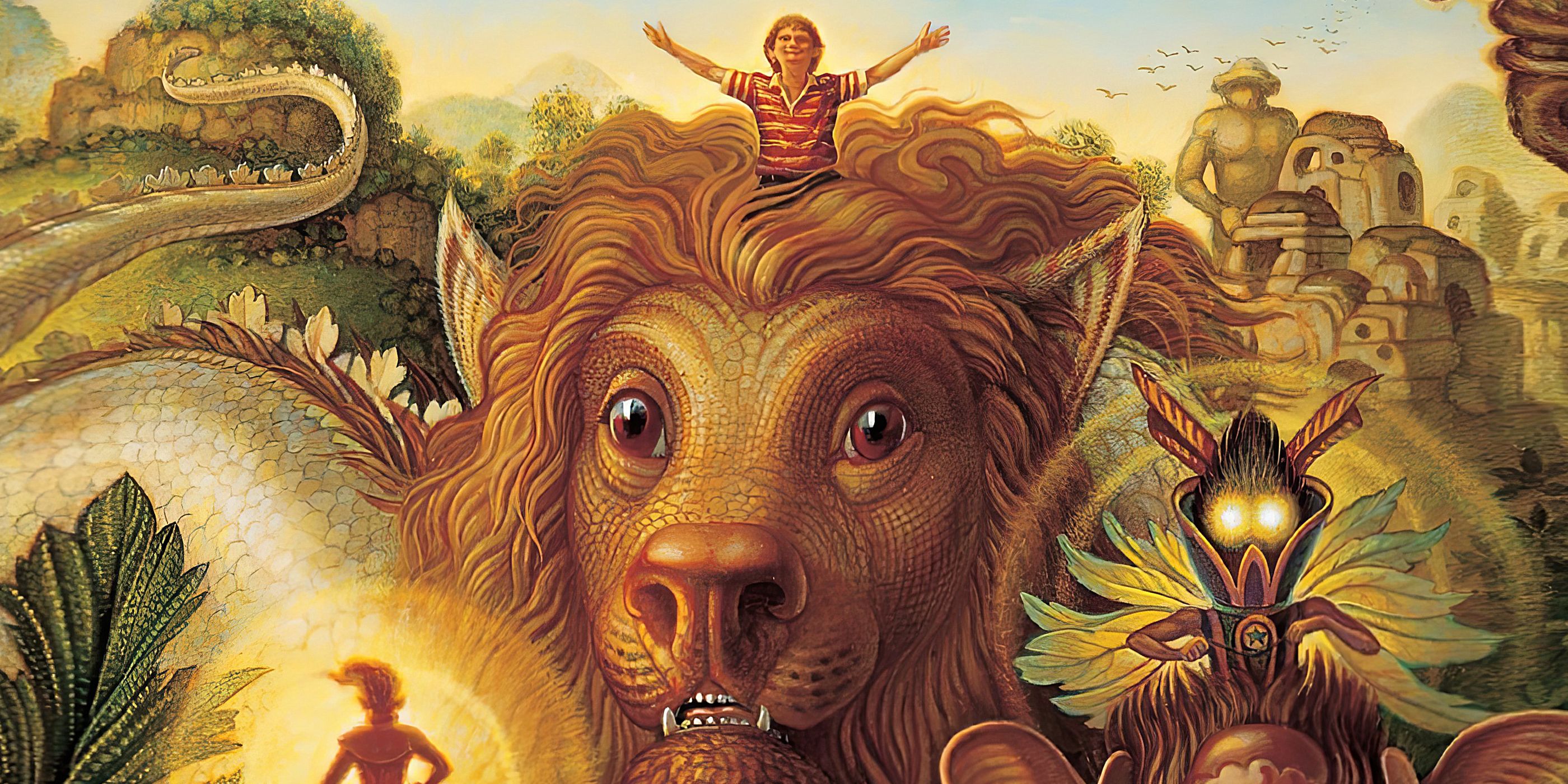
‘The NeverEnding Story’ (1979)
Image via Thienemann Verlag
The NeverEnding Story was written by German author Michael Ende and was adapted for the big screen just five years later. It’s sort of a frame story, acting as a bit of book-ception. The premise is that a lonely boy in the real world finds an old book, and begins reading it, which happens to be pretty much The NeverEnding Story itself. The book is set in the realm of Fantastica, which is under threat from a dangerous, amalgamous force called “the Nothing.” Fearing destruction, a princess sends a boy warrior named Atreyu to stop it. It’s a classic feel-good story, though it is not without its more depressing parts. The movie became a staple of ’80s fantasy cinema, even spawning a few sequels. As with pretty much any book-to-film adaptation, though, the original text is going to reign supreme. It feels like a nostalgic childhood fairytale, including dragons, adventure, and magic, which is pretty much everything one could want from a high fantasy story. The writing approach turned out to be the correct choice, because it certainly helped the book stand out amongst others.
‘The Blade Itself’ (2006)
Image via Gollancz
The Blade Itself is the first book in The First Law trilogy by Joe Abercrombie. It’s a grimdark fantasy series, so don’t expect it to be all sunshine and daisies. This book is unapologetically bleak, with very few, if any, morally sound characters. The protagonists in question are pretty awful people, with one being a murderous barbarian, one being a fraudulent wizard, another being a hedonistic soldier, and the last being a literal torturer. Their fates become intertwined when conspiracies are unravelled, and villains show up to exact revenge. This book is basically what would happen if a tabletop RPG party was made up of the worst people you ever knew. Which… if you play games like that with your friends, maybe it’s the case anyway. Joking aside, the writing in this book is brilliant, largely because it feels so realistic. The characters feel like they could be genuine people, because, let’s face it, there are a lot of corrupt and evil people out there. The way the characters are fleshed out is exceptional, and makes for an amazing reading experience.
‘A Wizard of Earthsea’ (1968)
Image via Parnassus Press
A Wizard of Earthsea is the first in the popular Earthsea saga, which became known for a lot of things, namely its impeccable worldbuilding. The story is set on an ocean planet, with the only land being an archipelago of islands. This planet, called Earthsea, is inhabited by both humans and dragons. Most humans have some sort of magical abilities and have developed cultures and realms. It’s not so simple and one-dimensional as having one culture per island either — many of these cultures have expanded and colonized multiple islands, making the world actually feel like a real, complete place. Ursula K. Le Guin won numerous awards for this book, and for its sequels. Not only does it have a fascinating world that is incredibly easy to get lost in, but it’s also a fantastic, well-thought-out story. Of course, the thing that makes it all better is the writing itself. The prose immaculately flows and really reminds the reader that writing is an art form. There’s just nothing else like these books out there, and they’re still popular today.
‘Assassin’s Apprentice’ (1995)
Image via Del Rey
Assassin’s Apprentice is the first book in Robin Hobb’s Farseer Trilogy, which eventually expanded into a rather large shared universe consisting of multiple trilogies and one quadrilogy. Believe it or not, the book is about an assassin’s apprentice. More specifically, it is about the king’s illegitimate son being taken at the age of six to train with the assassins in order to protect the throne from his power-hungry uncle. This book came as a bit of a surprise to fantasy fans, because nobody had ever read anything quite like it before. Like any work, it’s clear where its inspirations come from, but it also did a lot to reinvent classic fantasy tropes so that it felt original. Assassin’s Apprentice is proof that Hobb is a master of the pen and is able to craft stories that capture the imagination and emotions, creating an unparalleled fantasy experience.
‘Gardens of the Moon’ (1999)
Image via Tor Fantasy
Gardens of the Moon is the first book in Steven Erikson’s Malazan universe, as well as the first in the main sequence known as Malazan: Book of the Fallen. The gist of the story is that there is a terrifying and oppressive regime, called the Malazan Empire, which has conquered much of the known world. At the onset of the series, they intend to expand even further by conquering the continent of Genebackis. That’s the very short version of things, anyway. The novels get much more complex and nuanced — they’re epic fantasy, after all. Malazan has become something of a favourite in the fantasy fandom, and it’s still seeing releases to this day, so it never goes out of style. While all of the books are pretty awesome and well-written in their own right, the way this one is written is just a little bit more special.
‘A Storm of Swords’ (2000)
Image via Bantam Spectra
A Storm of Swords is the third book in George R. R. Martin’s A Song of Ice and Fire series, which famously got adapted into the hit HBO original series, Game of Thrones. This book was so large that it actually needed two seasons of the show to adapt the whole thing. Like the rest of the series, the story is about nine royal families feuding over a throne, completely unaware that a primordial evil is silently gathering strength far to the North, preparing to bring an end to humanity. So many important and legendary events happen in this book, including the Battle of Castle Black and the notorious Red Wedding. Even though it’s a super long book, it really doesn’t feel that long because it’s consistently exciting all the way through. It’s bleak, epic, and really emotional, inspiring anger, anxiety, sadness, triumph, and pretty much every other emotion that a reader should feel from a good story, all thanks to Martin’s impeccable writing style.
Collider Exclusive · Game of Thrones Personality Quiz
Which Game of Thrones House Do You Belong To?
Stark · Lannister · Targaryen · Baratheon · Tyrell
Five great houses. Five completely different answers to the same question: how do you hold power in a world that will take it from you the moment you stop paying attention? Eight questions will determine where your loyalties — and your nature — truly lie.
Stark
Lannister
Targaryen
Baratheon
Tyrell
FIND YOUR HOUSE →
01
Someone powerful is acting dishonourably and everyone knows it. What do you do?
In Westeros, the answer to this question has ended more than one great house.
ACall it out, openly and on the record. If honour means anything, it has to mean something when it’s costly.
BUse it. Information about someone else’s dishonour is leverage — and leverage is power.
CAct decisively to correct it — with or without the approval of those around me.
DChallenge them directly. Strength settles disputes more honestly than courtroom manoeuvring.
ENavigate carefully — build alliances, apply quiet pressure, and create a situation where the right outcome becomes inevitable.
NEXT QUESTION →
02
What is the source of your power?
Every house endures because of something. What is it for yours?
AThe loyalty of people who trust me — earned over generations, not bought with gold.
BWealth, intelligence, and the willingness to use both without sentiment.
CA legacy so fearsome and a vision so total that opposition becomes unthinkable.
DPhysical strength, military force, and the respect that comes from being the kind of person nobody wants to fight.
ECharm, connection, and the ability to make powerful people feel that my success is also theirs.
NEXT QUESTION →
03
Who do you truly fight for?
Strip away the banners and the words. The honest answer tells you everything.
AMy family and my people — those who depend on me and have kept faith with me through everything.
BMy family — the ones who share my blood, even when they exhaust me, even when they disappoint me.
CMy cause — a vision larger than any single person, including me.
DMyself, and those few who’ve proven themselves worth fighting beside.
EMy house — its name, its future, the position I intend to leave it in when I’m gone.
NEXT QUESTION →
04
How do you deal with your enemies?
A house’s method reveals its character as clearly as its words ever could.
AHonestly — I face them directly, and I give quarter when it’s warranted.
BThoroughly — I don’t leave loose ends, and I don’t make the same enemy twice.
CDecisively — fire answers questions that diplomacy only delays.
DHead-on — I’d rather meet a threat on the battlefield than behind closed doors.
EElegantly — I prefer to make former enemies into allies, or at least into people who owe me something.
NEXT QUESTION →
05
What kind of ruler do you believe in?
Westeros is full of answers to this question. Most of them end badly.
AA just one — someone who serves the realm rather than using it, who leads by example rather than fear.
BA capable one — someone smart enough to navigate the game, ruthless enough to win it, and realistic about what winning costs.
CA transformative one — someone who doesn’t just rule what exists but reshapes what’s possible.
DA strong one — someone whose authority is beyond question because the alternative is obviously worse.
EA wise one — someone who understands that the realm is fed by more than armies, and that a full stomach keeps more peace than a sharp sword.
NEXT QUESTION →
06
You suffer a devastating loss. How does your house respond?
How a house handles defeat tells you more about it than how it handles victory.
AWe grieve, properly and together — and then we endure, because endurance is what we do.
BWe adapt. We reassess. And we ensure that whoever caused this loss comes to regret it completely.
CWe burn hotter. Setbacks don’t soften us — they clarify what needs to happen next.
DWe hit back. Grief and revenge are the same motion in our house.
EWe regroup quietly, rebuild our position, and return when we’re ready — on our terms, not theirs.
NEXT QUESTION →
07
Which of these truths about Westeros do you most believe?
Every house has a philosophy. This is yours.
AThe lone wolf dies, but the pack survives. Nothing matters more than the people you protect.
BA Lannister always pays their debts — in gold or in kind. Reputation is built on consistency.
CI am the blood of the dragon. Some destinies are written before the person who carries them is born.
DOurs is the fury. When we move, we move completely — and we don’t stop until it’s done.
EGrowing strong means knowing when to bloom and when to wait. Patience is its own kind of power.
NEXT QUESTION →
08
The Iron Throne is within reach. What do you do?
The answer reveals not just your ambition — but your character.
AClaim it only if the realm needs me to — and rule in a way that makes it worth having.
BEnsure someone who owes us sits in it. The power behind the throne is safer than the throne itself.
CTake it. It was always meant to be mine — I feel that in my bones and in my blood.
DSeize it — with both hands, without hesitation. Opportunity in Westeros does not wait to be asked.
EPosition my house to be indispensable to whoever sits there — influence outlasts any single reign.
REVEAL MY HOUSE →
The Maester Has Spoken
Your House Is…
Your answers point to the great house whose words, values, and way of surviving in Westeros match your own. Bend the knee — or don’t. That’s very much up to you.
Winterfell · The North
House Stark
Winter is Coming — and you have always known it. You prepare not out of fear but out of duty, because the people who depend on you deserve someone who takes the long view.
You lead with honour even when it costs you, because you understand that a reputation built on integrity is the only one worth having.
Your loyalty to family and people runs deep — not as sentiment but as a code that doesn’t bend when things get difficult.
The North endures because Starks endure — not by being the cleverest players in the game, but by being the kind of people others are willing to follow into the cold.
You are that kind of person. The pack survives. The lone wolf dies. You already know which one you are.
Casterly Rock · The Westerlands
House Lannister
You understand the game — its rules, its exceptions, and exactly when the rules become the exception. You play it without illusions and without apology.
You are sharper than most people realise, and you have learned to use that gap to your advantage.
A Lannister always pays their debts — and you always keep your word, because your word is an instrument of power, and instruments must be kept in working order.
You love your family with a ferocity that sometimes blinds you, and you know it, and you do it anyway.
The lion doesn’t concern itself with the opinion of sheep. Neither, in the end, do you.
Dragonstone · The Iron Throne
House Targaryen
You carry a sense of destiny that is difficult to explain and impossible to ignore — the feeling that you are not simply participating in the world but meant to reshape it.
You are capable of extraordinary things, and you know it, and that knowledge is both your greatest strength and your most dangerous quality.
Fire and blood are not just words to you — they are a philosophy about what change requires and what it costs.
The Targaryens at their best were transformative rulers who broke chains and defied the limits of what anyone thought possible.
At your best, so are you. The dragon has three heads. You are one of them.
Storm’s End · The Stormlands
House Baratheon
You are a force — direct, powerful, and difficult to ignore when you enter a room or a conflict. You do not negotiate with challenges. You meet them.
Ours is the fury — and yours is a kind of intensity that commands attention, respect, and occasionally fear from those who underestimate what’s behind it.
You value strength and straight dealing. You’d rather know where you stand in a fight than navigate a web of courtly whispers.
The Baratheons built their house on the back of one of the greatest military victories in Westerosi history — and then struggled with what came after.
The lesson of your house is that winning is not the end of the story. Governing is. You are learning that too.
Highgarden · The Reach
House Tyrell
You understand that power does not always announce itself — that sometimes it arrives with flowers, good wine, and a smile that doesn’t quite reach the eyes.
Growing strong is your house’s motto, and you live it: patiently, strategically, always investing in the relationships and resources that will matter most when it counts.
You are charming by choice and calculating by nature — a combination that makes you one of the most effective players in any room you enter.
The Tyrells fed King’s Landing and shaped its politics without ever sitting on the Iron Throne — and they were arguably more powerful for it.
You know that the person who controls the food controls the kingdom. And you always know where the food is.
↻ RETAKE THE QUIZ
‘The Shadow Rising’ (1992)
Image via Tor Fantasy
The Shadow Rising is the fourth book in the enormous The Wheel of Time saga, which spans 15 novels. The Wheel of Time generally has a reputation for being too “fluffy.” Author Robert Jordan often includes lots of padding, especially around books seven through ten, and it can be challenging for a lot of people. This fourth entry, however, is perfectly paced: each chapter actually feels like it progresses the story rather than serving as an overly long bit of filler.
The overarching narrative is set on Earth, thousands of years in the future, and is about a chosen one known as the Dragon Reborn, who is destined to either destroy the world or save it. This book follows the characters as they traverse the mysterious desert known as the Aiel Waste. It also happens to be the basis for the third and final season of the cancelled TV show. Among fans, it’s widely considered one of the best books because it’s got lots of adventure, excellent worldbuilding, great character moments, and a ton of interesting sequences. Above all, the writing in this one is absolutely top-tier.
‘Oathbringer’ (2017)
Image via Tor Fantasy
Oathbringer is the third book in Brandon Sanderson’s The Stormlight Archive saga. The series is part of his shared literary universe known as the Cosmere. Each book or series in the Cosmere takes place on its own planet within the same galaxy, with each planet having a distinct system of magic. Stormlight takes place on the barren world of Roshar, a land constantly bombarded by hurricane-like events known as highstorms. There is little to no plant life, and most indigenous life forms are crustaceous. The premise of the series is about a war between humans and the native Listeners, a race of crustaceous humanoids, and the resurrection of an old form of magic that hasn’t been seen in over 1,000 years. This monster of a book is 1,200 pages long, yet it doesn’t waste a single word. It’s perfectly paced, contains some amazing and meaningful quotes, lots of large-scale battles, and one of the most thrilling climaxes in the entire genre. Sanderson is a master at his craft, but this book might just be his absolute finest.
‘The Hobbit, or There and Back Again’ (1937)
Image via George Allen & Unwin
The Hobbit is a book that probably doesn’t need an introduction. Just in case you somehow haven’t heard of it, the story was J. R. R. Tolkien’s debut novel, and the first set in his enormous legendarium known commonly as Middle-earth. This story is meant for both kids and adults, and serves as only a small part of the truly enormous history that Tolkien wrote about Middle-earth. In it, a hobbit named Bilbo Baggins is swept away from his cozy home in the Shire to embark on a journey across the land to reclaim the dwarven kingdom of Erebor from a slumbering dragon. The length is perfect, neither too short nor too long. It’s an absolute fantasy classic that serves as a prequel to The Lord of the Rings trilogy that Tolkien primarily became known for, which, like The Hobbit, would later receive movie adaptations directed by Peter Jackson. The best part about it is Tolkien’s signature flair, which recounts the story almost as if he were a father telling it to his children. It’s full of classic fantasy tropes, grand adventure, and a warm, cozy atmosphere. It’s also a legendary piece of history and one of the earliest high fantasy novels ever made.
تم النشر: 2026-07-18 05:08:00
مصدر: collider.com