India has cracked rocket science. Now comes the hard part: Rocket Economics
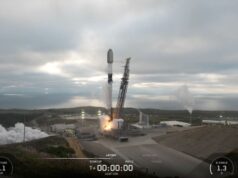
At five minutes past noon last weekend, a seven-storey rocket built by a Hyderabad startup lifted off from the Satish Dhawan Space Centre at Sriharikota. Fifteen minutes later, Skyroot Aerospace confirmed that Vikram-1’s upper stage had reached its planned 450-kilometre low Earth orbit and began deploying its payloads, including the company’s own SCOPE satellite and a spacecraft from fellow startup Grahaa Space. The mission was named Aagaman, Sanskrit for ‘arrival,’ and rarely has a mission name earned its keep so completely. With one flight, India became just the third country in the world, after the United States and China, whose private sector can independently reach orbit. Skyroot did it on its very first attempt, a feat that has eluded most of the world’s launch startups.The temptation now is to treat Vikram-1 as a finish line, as the crowning proof that India’s space startups can build hardware that competes with the best in the world. That proof is real, and it matters. But it is also the least interesting way to read this moment. The far more consequential story is what Vikram-1 changes: getting to orbit is no longer the hard part for India’s private space sector. Building a business is. India has, in effect, graduated from the demonstration phase of its space journey and entered the commercial phase. The next five years will be decided not by who builds the best rocket, but by who builds the strongest ecosystem around it.The capability question is settledConsider how broad the base beneath Vikram-1 already is. India today hosts over 400 private space companies, the largest concentration in Asia, spanning nearly every layer of the value chain. A snapshot of the leading players makes the point:
Company
What they build
Where they stand
Skyroot Aerospace (Hyderabad)
Small-lift orbital launch vehicles
First private Indian rocket to reach orbit (Vikram-1, July 2026); India’s first spacetech unicorn.
Agnikul Cosmos (Chennai)
On-demand launch; 3D-printed engines
Flew the world’s first single-piece 3D-printed engine (2024); Mission-02 will attempt India’s first booster recovery.
Pixxel (Bengaluru)
Hyperspectral Earth observation
Six Firefly satellites in orbit; customers include NASA, Rio Tinto and BP.
Digantara (Bengaluru)
Space situational awareness
SCOT surveillance satellite launched in 2025; contracts with US Space Command.
Dhruva Space (Hyderabad)
Satellite platforms and ground systems
Won a Rs 105 crore RDI grant for Project Garud, a 500-kg satellite platform.
GalaxEye (Bengaluru)
Multi-sensor (OptoSAR) imaging
Launched Drishti (May 2026), the world’s first commercial satellite fusing optical and radar imaging.
EtherealX (Bengaluru)
Reusable launch vehicles
Developing a reusable medium-lift launcher aimed at cutting launch costs.
TakeMe2Space (Hyderabad)
Orbital data centres
Building in-orbit computing and satellite platforms for space-based data processing.
Bellatrix Aerospace (Bengaluru)
In-space propulsion
Electric and green propulsion systems flown on multiple missions; orbital transfer vehicles in development.
Around them sit dozens of component, software and ground-segment firms filling out the supply chain. Whatever doubts once existed about whether Indian private industry could build world-class space hardware, 2025 and 2026 have answered them.Rocket science gets you to orbit. Demand keeps you there.Here is what almost everyone celebrating this moment misses, and what makes India’s next chapter genuinely high-stakes. The global record of the past decade is brutal: mastering rocket science is not the same as mastering rocket economics. In the United States, dozens of small-launch startups raised billions of dollars between 2015 and 2022. Many built remarkable technology. Several reached orbit but faded away. Virgin Orbit, founded and backed by the indomitable Richard Branson, went bankrupt in 2023 despite four successful orbital missions. Astra, which was valued at around $2.1 billion when it went public, was taken private in 2024 for roughly $10 million. Relativity Space raised over $1.3 billion, reached space, and then cancelled its small rocket entirely. ABL Space Systems raised more than $500 million and pivoted to missiles. These were not failures of engineering talent — America has no shortage of that. They were failures of demand.The structural cause is well documented. From 2019 to 2023, SpaceX’s Transporter rideshare missions carried an estimated 81 percent of the world’s small satellites (excluding Starlink and Chinese spacecraft), at prices per kilogram that dedicated small launchers could not approach — often five to ten times cheaper. There were simply not enough dedicated launches to sustain everyone. Even Rocket Lab, the small-launch sector’s clear survivor, endured by diversifying: by 2023 roughly two-thirds of its revenue came from satellite manufacturing and space systems. The lesson is that a launch vehicle without a reliable customer base is a science project, however brilliant. Technology can create capability. Only demand can turn that capability into a durable industry.The counter-examples prove the same rule from the other direction. SpaceX itself was carried through its fragile early years by NASA’s commercial cargo and crew programmes, and has drawn more than $22 billion in US government contracts over its lifetime. China treats its commercial launch and constellation programmes as instruments of national capability, with state funds and guaranteed constellation contracts. Sample this: single Chinese funding rounds in 2025, such as rocket maker Space Pioneer’s $351 million raise, exceeded the roughly $330 million that India’s entire spacetech sector attracted in private equity and venture capital from 2022 to later 2025. While India’s structural capital efficiency allows its startups to build hardware at a fraction of Western or Chinese costs, early-stage frugality has its limits. “Capital efficiency helps you survive the early innings, it doesn’t help you outspend a state-backed competitor once the game moves to constellation-scale manufacturing,” cautions Vishesh Rajaram, Founding Partner at Speciale Invest, a deeptech VC firm that wrote its first cheque into Agnikul Cosmos in 2018 and has since backed spacetech companies including GalaxEye, Kawa Space and InspeCity. The pattern across every successful space power is identical: engineering gets you to orbit, but procurement builds you an industry.India’s quiet answer: a demand engine switching on at the right momentWhile the world has been applauding Vikram-1’s engineering, India has been assembling something more important and far less noticed: a long-term domestic demand engine, built deliberately and arriving at exactly the moment the supply side matured.The centrepiece is the Space-Based Surveillance-3 (SBS-3) programme, under which India plans to deploy 52 satellites over five years to give its armed forces persistent space-based surveillance, with over half of those satellites expected to be built and delivered by private companies. This is not a subsidy but a predictable, multi-year pipeline of paying work that flows through the entire ecosystem at once: launch providers, satellite manufacturers, payload developers, sensor makers, ground-station operators and analytics firms. The programme’s urgency was reinforced by the learnings from Operation Sindoor (May 2025), which demonstrated how central space-based assets are to modern security, a structural driver of demand that will only deepen.“SBS-3 is not a subsidy—it’s a ₹27,000 crore demand signal,” says Rajaram of Speciale Invest. “Thirty-one of fifty-two military surveillance satellites going to private players is the first large-scale proof that the government will trust private hardware with national security missions. It tells growth-stage investors there’s a durable, non-cyclical revenue pool behind these companies beyond venture rounds,” Rajaram adds.Around that anchor, the capital architecture has been filling in. The Antariksh Venture Capital Fund, anchored by IN-SPACe and managed by SIDBI Venture Capital, entered its deployment phase in July 2026 with a ₹60 crore investment in Dhruva Space. This would address deeptech’s oldest problem, patient risk capital. The Research, Development and Innovation (RDI) scheme launched in July 2025 is beginning to bridge the gap between laboratory breakthrough and commercial product; Dhruva Space’s ₹105 crore grant for Project Garud is a live example of how grant money can fund pre-commercial platform development that procurement can later pull into industry. Beneath all of it sits the institutional foundation laid over the past half-decade: the creation of IN-SPACe in 2020 as a single-window authorisation body, the Indian Space Policy of 2023 that gave private players clear rules of the road, liberalised FDI norms for the sector, and IN-SPACe’s active push urging government ministries to buy from homegrown space companies. “Recognising space infrastructure as critical infrastructure can unlock low-cost financing,” says Srinath Ravichandran, Co-founder and CEO of Agnikul Cosmos. “Equally important will be deeper, outcome-driven collaboration with ISRO and IN-SPACe, coupled with clearer long-term procurement visibility,” Ravichandran adds.Individually, each initiative matters. Together, they answer the exact question that destroyed the American small-launch cohort: who will actually buy what these companies build?The commercial phase is not a promise, it is already deliveringThe clearest evidence that India has entered its commercial phase is that Indian space companies are already winning paying customers, including the world’s most demanding ones. Pixxel has signed around 65 clients — Rio Tinto, BP and India’s Ministry of Agriculture among them — and won a NASA contract to supply hyperspectral Earth-observation data, making an Indian startup a vendor to the world’s premier space agency. Digantara holds analytics contracts with US Space Command, has been selected for the US Missile Defense Agency’s SHIELD contract vehicle and closed a $50 million round led by Reliance Industries: the largest private spacetech investment in India in 2025. These are dollar revenues from sovereign and blue-chip customers, earned in open competition against American and European rivals.They also point to where the real value of the space economy lies: far beyond the launch pad. Of India’s targeted $44 billion space economy by 2033, satellite communications is projected to account for $14.8 billion and Earth observation around $8 billion — downstream services woven into agriculture, disaster management, climate intelligence, mining, maritime logistics, navigation and defence. Launch is the enabling act, but the recurring revenue lives in data and services. India’s ecosystem, with strong players at every layer (launch, manufacturing, sensors, software, analytics), is unusually well shaped to capture that full stack rather than any single sliver of it.The honest caveats and why they strengthen the argumentA fair reading must acknowledge the counter-case. Launch makers like Skyroot and Agnikul argue that the small-satellite launch market is genuinely supply-constrained for niche demands that rideshares cannot fulfill: sovereign payloads, tailored orbits, and custom schedules.Moreover, Indian launchers are evolving rapidly beyond single-use boosters toward reusable architectures to redefine launch economics altogether. “One-time-use rockets were originally developed when reaching space was about accomplishing one-off goals,” says Ravichandran of Agnikul Cosmos, as his company prepares for Mission-02 to recover India’s first orbital booster stage. “For economically viable, frequently flyable missions, the philosophy is about rapid reuse, complete flexibility and modularity,” he adds.India’s launchers are scaling up fast: Vikram-1U will lift 550 kilograms, Vikram-2 targets a tonne by 2027, and both Skyroot and Agnikul have committed to reusability. Notably, Indian firms have reached orbit on a small fraction of the capital their American predecessors burned, a cost discipline that is itself a durable competitive weapon: India has launched 434 satellites for foreign customers precisely because of it.But these caveats reinforce, rather than weaken, the central argument. The niches that can sustain Indian launch companies — sovereign payloads, defence constellations, assured domestic access — are demand-side phenomena, created and guaranteed by policy. The time Indian companies need to climb the reusability curve is bought by the same anchor contracts. The global evidence and the Indian strategy converge on the same conclusion: the decisive variable of the next five years is the strength of the demand engine, and India is for the first time building one deliberately.Three ingredients, aligned at lastStep back, and the shape of the moment becomes clear. For decades, India possessed world-class space engineering talent but channelled it almost entirely through a single government organisation. What is new — and what Vikram-1 symbolises — is that for perhaps the first time, all three ingredients of a self-sustaining space industry are aligning simultaneously: world-class engineering talent, now proven in the private sector at orbital scale; government policy that actively creates demand rather than merely permitting participation; and capital beginning to flow, with sector funding up 94 percent in 2025 to $157 million and accelerating further in 2026 with the country’s first spacetech unicorn. That alignment is a far more durable competitive advantage than any single successful launch.The targets are ambitious: growing India’s space economy from $8.4 billion — about 2 percent of the global market — to $44 billion and an 8 percent share by 2033, with $11 billion in exports. Ambition is not destiny, and the global graveyard of well-funded launch companies is a standing reminder that this industry forgives nothing. But India is entering its commercial phase with the one asset that history says matters most: a state increasingly willing to act as an anchor customer, at the precise moment its companies have proven they can deliver.Vikram-1 proved that an Indian startup can reach orbit. The next five years will determine whether India can turn that capability into a self-sustaining space economy. Rocket science got us here. Rocket economics will decide what happens next.Edited by Adith Charlie
تم النشر: 2026-07-25 05:12:00
مصدر: yourstory.com