
I tested the 7 best AEO tools & here’s the one I’ll use every day in 2026
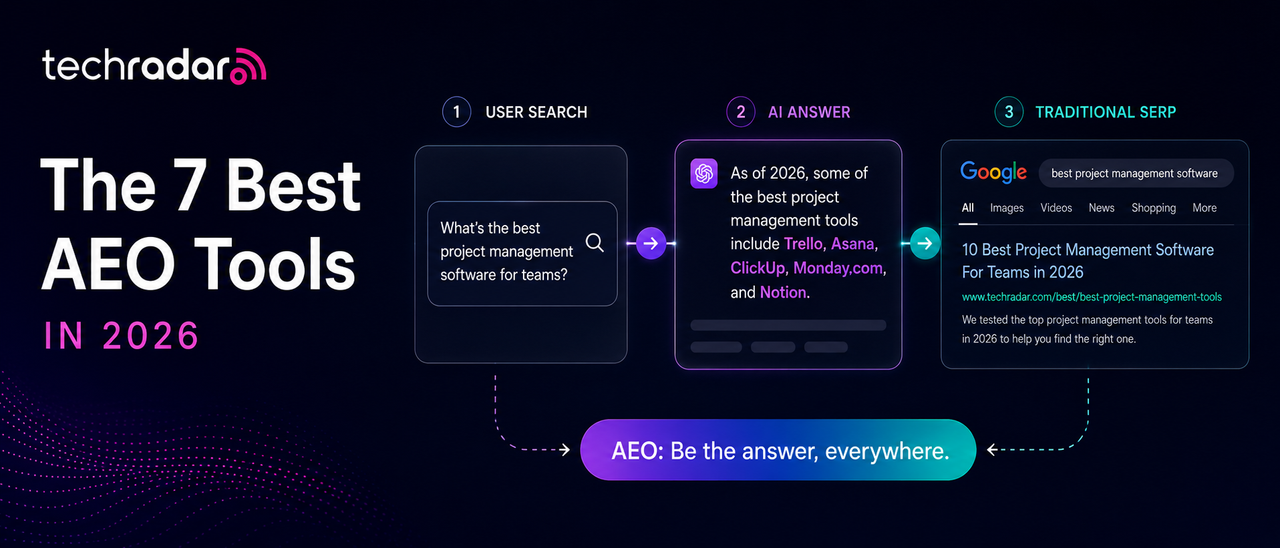
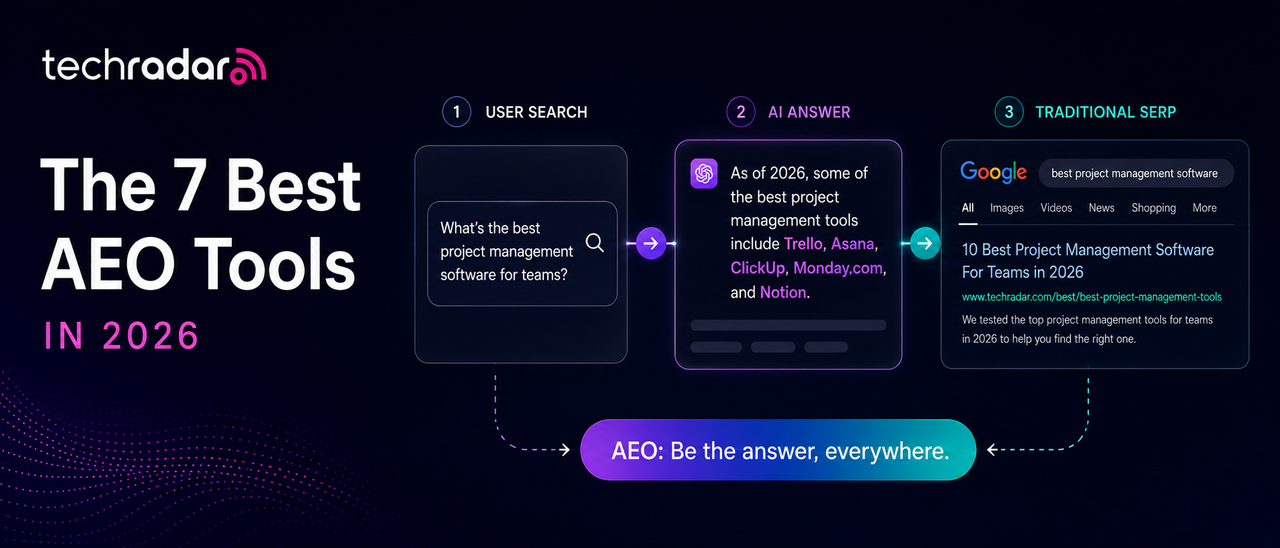
AEO (Answer Engine Optimization) is the process of optimizing your online presence to get mentioned, cited, or recommended by AI platforms like ChatGPT, Gemini, or Perplexity.It’s no easy feat, but AEO tools can give you the insight you need to do this.I’ve tested seven of the top AEO tools on the market, and HubSpot earns my top spot. This is thanks to its deep diagnostic tools, AI analytics, and CRM integration – it’s also affordable, making it ideal for everyday use.Latest Videos FromTechRadarBut an AEO tool isn’t one thing. It’s a label stretched across very different jobs.Some tools only tell you whether AI mentions your brand. Some find the questions your customers are asking these platforms. Some show you which websites they trust and pull from. Others write and optimize the content that gets you picked in the first place.
You may like
I tested each tool the way you’d use them in real work. Same setup, the same kinds of prompts, the same questions put to each tool. I scored each based on tracking depth, setup time, insight clarity, ease of use, and value for money.Below, I dive into my experience with these tools, giving you all the information you need to pick the best one for you.Sign up to the TechRadar Pro newsletter to get all the top news, opinion, features and guidance your business needs to succeed!Key takeawaysIf AI doesn’t mention you, a competitor gets the customer: More buyers now ask AI before they choose.”AEO tool” isn’t a single category: It spans four jobs: tracking visibility, finding prompts, showing trusted sources, and creating content.Optimizing for AI is still just SEO: There’s no secret algorithm, and no tool is a shortcut past the fundamentals.Check what marketing pages hide: Data accuracy, engine coverage, prompt caps, and the real bill after add-ons.The top picks: HubSpot for a free, CRM-connected start, Mentions for agencies and white-label reporting.Best for creating content: Surfer writes and optimizes for Google and AI in one draft.Deep pockets, specific needs: Scrunch tracks crawler traffic, Brand Radar researches any brand, AirOps runs content workflows.The 7 best AEO tools in 2026HubSpot AEOSpecificationsTracking depth-4/5Setup time-4.5/5Insight clarity-4.5/5Ease of setup and use-4/5Value for money-4.5/5ProsFree 28-day trialRecommendations come as a priority task listPulls real buyer prompts from your CRMAffordable plansTracks which AI sent each leadConsCRM prompts locked to Pro/Enterprise plansStandalone caps at 25 prompts monthlyStill in beta; content tools unfinishedHubSpot launched its AEO tool in April 2026, built on tech from xFunnel, an Israeli startup it acquired in late 2025.The pitch is simple. Track how ChatGPT, Gemini, and Perplexity describe your brand, then tell you what to fix. For a first version, it handles the tracking well. The fixing part is where it gets more interesting, and where the limits start to show.Why I picked HubSpot AEOA lot of AEO tools stop at the scoreboard. Here’s your visibility score, now good luck. HubSpot goes one step past that, and that step is why it earns a spot here.
What to read next
Its recommendations come with a priority and a status.Create a product page on this topic. Get into these two Reddit threads. Write this listicle.It reads like a task list instead of a chart, which is rarer in this category than you’d think.The CRM connection is the other real edge. On the Marketing Hub Pro or Enterprise plan, HubSpot builds your prompt list from actual sales calls, support tickets, and site searches, so you’re tracking questions your buyers really ask instead of ones you assumed they would. If you already run your business inside HubSpot, that’s a head start no standalone tool can match.However, that CRM trick is locked to Pro and Enterprise. Buy the $50 standalone plan, and you lose it, which means the cheapest version is also the least clever one. Plus, it’s still in beta.The content-creation features aren’t fully out, so for now it tells you what to write without helping you write it. Handy, but not the finished product HubSpot is clearly building toward.Best featuresRecommendations tagged with priority and statusAI referral attribution built into HubSpot’s source trackingA free AEO Grader for a quick first look, no signup neededCRM-powered prompts on Pro and Enterprise plans, pulled from real buyer conversationsCitation breakdown by content type (blog, listicle, product page, homepage) and by owned, earned, or peerPricing$50/month standalone, or $45/ month billed annually. It’s free inside Marketing Hub Pro and Enterprise, so if you already pay for either, the AEO tool adds nothing to your bill.Mentions
Image 1 of 4
(Image credit: Mentions)
Gallery
(Image credit: Mentions)
(Image credit: Mentions)
(Image credit: Mentions)
SpecificationsTracking depth-4.5/5Setup time-4.5/5Insight clarity-4/5Ease of setup and use-4.5/5Value for money-4/5ProsFastest, most automated setup I testedTracks eight engines, most on this listWhite-label reports built for client workTies AI visibility to real trafficConsCheapest plan tracks only three enginesNo free plan; starts at $4925 prompts on entry planRecommendations lighter than a full platformSetting up most AEO tools feels like a chore. You pick competitors, write prompts, choose engines, and hope you guessed right. Mentions does almost all of that for you.You hand it your domain. It scrapes your site, builds a “brandbook” of your offerings, pain points, and competitors, then drafts a starter set of prompts based on what it found. A minute of clicking and you’re looking at a live dashboard. Of everything I tested, nothing got me to real data faster.Why I picked MentionsTwo things pushed Mentions onto this list: how much it watches, and who it’s built for.On coverage, it tracks eight engines instead of the usual three. ChatGPT, Perplexity, Claude, Grok, Gemini, DeepSeek, Llama, and Google’s AI Overview. If your buyers are asking Claude or Grok and your tool only checks ChatGPT, you’re seeing half the picture. Mentions sees the whole thing.The other half is reporting. This is the tool I’d actually hand a client. The monthly reports are clean, shareable, and on the Agency plan, fully white-labeled with your own domain and logo. There’s a pitch workspace for winning new business and unlimited client sites. If you sell AEO as a service, that beats another pretty chart.Underneath, the tracking holds up. Visibility, sentiment, and share of voice, switchable in a click. A per-prompt view that shows the exact AI answer and the sources it pulled from. A Sources page that tells you whether the pages AI scrapes actually mention you, which is the question that matters. And an AI traffic view that connects visibility back to real visits, so you can prove it drove something.Now the catches. That “every model” promise has fine print. The $49 Starter plan tracks only three engines. You need the $99 Pro plan before “all LLMs” really means all of them. Plus, 25 prompts on the entry plan run out quickly once you get serious.One more thing worth saying plainly. Mentions watches and advises; it doesn’t act. It hands you a tidy Kanban board of fixes (write about pricing, chase this site for a mention), but you’re still the one writing and publishing. That’s fine, as long as you know you’re buying a sharp scoreboard, not a content team.Best featuresSwitch between visibility, sentiment, and share of voice in a clickTracks eight AI engines, including Claude, Grok, and DeepSeekKanban insights board that prioritizes your next fixesSources page showing whether the pages AI scrapes actually mention youWhite-label monthly reports with your own domain and logo (Agency plan)AI traffic analytics tying model visibility back to real site visitsPlain-English agent that answers questions and builds reports on demandPricingMentions runs four flat plans: Starter at $49 a month (25 prompts, 3 engines), Pro at $99 (50 prompts, all engines), Business at $199 (100 prompts), and Agency at $399, which adds white-labeling, a pitch workspace, and unlimited client sites.Semrush AI Visibility ToolkitDetailed AI visibility reports SpecificationsTracking depth-4.5/5Setup time-4/5Insight clarity-4/5Ease of setup and use-4/5Value for money-3.5/5ProsReal sentiment and perception analysisAI data sits beside your SEODaily prompt tracking, ChatGPT and GoogleConsCosts stack fast with seats/domainsNo real free trialSemrush joined the AEO party last year and has now launched a scaled-up version of the AI Visibility Index in June 2026. It’s less a standalone tracker than an AI layer bolted onto the suite you already know.The good thing here is that your AI visibility sits right next to your rankings, backlinks, and site audits. What sets it apart from the pure trackers is how hard it digs into why AI describes your brand the way it does, not just whether it mentions you at all.Why I picked Semrush AI Visibility ToolkitPlenty of tools tell you whether AI mentions you. Semrush is the one that’s actually good at explaining why.Its perception and “key business drivers” reports break down the specific trust factors AI attaches to your brand (a feature that works without a subscription, say, or a product that runs quietly) and show where a competitor owns a factor you don’t.So instead of “our visibility is low,” you get “we lose a whole cluster of prompts because rivals own the access-control angle and our pages never mention it.” One is a number. The other is a task you can hand to a writer.Because it lives inside Semrush, the AI data sits next to everything else. You can jump from an AI gap to the keyword behind it, check whether LLMs can even crawl the page (there’s a dedicated AI-readiness site audit), and add any prompt to daily tracking across ChatGPT and Google’s AI answers in one click.Now the trade-offs.The pricing looks friendlier than it plays out. $99 a month sounds fine until you notice it covers one domain, one user, and 25 prompts. Add a teammate and that’s another license. Add domains or prompts and the real bill climbs toward a few hundred, sometimes well past a thousand. Plus, there’s no proper free trial, only demo reports you can browse.Like most of this list, it watches and advises. It will tell you what to fix and even hands you AI-generated strategy ideas, but you’re still the one writing the content.Best featuresAI visibility score out of 100, tracked over timeDaily prompt tracking across ChatGPT and Google’s AI answersCompetitor gap analysis that sorts by the topics you’re missingQuestions tab surfacing real user queries for content ideas”Key business drivers” showing which trust factors rivals ownAI-readiness site audit that flags issues blocking LLM crawlersPricingThe AI Visibility Toolkit is $99 a month per domain (billed annually), which buys one domain, one user, and 25 tracked prompts across five engines, plus the AI-readiness site audit.If you want AI visibility bundled with the full SEO suite, Semrush One starts around $199. There’s no standard free trial, though you can browse demo reports first.SurferPurpose built AEO tool for writers and content teams SpecificationsTracking depth-4/5Setup time-4/5Insight clarity-4.5/5Ease of setup and use-4.5/5Value for money-3.5/5ProsOne draft scored for both Google and AIMention gap turns visibility into outreachTracks five engines, including ClaudePolished and easy for writers to useConsAI Tracker is a paid add-on$95 add-on for 25 promptsAI drafts still need real editingKeyword and topical tools feel lighterOver-optimizing the score reads roboticSurfer is a content editor first and an AI tracker second, and its whole idea is that you write one article and optimize it for Google and AI search at the same time, in the same document, against two live scores climbing side by side.Why I picked SurferSurfer’s content editor is the best reason to use it, and it’s the part that quietly solved the problem this whole list keeps circling.As you write, an SEO score (how well you match what’s ranking in Google) and an AI search score (how well you cover what AI answers pull from) keeps working.Here, a checklist nudges you to answer the main question in your first 100 words, because Surfer’s own data says that’s where a large share of AI citations come from. Plus, Surfy, the built-in assistant, already knows your article, your guidelines, and your voice, so its rewrites don’t read like generic chatbot filler.Then there’s the AI Tracker, which is where Surfer stops being unique and becomes merely good. It watches your brand across five engines (ChatGPT, Claude, Perplexity, Gemini, and Google’s AI Overviews), scrapes the actual answers a real user sees rather than pinging an API, and reads sentiment.Surfer also added a one-click jump from that gap straight into the editor to write the fix, which no rival quite matches.But the content engine has limits too. The AI draft gets you most of the way, but it does need real editing. Lean too hard on the content score and your writing turns robotic. The built-in keyword and topical tools are lighter than Ahrefs or Semrush.Still, if your actual job is producing content that has to win in both Google and AI, Surfer is the one tool here that helps you write it, not just grade it.Best featuresTopical map that visualizes your coverage and the gapsAn LLM-optimized content format built for AI citationsAI Tracker across five engines, with sentiment on higher tiersMention gap showing the exact sites competitors own and you don’tGoogle Docs and WordPress integrations writers actually keep openPricingSurfer’s core plans run from about $99/ month for Essential ($79 annual, 30 content-editor articles) up to $219 for Scale, with a custom Enterprise tier above that.The AI Tracker is a separate add-on at around $95 a month for 25 prompts, and the full five-engine, daily-refresh, with-sentiment version sits on the higher tiers.Ahrefs Brand RadarInstant competitor and market research SpecificationsTracking depth-4/5Setup time-4.5/5Insight clarity-3.5/5Ease of setup and use-3.5/5Value for money-2.5/5ProsPrompts built from real search dataZero setup, instant data on any brandAdds web, Reddit, YouTube, and TikTok trackingResearch any competitor without owning itFree demo before you payConsNo Claude or Grok trackingLacks sentiment analysisCostly plansHere’s the dirty secret of AEO trackers. Nobody actually knows what people type into ChatGPT, because that data is locked away. So most tools invent prompts that sound plausible and hope they match reality.Ahrefs took a different route. Brand Radar builds its questions from its real keyword database, the actual things people search on Google, then runs those through the AI engines. It’s still a proxy, and Ahrefs says so plainly. But it’s a proxy built on real search behavior instead of pure guesswork.Why I picked Ahrefs Brand RadarType in any brand, yours, a competitor’s, or one from an industry you’ve never touched, and Brand Radar shows its AI visibility instantly. The reach is wide. In one place, you see how six AI engines answer, which URLs they cite, how your branded search volume is trending, who mentions you across the web, and which Reddit threads, YouTube videos, and TikToks are shaping the conversation.Then there’s the data. Where other trackers guess at prompts, Brand Radar pulls from more than 200 million real search queries and weights everything by actual search volume. A mention on a query thousands of people search counts for more than one nobody asks. That grounding is genuinely different.Now the honest part, because there’s plenty of it.Start with what it can’t see. Six engines sounds broad until you notice Claude and Grok aren’t on the list. If your buyers use either, that’s a blind spot. There’s also no sentiment analysis, so you learn whether AI mentions you, not how it describes you. Every cheaper tool here does that much.The data grounding cuts both ways, too. Google searches aren’t AI prompts, and independent tests have flagged accuracy gaps (one found three ChatGPT mentions where there were actually over a hundred). So, treat the share-of-voice numbers as a directional read, not gospel.It’s a research tool, full stop. It shows you the map, then hands the walking back to you. Ahrefs sells a separate agent for this called “Agent A”.Best featuresZero setup; the data is already collected and waitingFree demo queries so you can try before buyingAdds web mentions, Reddit, YouTube, and TikTok visibilityAnalyze any brand, competitor, or whole industry instantlyPrompts built from real Google search data, not synthetic guessesImpressions and share of voice weighted by actual search volumePricingBrand Radar is an add-on, not a standalone. Each AI engine costs $199 a month, or $699 for all six bundled, and that sits on top of a required Ahrefs base plan (from $129 a month for Lite).Scrunch
Image 1 of 4
(Image credit: scrunch)
(Image credit: scrunch)
(Image credit: scrunch)
(Image credit: scrunch)
SpecificationsTracking depth-4.5/5Setup time-3.5/5Insight clarity-4/5Ease of setup and use-3.5/5Value for money-3/5ProsTracks the AI bots crawling your siteTies AI citations to real conversionsBoth sides: answers and crawler trafficSentiment and citation analysis includedEnterprise-grade security and integrationsConsBest features locked to EnterpriseOnly four engines on entryToo complex for small teamsHere’s a question no other tool on this list really answers. When an AI crawler visits your site, what does it actually see, and does that visit ever turn into a customer? Scrunch is built around that question.It tracks the bots hitting your pages, ties their visits to real referral traffic and conversions, and can even serve those bots a cleaner version of the page. It watches the plumbing of AI search, and that makes it the most technical tool here and the most enterprise.Why I picked ScrunchScrunch connects three things other tools keep separate. Where you show up in AI answers. Which AI crawlers actually hit your site and which pages they read. Plus, through a GA4 hookup, what referral traffic and conversions those citations drove.So when a comparison page pulls a handful of Perplexity sessions that convert well while a blog post pulls more ChatGPT traffic that converts nothing, you know exactly where to push.Then there’s AXP, its most distinctive bet and the one that needs the most caveats. It sits at your CDN and serves AI bots a stripped-down, machine-readable version of a page (Scrunch’s own example crushes a pricing page from roughly 124,000 tokens to about 1,300).A cleaner page is easier for a model to parse and cite accurately. It’s genuinely forward-looking. It’s also Enterprise-only, still in limited release, and needs CDN-level setup, so treat it as a reason to keep an eye on Scrunch, not a button you’ll press next week.Best featuresAgent traffic analytics showing which AI bots crawl youGA4 integration that ties AI citations to conversionsCitation drill-down to find the exact pages for outreachSitemaps view that scores every page for AI performanceAXP serves AI bots a compressed, machine-readable page (Enterprise)Enterprise-grade security: SOC 2, SSO, and RBACPricingScrunch starts at $250 a month for the Core plan, covering 125 prompts across four engines (ChatGPT, Perplexity, Google’s AI, and Copilot).Higher tiers add more prompts and multi-client support, while the headline features- broader engine coverage, the AXP delivery layer, full agent-traffic analytics, and API access- sit behind a demo-gated Enterprise plan.AirOpsAEO tool built for running content workflows end to end SpecificationsTracking depth- 4.5/5Setup time-2.5/5Insight clarity-3.5/5Ease of setup and use-3/5Value for money-3/5ProsCloses the loop from insight to measurementQuill agent turns data into content campaignsTracks sentiment and third-party citation sourcesPlaybooks run fixes across hundreds of pagesPublishes finished content straight to your CMSConsSteep learning curve, expects SEO expertiseSetup measured in weeks, not minutesOverkill for solo or small teamsAirOps is a full content operations platform that happens to do AEO. It watches how AI describes your brand. But then it wants you to build playbooks, run them across hundreds of pages, refresh stale posts, and push the finished article straight to your CMS.That range is both the draw and the warning. AirOps does more than almost anything else on this list. It also asks more of you than almost anything else on this list.Why I picked AirOpsAirOps is the only tool here that will actually build and publish the fix for you. Everything else on this list points at the problem and leaves the work to you. AirOps hands you the machinery.Here’s how that plays out. You notice AI keeps describing your app as slow, or skipping you on privacy questions. You open Quill, the platform’s AI agent, and just talk to it. It pulls the sentiment data, finds the prompts driving the problem, and helps you spin up a page-refresh campaign. The campaign runs, publishes, and then tracks whether your citations actually climbed. Insight, action, and proof, in one place.The tracking underneath is deep, too. It follows sentiment, so not just whether you show up but how you get described. It maps which third-party sites (Reddit, YouTube, LinkedIn) are shaping your answers. And its Page360 view stacks AI search, SEO, and citations together, so you can catch a page that gets crawled constantly but never cited.So why isn’t it near the top of this list? Because all that power comes with a tax.AirOps expects you to already know SEO. It hands you a workflow builder, not a wizard, and if you show up without a plan, you’ll sit staring at a blank playbook. Quill softens that, but setup still runs in weeks, not minutes.Then there’s the bill. AirOps charges by the task, so every AI step in every workflow costs you, and a single article can burn hundreds of tasks. Worse, the paid plans leap from about $200 a month to about $2,000 with almost nothing in between. Outgrow the cheap plan, and you don’t take a step up; you have to climb a mountain.For an agency refreshing hundreds of client URLs, that math can work. For a solo marketer or a small team, AirOps is a Formula 1 car booked for the grocery run.Best featuresSentiment tracking, how AI describes you and not just whetherQuill, an AI agent you chat with to launch campaignsPlaybooks that apply one fix across hundreds of pagesThird-party citation tracking across Reddit, YouTube, and LinkedInNative CMS publishing to WordPress, Webflow, Sanity, and morePage360 view stacking AI search, SEO, and citation data in one screenPricingAirOps starts with a free single-user tier, then the paid plans jump from a Solo plan around $200 a month to a Pro plan around $2,000, with almost nothing in between. Billing is usage-based, so you pay per task (each AI step counts), and the paid tiers are quote-based.What are AEO tools?AEO stands for Answer Engine Optimization. It’s the work of getting your business mentioned, cited, or recommended when someone asks ChatGPT, Gemini, Perplexity, or Google’s AI features a question you could answer.AEO tools are the software that supports that work. These tools generally do the following tasks:Track your visibility: Show you whether, and how often, AI engines mention your brand, where you rank in the answer, and how you stack up against competitors.Find the questions people ask: Surface the real prompts your customers are typing into AI, so you know what your content needs to answer.Show which sources AI trusts: Reveal the websites, pages, and threads AI pulls from when it answers, so you know where to show up, not just on your own site.Create and optimize the content: Help you write and structure pages, so both Google and AI are more likely to pick them.Importantly, Google has publicly stated that optimizing for its AI search features is still just SEO. There’s no secret AI algorithm that a special tool unlocks.So treat every tool in this guide as what it is: a way to do the fundamentals faster, see them more clearly, or prove they’re working.How I tested these AEO toolsI used each of these AEO tools the way you would on a real project, then scored what it was like to live with.These tools don’t all do the same job. Some track your visibility, some research questions, some write content, some watch your crawler traffic. So I didn’t hold a tracker to the same bar as a content platform. I judged each one on how well it does the thing it’s built to do.Every tool got a score out of five in five areas:Tracking depth: How much the tool actually captures. Depending on what it’s for, that means prompts, brand mentions, citations, competitors, content performance, historical trends, and how many AI engines it covers. More depth, higher score.Setup time: How long from signing up to seeing something useful. Tools that got me to real data fast scored well. Tools that made me sit through long onboarding or heavy manual setup scored lower.Insight clarity: How easy the findings are to read. Could I look at the dashboard, the reports, and the recommendations and know what to do next? Or did I have to decode it first?Ease of setup and use: How the tool feels once you’re past setup. Getting around, managing projects, running everyday tasks, pulling reports, and how steep the learning curve is.Value for money: What you get for the price. I looked at the limits, the features, and who each tool is for. An expensive enterprise platform isn’t bad value if it earns its price for a big team, and a cheap tool isn’t good value if the entry plan can’t do anything useful.The overall score is the average of those five. I also weighed what each tool is for, so a specialist tool didn’t lose points for skipping features it was never trying to have.The marketing pages all look clean. The complaints show up later, once you’re paying. Here’s where these tools actually crack, and what to check before you input your credit card.Accuracy you can trust: This is the number one gripe by a wide margin. The data often doesn’t match reality. Ask how the tool collects data (does it read the real answer a user sees, or just ping an API?) and how often it re-runs each prompt. Treat any single-snapshot score as a rough estimate, not gospel, and don’t panic over small week-to-week swings.Real prompts, not made-up ones: Plenty of tools invent plausible-sounding queries and call it monitoring. That’s sampling with a confidence problem. Check that you can add your own prompts, and better still, feed in the real questions your buyers ask (from your search console, sales calls, or support tickets).Engines your buyers actually use: Most tools quietly track ChatGPT and little else. If your customers lean on Gemini, Claude, or Grok, confirm coverage before you pay, and confirm it’s on the plan you’re buying.A score you can act on: A lot of dashboards look impressive and tell you nothing to do next. If the tool can’t show you the why behind the number (the sentiment, the prompts, the sources feeding the answer) and a clear next step, you’re paying to watch a chart move.The real monthly bill: The headline price is the tease. Watch the prompt cap (10 to 25 runs out fast), per-seat fees, per-domain fees, usage-based task billing, and add-ons.Tracker or doer, and does it fit your stack: Decide whether you need something that watches or something that writes, because few tools do both well. And favor one that plugs into what you already run.Buy for the job in front of you. The worst subscription is the impressive one you never had a use for.Quick AEO tool selection guideShort on time? Find your situation, grab the tool, skip the rest.Already live in HubSpot? HubSpot AEO gives CRM-fed tracking and a priority task list, cheaply.Need content written and shipped at scale? AirOps builds, runs, and publishes it, if you know SEO.Running an agency? Mentions sets up fastest, tracks eight engines, and white-labels your client reports.Already pay for Ahrefs? Brand Radar adds AI research built on real search data (no sentiment).Already on Semrush? Its toolkit explains why AI describes you that way, besides your SEO.Technical or enterprise team? Scrunch tracks AI crawler traffic and ties citations to real conversions.Want to write for Google and AI at once? Surfer optimizes one draft against two live scores.On the tightest budget? Start with a free checker, prove AI search matters, then buy.FAQsWhat are the best AEO tools for ecommerce?For ecommerce, Semrush and Mentions track product-level visibility well, and Surfer helps optimize product and category pages. But the real groundwork is clean product schema (price, reviews, availability) so AI can read and recommend your catalog. Pair a tracker with solid structured data.Are AEO and GEO the same thing?Not exactly, though people now use them interchangeably. AEO (Answer Engine Optimization) is about becoming the direct answer AI gives. GEO (Generative Engine Optimization) is about getting cited inside AI-generated responses. They overlap heavily and share the same fundamentals, so most tools cover both under one label.Will AEO replace SEO?No. AEO adds to SEO, it doesn’t replace it. Google has said optimizing for its AI features is still just SEO, with the same index and fundamentals. Strong SEO is what gets you into AI answers in the first place. Treat AEO as a layer, not a swap.Do I need a paid AEO tool, or is a free one enough?A free checker is enough to start. It tells you whether AI mentions you and where the gaps are. Once you need ongoing tracking, competitor comparison, and sentiment over time, a paid tool earns its place. Start free, then upgrade when you have something to act on.How do you measure AI visibility?AI visibility is measured by mentions, citations, share of voice, and sentiment, not rankings or clicks. Mentions count how often AI names you, citations track when your page is the source, and sentiment shows how you’re described. Most tools in this guide report all four.Why doesn’t my AEO tool’s data match what I see in ChatGPT?Because AI answers change constantly. The same question returns different results by phrasing, location, model, and day. Most tools sample a set of prompts and take a snapshot, so their numbers are estimates, not exact counts. Treat the trend as directional and don’t over-read small swings.Which AI engines should an AEO tool cover?Cover the engines your buyers actually use. ChatGPT, Google’s AI Overviews, and AI Mode matter for almost everyone. Add Perplexity, Gemini, Claude, and Grok depending on your audience. Check coverage before you pay, since many tools track only ChatGPT and charge extra for the rest.How much do AEO tools cost?AEO tools range widely. Free checkers get you started, entry plans run about $49 to $99 a month, mid-tier tools land around $200 to $700, and enterprise platforms climb past $2,000. Watch for prompt caps, per-seat fees, and add-ons that quietly raise the real bill.
تم النشر: 2026-07-30 15:38:00
مصدر: www.techradar.com