
How Meta Got Everything It Wanted in a Secret Louisiana Data Center Deal
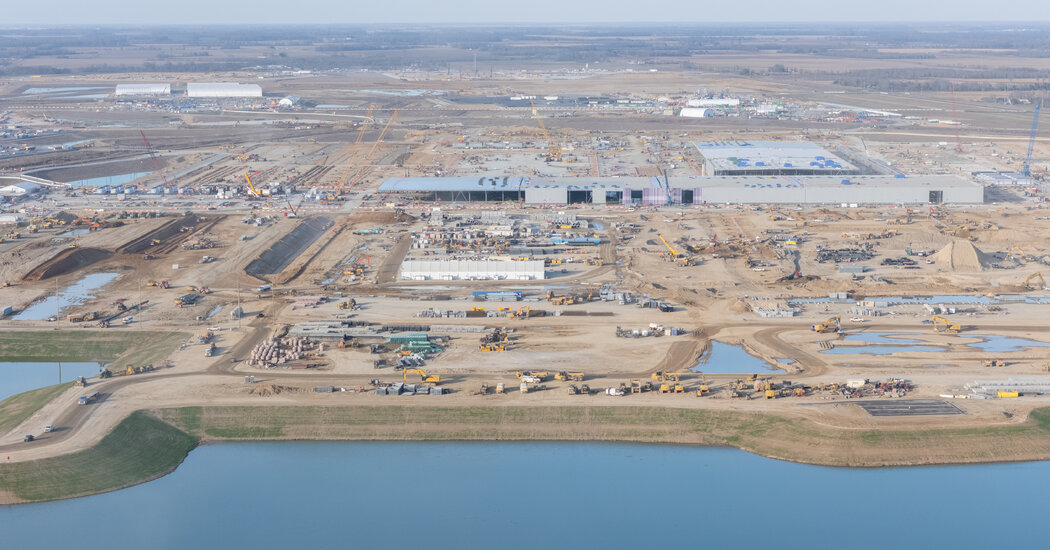
A Louisiana state legislative committee was about to consider a bill in April 2024 when Richard Nelson, then the state’s revenue secretary, received an urgent message from Gov. Jeff Landry. Get the bill passed, the newly elected Republican governor told him, because they needed it for something else.Mr. Nelson walked across a room in Baton Rouge’s towering State Capitol to the bill’s author, Chris Turner, a Republican state representative.“‘Hey, we need to hijack your bill,’” Mr. Nelson told Mr. Turner. “I can’t really tell you what it’s about. All I can tell you is that it’s important.’”Mr. Turner agreed. The bill had started out as a tax rebate for fiber-optic equipment. But when it was voted on by the state House of Representatives less than two months later, it had become a tax rebate for equipment used in data centers.Mr. Turner had helped land the largest development in Louisiana’s history: A $50 billion data center for the Silicon Valley giant Meta that planners say could cover about six square miles and use seven times as much energy as New Orleans.Meta wanted the rebate to build its data center in Richland Parish, an impoverished farming community in Louisiana’s northeast corner. The tech company also needed a secret deal done quickly, and state officials were eager to oblige.Rewriting the bill was a critical part of a nine-month process that Meta used to cut deals behind the scenes, avoid local opposition and offload financial risk, according to interviews with more than 40 people and a review of corporate filings, tax records, property records and meeting transcripts.The secrecy was agreed to by nearly everyone involved, from utility executives to the governor’s office to a local elected official who knew about the talks with Meta and sold 300 acres of his own property for the project.The upshot was a deal that was nearly ironclad for Meta because everyone else took on most of the potential downside. Mark Zuckerberg, Meta’s chief executive, also gave his company an escape hatch to get out of it years before its partners.Those partners include Entergy Louisiana, the state’s largest power company, and Blue Owl, a Wall Street investment firm, according to public statements from the companies and investor documents. If Meta should pull out of the project because of a natural disaster, Blue Owl and its investors could be stuck with tens of billions of dollars in debt. Should Meta exit its lease early for other reasons and pay high penalties for doing so, Entergy and its customers could wind up saddled with higher costs.Adding to their risk, insurance companies would not fully insure Meta’s facility because of its size and location in the Louisiana Delta flood plains.The New York Times’s examination shows for the first time how Meta used secrecy and speed to pave the way for its giant project, which it calls Hyperion. At a pivotal moment for the A.I. boom, Hyperion could be a blueprint for other companies intent on avoiding local opposition in order to get massive data centers built fast.Google, Amazon, Microsoft and others are expected to spend more than $1 trillion on data centers in coming years, but some communities are pushing back because they are worried about water use, electricity rates going up, disruption by construction, and the endless hum of giant computing centers running throughout the night.From January through March, construction of 75 data centers worth an estimated $130 billion was delayed or stopped by local or political roadblocks, according to Data Center Watch, a project run by the A.I. research firm 10a Labs.The tax breaks, backroom negotiations and lack of public input do not appear to have broken any laws, but they raise ethics questions about the state’s negotiations with Meta, said Dane Ciolino, a professor of legal ethics at Loyola University New Orleans College of Law.“It goes to the basic, public confidence we need to have that state power is not being used to enrich insiders,” he said.Meta executives said Hyperion, which will be the company’s largest data center, was critical to their A.I. ambitions and they envision years of investment in Louisiana.“We’re committed to the state, we’re committed to Richland Parish, and we’re committed to putting the best compute infrastructure in the world into that single location,” said Rachel Peterson, Meta’s head of data centers.Ashley Settle, a Meta spokeswoman, said in a statement that it was unfair to say its Louisiana deal was made in secret, as it “went through established state and local economic development processes and approvals,” with oversight from local tax and development boards.State officials are proud of the deal and believe the economic benefits will be worth it. That includes 1,000 permanent jobs, thousands of temporary ones, and tens of millions of dollars in tax revenue. Sales tax totals in Richland Parish have already jumped 2,000 percent since construction started, which led to a $50,000 bonus for some local teachers.Whether Louisiana gave up too much, including tax breaks that could be worth as much as $10 billion and the use of public land for a privately owned project, won’t be answered for years. Officials are quick to say that whatever comes out of it will be better than the mostly fallow farmland that was there.Governor Landry was so pleased with the deal that he codified the process with an executive order called “Louisiana Lightning Speed” to attract other projects. Amazon already has plans for a $12 billion data center in the state’s northwest corner.“How did Mark Zuckerberg build a successful company?” Mr. Landry said in an interview. “He didn’t do it by going out there and telling everybody what he was doing, what his game plan was.”Fortunes from the project, however, have been unequally distributed. In Delhi, a poor and majority Black town 10 minutes from the Hyperion site, some residents have seen their rents spike because construction workers need homes.Tracy Williams, 41, was evicted from her trailer park last July when her landlord raised the rent to $1,495 from $250 a month. She could not afford to relocate her trailer with only a month’s notice, so she and her family watched as a machine dismantled their home, cut it into pieces and “crushed it like a can,” she said. For the next three weeks, she and her four children slept in their car.“That was my home for over a decade,” she said. “Not everyone is making Meta money.”Part I: ‘Heaven and Earth’A year before Meta broke ground for Hyperion on a stretch of mostly abandoned rice and soybean farms, Louisiana wasn’t even among the states competing for the project.It was January 2024, about a year after OpenAI started the artificial intelligence boom with its ChatGPT chatbot. Meta wanted to build one of the planet’s biggest data center complexes and was looking for a state willing to make a deal.Three Meta employees gathered at Copper Vine, a bistro in downtown New Orleans, to listen to a pitch for the Richland Parish site. On the other side of the table were executives from Entergy.Over red wine and crab bisque in a private dining room, Phillip May, Entergy’s chief executive, proposed Louisiana as a dark horse contender to sites in Arkansas and Mississippi. His company could provide the power, he said, and the state owned the perfect land — 1,440 acres in Richland Parish sitting mostly vacant that Louisiana had acquired in 2006 for a failed attempt to lure a Toyota plant. The state knew Meta could also buy at least 2,300 more acres nearby.The area badly needed development. As global trade agreements bit into the profits of local farms, thousands of jobless residents left. The state pitched other big companies on opening factories there — Jaguar, Mercedes, Hyundai, Daimler Chrysler, John Deere and Caterpillar — but all went elsewhere.Meta told Mr. May during their meal that it wasn’t considering Louisiana because it lacked what other states were offering: a sales tax exemption on data center equipment. And because its state legislature was in a “nonfiscal” session, it couldn’t take up new tax exemptions until the following year.“I asked them, ‘If we can get you that exemption this year, would we be a contender?’” Mr. May said. “They told me, ‘Yes.’”Meta wanted to keep the negotiations as quiet as possible, and the utility executives (followed by state officials) agreed that was the best way to ensure talks didn’t get derailed by potential opponents. No public meetings were held to discuss the project before it was officially unveiled. Meta had other requests too, like sufficient electricity, water and land. Most important, it told Mr. May they needed to move fast.The data center would be a windfall for Entergy, and Meta would be the largest customer in its 112-year history. And Mr. May knew the new governor would be on board, especially to help a part of the state that needed revival. Mr. Landry, an ally of President Trump, won his election partially on the promise of increasing drilling for oil and natural gas in the state.Later that January, Mr. May and a crew of Entergy executives attended an event in Washington where Susan Bourgeois, Louisiana’s new secretary of economic development, was sworn in. As she walked off the stage, Ed Jimenez, a vice president from Entergy, was waiting.“We have a really, really significant project, and we have a shot,” Ms. Bourgeois recalled Mr. Jimenez telling her. “But in order to do this, we as a state are going to have to move heaven and earth.”Ms. Bourgeois and her team signed nondisclosure agreements, or N.D.A.s, with Entergy and Meta to put together the deal.The state had one important request: Go bigger.“We told Meta, the larger you can make it, the more aggressive we can be to get you what you need,” Ms. Bourgeois said. While the project was projected to cost $10 billion, “it was always $10 billion with a wink,” she said.Meta gave Louisiana an August deadline — seven months away — for a deal that normally takes years to plan. (Meta said the August date was a “working target and suggestion.”) Everyone involved agreed that it needed to be kept secret.Mr. Landry invited every member of his cabinet who needed to know about the project to a meeting at the governor’s mansion. His chief of staff passed around a stack of N.D.A.s and freshly baked peanut butter cookies.“Louisiana has an opportunity for something very, very, very big,” the governor told the group, said Ms. Bourgeois and her deputy, Anne Villa. “But leaks kill deals. If this leaks and we lose this deal, if I find out it was you, you’re fired. Are we clear?”Using N.D.A.s between public officials and private companies is legal but raises transparency concerns, experts said. It has become a common practice among tech companies working on data centers.Over 50 government officials have signed N.D.A.s with Mr. Landry’s economic development office since his term began in January 2024, according to records obtained by Gulf States Newsroom and Type Investigations and shared with The Times. The practice was not common in the previous governor’s term.To seal the Meta deal, the governor’s first order of business was the sales tax exemption. Because it was the middle of the legislative session and Meta was asking for quick action, the only option was rewriting a proposed rebate that had already been introduced. The governor’s team chose the tax break for fiber-optic equipment because it sounded close enough to data centers. Mr. Nelson, the revenue secretary and a self-described “outspoken critic of tax breaks,” was planning to speak against the fiber-optic bill. He changed his mind.“To do these deals, you have to be competitive with neighboring states, and that’s what this bill did,” Mr. Nelson said in an interview.Meta also wanted property tax incentives and upgrades to nearby roads. There were no public disclosures of the negotiations. Remarkably, Ms. Bourgeois said, the deal never leaked.Part II: Hyperion Is RevealedHyperion was unveiled by state officials in December 2024 as a $10 billion deal, about a fifth of the size of current plans. When construction is finished, the data center is expected to use nearly half of Entergy’s energy supply, Mr. May said.Mr. Landry bluntly acknowledged that the deal’s secrecy was unconventional, but said state officials had to think like a tech company to secure a project of its size.“Transparency is a very interesting word,” he said. “Because what we’ve seen is people have used the word transparency to basically kill deals like this.”Ms. Bourgeois said her team did what was best for Louisiana. “I will never apologize for putting this state, and a parish like that, in a position to be able to enjoy the benefits of billions and billions of dollars,” she said.One Republican state senator, Jay Morris, a native of Richland Parish, was particularly eager to see Hyperion happen. He coauthored a bill that helped the state make the deal with Meta, voted “yes” on the data center tax rebate, and spoke in support of the project to a utility commissioner before the state’s power commission voted to approve Entergy’s expansion plans.Last September, Mr. Morris, who had signed an N.D.A. with Entergy, sold 300 acres of land he co-owned near the data center site to the energy company, according to property filings.The money Mr. Morris made was not disclosed in the filings, and he declined to provide a figure in an interview. The value of land near where the data center is being built has skyrocketed to more than $50,000 an acre from $3,000 to $5,000 an acre before the data center was announced, said Sherry Hough, a local real-estate appraiser.Mr. Morris’s sales were earlier reported by Floodlight, an investigative news outlet. Mr. Morris, 68, confirmed the transactions and said there was no conflict of interest.“We wouldn’t have any data centers at all if it weren’t for those tax incentives,” he said. “I’m probably more popular now in my district than I ever have been.”Part III: The Final HurdlesAround the same time Mr. Morris sold his land, Meta had a to-do list with three big items: Power, insurance and finding someone else to foot the bill.In August 2025, Louisiana’s power commissioners voted 4 to 1 to approve three new gas turbines to power the data center. The commission skipped having an independent administrative judge weigh in on whether the project was in the public’s best interest, something that is typically done in Louisiana but would have slowed down the project. Legally, the power commission could skip that step.Meta promised to pay for the maintenance and operational costs of the new turbines for half their 30-year life span. Entergy reserved the right to raise its energy prices for all customers to pay for the rest.Davante Lewis, a power commissioner who was the lone dissenting vote, said he was nervous about the rushed process. “I believe my most important job as a regulator is to trust, but verify,” he said at the meeting. “And the truth is there’s a lot of things that I just cannot verify at this moment.”Local consumer groups say some of the cost of the plants would fall to ratepayers if Meta were to back out. But Brandon Scardigli, an Entergy spokesman, said its customers were not being put at risk and Meta would have to pay “substantial penalties” if it withdrew. He said new power plants could eventually replace the state’s aging ones if Meta leaves.The day the commissioners approved the power plants, Meta registered a legal entity in Delaware called Beignet Investor LLC, named after Louisiana’s deep-fried pastry. The entity would allow Meta to transfer most of the project’s ownership to a Wall Street partner so it could reduce its own risk.In October 2025, Meta announced a joint venture with Blue Owl, a private credit firm known for lending to risky companies. Started in 2016, the firm had become a $300 billion colossus. Blue Owl put $7 billion into the joint venture, and Meta put in $2 billion in addition to several billion it had already spent.Blue Owl sold roughly $27 billion in bonds — one of the largest private bond issues ever — to finance its investment in the project. Among the buyers of those bonds was PIMCO, the bond giant that works with teachers’ pension funds.Blue Owl committed to owning Hyperion for the next 24 years, the company said, but Meta could drop out after four years. If it did, Meta would still have to make up the difference between whatever debt had not been paid off and what a new tenant or owner was willing to pay. It’s impossible to say what that difference could be, but Blue Owl said walking away from the deal would not be a “costless decision” for Meta.Opponents of the deal say Louisiana is putting too much faith in Meta to stick with the project. “If Mark loses interest in this, they’re gone,” said Susan Miller, a lawyer for the environmental law firm Earthjustice, which unsuccessfully pushed the state power commission to investigate Entergy’s deal with Meta.Insurance was one issue that couldn’t be entirely solved. No insurers would provide full coverage for Hyperion because it was so big and was being built in a flood plain, according to three people who were familiar with the talks but not allowed to discuss them publicly. One insurance executive who declined to cover the project said that “to build it in a floodplain, it’s crazy.”Project planners cobbled together insurance to cover up to $4 billion, according to investor documents. But if a natural disaster shuts down the data center for over two years, Meta can walk away without paying the difference in what’s owed on its lease, according to investor documents and a Blue Owl spokesperson.Meta and Blue Owl dismissed concerns over insurance. Tornadoes, they said, were a bigger risk than flooding and the two companies decided that full coverage wasn’t necessary. (The last significant flooding in the area was 2016, and a disastrous flood hit in 1927.)“There is no scenario,” Blue Owl said in a statement, that such a massive project “could face destruction from a natural catastrophe.” To imply that the project is underinsured, the company said, “is simply false.”The project keeps getting bigger. In October, Meta said Hyperion would become a $30 billion project. This month, after Entergy announced it was building 10 gas turbines instead of three at an estimated cost of $14 billion, Meta said the project would total $50 billion.Blue Owl is not funding the latest expansion. While Meta would not say where the additional funding was coming from, it said it expected to spend up to $145 billion companywide, much of it on A.I., this year.Part IV: The Boom in Northeast LouisianaAlong a strip of one-lane highway dotted by cottonwood trees, trailer parks and Baptist churches, the data center site — a mile wide and more than five miles long — stretches beyond eyesight. A bumper-to-bumper line of trucks weaves through towns so small they don’t have traffic lights, so Meta is paying for dozens of off-duty sheriff’s officers to monitor roads.The construction changed Richland Parish overnight, with 6,000 temporary workers pouring into a parish of 20,000 people. Hourly pay for contract workers is high — around $40 an hour — and some landowners have seen their property values soar tenfold. Hotels rooms in Monroe, the largest nearby city with an airport, are going for $400 a night.Local residents have largely welcomed the boom, more excited about the new opportunities than concerned about the secrecy surrounding the deal. For 20 years, the parish tried and failed to land multimillion-dollar economic projects to help its residents, who are on average among the poorest in the state. Meta’s project is bigger than of them combined.“Nobody picked up the phone and asked us if we wanted this,” said Justin Clark, a pastor in the nearby town of Rayville. “But the reality is, this is an opportunity.”Fewer young people are leaving and some are even returning after years away. Because the data center’s construction will last at least four years, contractors are hiring locally if they can before bringing in workers from other states. Pastor Clark said it reminded him of a Bible verse from the book of Matthew: “The harvest is abundant, but the workers are few.”Rob Cleveland, the president of the Northeast Louisiana Economic Alliance, a local economic development group, said he’s never seen anything like Meta’s project in his 20 years of working in the field.“Every economic indicator in the parish is improving,” Mr. Cleveland said.Mr. Landry is hoping to replicate the scene in other parts of Louisiana, creating a “Silicon Bayou.” While Meta’s data center will create 1,000 permanent jobs, construction on other data centers could last for years to come, he said.“People who claim the state is losing tax revenue forget that there was zero up there. Zero from zero leaves zero,” Mr. Landry said. “And before Meta, there was zero.”In May, the joint venture that controls Hyperion paid its first sales tax payment of $22.4 million, making it the parish’s largest taxpayer. Meta plans to spend $1 billion to upgrade local infrastructure and $5 million on job training at a nearby community college. And local teachers got those big bonuses.That money hasn’t trickled down to people like Ms. Williams, who lost her home. The trailer park she lived in was one of at least five in Richland Parish to be remade for data center workers, most of whom live in converted “man camps,” some renovated with new basketball courts and soccer fields. Rents are so high that Ms. Williams moved her family to another parish, forcing her to find new work and schools for her children.Some of her neighbors found jobs working for Meta, but others left for good. Jesse Washington, Delhi’s mayor, said the data center has brought once-in-a-lifetime opportunity but also greed. He wondered, when the construction is done in a few years and all the temporary workers are gone, what will be left of the town?“Nobody really has an answer,” Mr. Washington said.Karen Weise and Rob Copeland contributed reporting.
تم النشر: 2026-07-27 15:25:00
مصدر: www.nytimes.com