
How Polymarket Traders Revolted Over One Silly Syllable
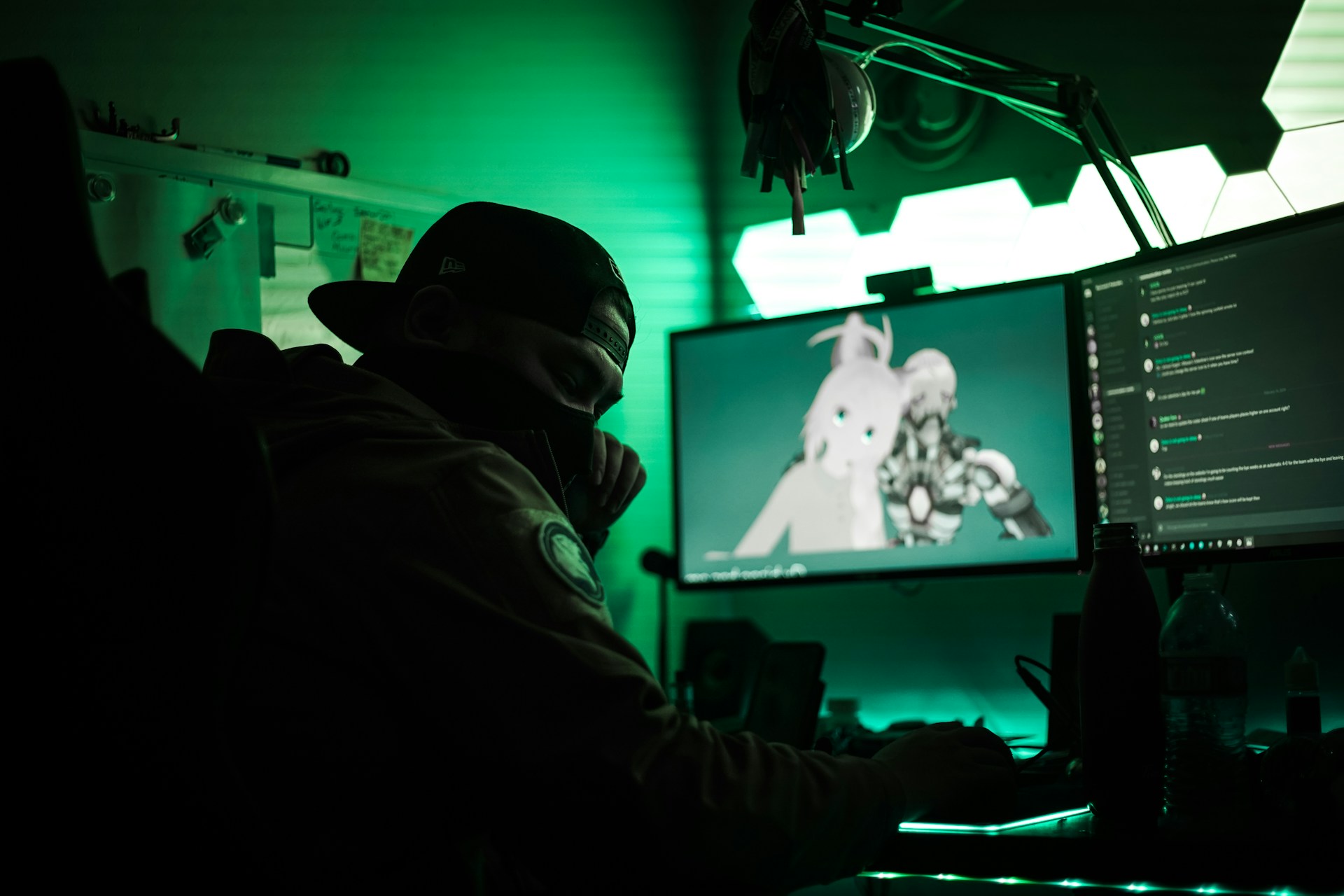
In mid-April, a long and testy argument erupted online over a seemingly trivial question: Did a guy in a video say “Donk”?Donk is Danil Kryshkovets, a diminutive 19-year-old e-sports player and a star in Counter-Strike 2, a five-on-five shoot-em-up game beloved by millions. The video was a seven-hour broadcast of a tournament held in Bucharest, Romania, in which Donk did not play. Donk, the person, and Counter-Strike 2 will soon exit this saga. All you need to know is that during the livestream, it is possible that the name of the famous gamer could have been uttered.And maybe it was. At about the five-hour-and-22-minute mark, one of the game’s commentators, known as casters, summed up the predicament of one of the teams, called FUT.“Let’s think about the money situation here for FUT,” the caster says. “Don’t — they don’t get any kills in this round.”When the caster said the first “don’t,” out came something that sounded very similar to “Donk.” Hence the debate, which played out on a Discord page called dispute-threads. On one side were those who argued that while a Donk-like noise had been emitted, it had not been a reference to Donk the player. On the other side were those who said that the context didn’t matter, that any donk would do. Including this accidental donk, which one debater posted as an audio clip, trimmed and slowed down, then repeated over and over with a bit of echo added: “Doooonnnk, doooonnnk, doooonnnk.”If you came to this fracas cold, you might have wondered why so many people were so exercised about a matter so minuscule. What, you might have asked, were the stakes?Just over $5.7 million is the answer. Before the tournament began, Polymarket, the online betting platform where wagers are placed on just about anything, posted this bet: “Will ‘Donk’ be said during the PGL Bucharest Grand Final 2026?”Polymarket and its more buttoned-up rival, Kalshi, have created rollicking marketplaces that sometimes seem designed to settle bar bets. There are contracts on topics as varied as politics (“What will Trump say during bilateral events with Xi Jinping?”) and pop culture minutiae (“Who will die in Euphoria: Season 3?”). About $2.4 billion was wagered on Polymarket alone in the first week of June. The bettors skew young and male.They come for buzzy, nonstop action, built on platforms with a feature that prediction markets are eager to trumpet: an almost uncanny ability to forecast the future. With thousands of people putting money on the line, the markets are said to harness the wisdom of the crowd and outperform the prognostications of pollsters, economists and other professionals.“It’s the most accurate thing we have as mankind right now,” Shayne Coplan, the 28-year-old founder of Polymarket, said in a “60 Minutes” profile. “Until someone else creates some sort of a super crystal ball.”Polymarket resolves with ease straightforward bets, like “Who will win the next Mets game?” Its track record is spottier when the answer is ambiguous, like whether someone said “Donk.” Less than 1 percent of all Polymarket bets land in this disputed category, according to the company, but they tend to be marquee bets and, without a fair system to decide who wins them, the platform’s credibility is in jeopardy.“You do not know in advance whether your market will be one that ends in a dispute,” said Alejandro Lopez-Lira, an assistant professor of finance at the University of Florida. “So you carry an extra risk that even when you bet correctly, you lose the payoff.”Early on, Polymarket relied on an internal team to adjudicate such cases. This “trust the bros” approach was replaced in 2022. (The company can still issue a “market clarification” and determine a winner. That scenario is rare.) Tough calls on the platform have since been decided by something with a soothingly authoritative name: the Optimistic Oracle.The oracle is an elaborate Web 3.0 contraption that combines cryptocurrency, voting and game theory in its goal to produce fair judgments. It’s billed by its creators, a company based in Manhattan called Risk Labs, as a “decentralized truth machine.”But for all its brainiac complexity, the oracle has proved exploitable. Dozens of livid bettors claim the system has been gamed, the handiwork of a budding tech entrepreneur named Lancelot Chardonnet (his name at birth, he says). A look at the Donk debate, which unfolded over nine rancorous days, illustrates how he did it, and the messy, fractious challenge of divining something as nuanced as truth.The Fateful SyllableWhen the Bucharest video was first broadcast on April 11, nobody heard “Donk,” and this bet seemed destined to be won by those who bet “no.” Then someone noticed that the caster, who through sheer phonetic coincidence is known as Dinko, had botched “don’t.”Dinko might have known about the Donk bet, so it’s at least possible that he said the fateful syllable on purpose. It’s even possible he placed money on the outcome. He might have made what linguistics fans would call a voiceless velar stop slip. We don’t know — he has not returned emails — and it doesn’t matter. Polymarket relies on extensive rules for every bet, and the crucial one for this instance was: “Any usage of the term, regardless of context, will count toward the resolution of this market.”With “yes” voters pointing to the rule and “no” voters arguing variations of “never mind the rule,” the Donk debate would be settled by the Optimistic Oracle. It performs this role for Polymarket’s international platform at a rate of about 200,000 bets a month. A vast majority are resolved quickly and without any debate. Will the Dow close up or down today? When the market closes, someone will propose an answer on the oracle’s resolution portal. If no one challenges that answer, it’s done. The correct bettors collect their winnings.This is what is “optimistic” about the oracle. It assumes most questions are straightforward and people are sane.But when the answers are challenged, the optimism vanishes. It’s replaced by greed.A Global JuryA few days into the Donk debate on Discord, a 23-year-old Icelandic entrepreneur named Daniel Gardarsson started paying attention. Mr. Gardarsson, a lean, soft-spoken man, runs a natural supplement company near Reykjavik.He began trading on Polymarket in January, wagering mostly on geopolitics. He soon was fascinated by the Optimistic Oracle. He had read Plato’s “Republic” when he was 12, and it had left him with an abiding interest in how a society could arrive at fair decisions. The oracle was attempting that same feat for a worldwide community of anonymous speculators.“It took a few weeks for me to figure out how it operated,” Mr. Gardarsson said in a phone interview.At the oracle’s foundation is a cryptocurrency called UMA. (It’s pronounced oom-ah and stands for Universal Market Access.) Anyone can buy UMA, and its value goes up and down, like all tokens.But UMA owners have a unique power: When a proposed resolution to a bet is challenged, they decide the outcome. Think of them as a jury, usually a few hundred people, spread around the globe. They vote by committing their tokens to one side or the other.They also stand to make some money. Anyone who votes with the majority earns a small bonus of UMA. Those who vote with the minority are “slashed,” in the parlance of the oracle. A small amount of UMA is taken away.The idea is to nudge token holders to vote for the answer that most people would regard as the truth. This is where game theory comes in. With a bet on the color of the sky, for instance, people will tend to say blue. Not just because that’s true, but because if you had to predict what other people would say, it makes sense to go with blue. That’s why Risk Labs calls the oracle a “truth machine.” It encourages the consensus answer.‘It’s an Auction’Once Mr. Gardarsson got his mind around the intricacies of the oracle, “I thought it was awesome,” he said. He bought about 10,000 UMA tokens, worth about $4,100.He spent much of the Donk debate at a laboratory in the University of Iceland, where he was extracting a chemical from sea moss for his supplement business. While beakers boiled and the smell of algae filled the room, he had time on his hands. He followed the dispute and decided to buy about $1,000 worth of “yes.” It seemed obvious to him that if you listened to the audio, and understood the rules, “yes” would prevail.Many disagreed, and few were more vociferous than someone named Scout. (Everyone on Discord uses a pseudonym.) The caster did not say “Donk” properly, Scout posted on April 11. He added a YouTube video demonstrating how to pronounce the word.The oracle had its first Donk vote on April 13. Nearly 376 voters went for “yes,” 246 voted “no,” which might sound like a lopsided victory. But the number of voters does not matter; the amount of UMA tokens by quantity carries the day. “No” had 60 percent of the total measured in tokens.That was still not enough to win. One of the consensus-making features of the oracle is that the winning side must get 65 percent of the value of the voted UMA. So the debate continued.By the time Mr. Gardarsson posted to Discord, on April 15, he was appalled. Voters who controlled the most UMA, known as whales, were swaying the vote. People who had voted “yes” in the first round were changing their vote to “no” for seemingly financial reasons. They didn’t want to get slashed.The game theory behind the oracle had gone kerflooey. Its finely calibrated levers were producing the preferred answer of the voters with the deepest pockets.On the Discord thread, Mr. Gardarsson delivered a brief lecture.“UMA’s entire value proposition — the reason any of your tokens are worth anything — is that the Oracle resolves on truth. That’s the promise,” he posted. If whales can scare someone into voting whichever way they prefer, he went on, “then what is UMA? It’s not an oracle. It’s an auction. Whoever holds the most tokens decides reality, and everyone else falls in line out of self-preservation.”Mr. Gardarsson realized that the oracle had a flaw that afflicted more than a few decision-making systems. It could be warped by money.‘They May See Us as a Parasite’ The oracle was supposed to be whale-proof. It was built by Hart Lambur, a 42-year-old Canadian, who graduated from Columbia University in 2005 with a degree in computer science. He worked as a bond trader at Goldman Sachs through the financial crisis of 2008, and later started and sold a business. He was a founder of Risk Labs in 2017. The next year, he published a formidably wonkish white paper explaining UMA.Mr. Lambur declined to comment for this story. But as he explained on Medium, he recognized the need to prevent deep-pocketed UMA holders from simply spending their way to the resolution they favored. Because of the structure of the oracle, buying up a decisive amount of UMA will always cost more than the payoff of any bet.But maybe you don’t need to buy the seats to control them. That was the insight of Mr. Chardonnet, the tech entrepreneur who is 32 and lives somewhere in Eastern Europe. He declined to say where, or to speak on the phone because, he said, his English was not strong.He became interested in Polymarket in the months before the U.S. presidential election in 2024, when the platform was hailed for predicting that President Biden would drop out of the race. That August, Mr. Chardonnet, an UMA holder, was on vacation with friends when he came up with a business idea.The UMA system, he realized, required token holders to read a lot; the Donk debate alone comprises many thousands of words on Discord. What if a company studied every Polymarket dispute in the oracle’s system and advised people on which way to vote? Or better yet, what if that company actually voted on behalf of customers? Because UMA holders receive a small bonus of tokens every time they are in the majority, they surely would give a small fraction of that bonus to a company that takes on the burden of research.“This was a no-brainer,” Mr. Chardonnet said in an email. “I had to build it or someone else would.”His company, called UMA.rocks, debuted in September 2024. It doesn’t buy UMA tokens. It persuades UMA holders to delegate them, for the purpose of voting on the oracle. More and more have done just that; the start-up now controls about 10 percent of the outstanding UMA. That might not sound like much, but in an otherwise fractured market, it has turned UMA.rocks into the ultimate whale.The company is the largest UMA holder that announces which way it will vote before the tokens are cast. Declaring its intentions is central to the start-up’s business model. It’s the trunk blast of an elephant, a signal to bettors about which side will win. This year, UMA.rocks has been on the winning side more than 99.4 percent of the time.“This one party controls the entire vote,” said George Shey, a Polymarket trader and an UMA.rocks critic. “It’s basically baked into the price.”Mr. Lambur hasn’t said publicly what he thinks of Mr. Chardonnet, and calls and emails to Risk Labs were returned by a spokesman who declined to comment. A Polymarket representative wrote in an email that nearly all the trades on the platform were “uneventfully reconciled,” but “even so, we remain committed to evolving our processes wherever possible to improve the experience of our users.” Mr. Chardonnet said neither company had been in touch with him.Referring to Risk Labs, he said, “They may see us as a parasite company and wish we didn’t exist.”A Loss of FaithThe Donk debate is a case study in how UMA.rocks can buffalo the oracle.The voting arm of the start-up is a committee of five people. During the debate, members included Mr. Chardonnet and Scout, the very vocal “no” voter. Whichever side he was on, the assumption was that UMA.rocks would eventually join it.Soon, that premonition was changing the debate. “Yes” voters were certain they had the facts on their side, that “Donk” had been said and that the context was irrelevant. But many began to realize that the rules did not matter.On Discord, Mr. Shey watched with growing outrage. A Cornell graduate, he quit his job at a hedge fund in New York City, moved to Columbus, Ohio, and now builds software allowing simultaneous trading on Polymarket and Kalshi. He’s a prediction markets true believer, imagining a better future for everyone in a world with improved forecasting. But that won’t happen if the mechanism deciding the truth can be gamed.“The Donk thing is just one silly bet, but for prediction markets to get to a place where they actually provide societal benefit, people who are using them must have an idea of what the truth might look like,” Mr. Shey said. “To get to that point, you have to have a resolution that people can trust. But right now that doesn’t exist on Polymarket, and the biggest problem is the UMA system and UMA.rocks.”On April 13, the start-up announced it would vote “no.” In the end, Scout and other “no” voters won the Donk bet, with an 85 percent victory.Mr. Gardarsson soon sold his UMA tokens.“I lost faith in the oracle,” he said.A Messy SystemPolymarket has traveled a long way from the day in 2022 when it was fined $1.4 million by the Commodity Futures Trading Commission for running an illegal betting operation. Today, the company operates under a presidential administration that has embraced prediction markets. Donald Trump Jr. sits on its advisory board. (The president’s son is also a strategic adviser to Kalshi, which might be the ultimate in bet hedging.)Total trading volume on Polymarket for the first quarter of 2026 rose to $26.2 billion, a 90 percent increase. The platform has fervid fans, and some who support the UMA system, too. “There are currently around 25,000 proposals per day,” one recently wrote on Discord. “If they switch from UMA to centralized resolutions, I think there’s a higher chance of misresolutions occurring.”But more than a few angry bettors say that the UMA system allows the company to duck the responsibility of refereeing hard calls and that it gets some of those wrong.During an onstage interview at the Harvard Business School in May, Mr. Coplan, Polymarket’s founder, seemed to acknowledge the problem. He described the company’s dispute resolution system as “messy,” adding that “it’s run by a third party. But there’s improvements coming soon.” Whether that means tweaks or something more drastic, he did not say.For its part, UMA.rocks has already announced some changes. Soon after the Donk vote ended, Mr. Chardonnet removed himself from the company’s voting committee. He did it, he said, because of pressure from Polymarket traders who had threatened both a lawsuit and his life, and to mitigate concerns that he had outsize influence over votes. He said he also hoped to shore up belief in the entire process, the oracle and Polymarket included.“This resolution mechanism only works if most people trust that it is working as intended,” Mr. Chardonnet said. “The last thing we want is people suspecting us of operating some kind of fraud.”Scout was also bounced off the committee. Mr. Chardonnet said the step had been necessary to maintain credibility.
تم النشر: 2026-06-28 12:19:00
مصدر: www.nytimes.com