10 Historically Inaccurate Movies That Are Still Masterpieces
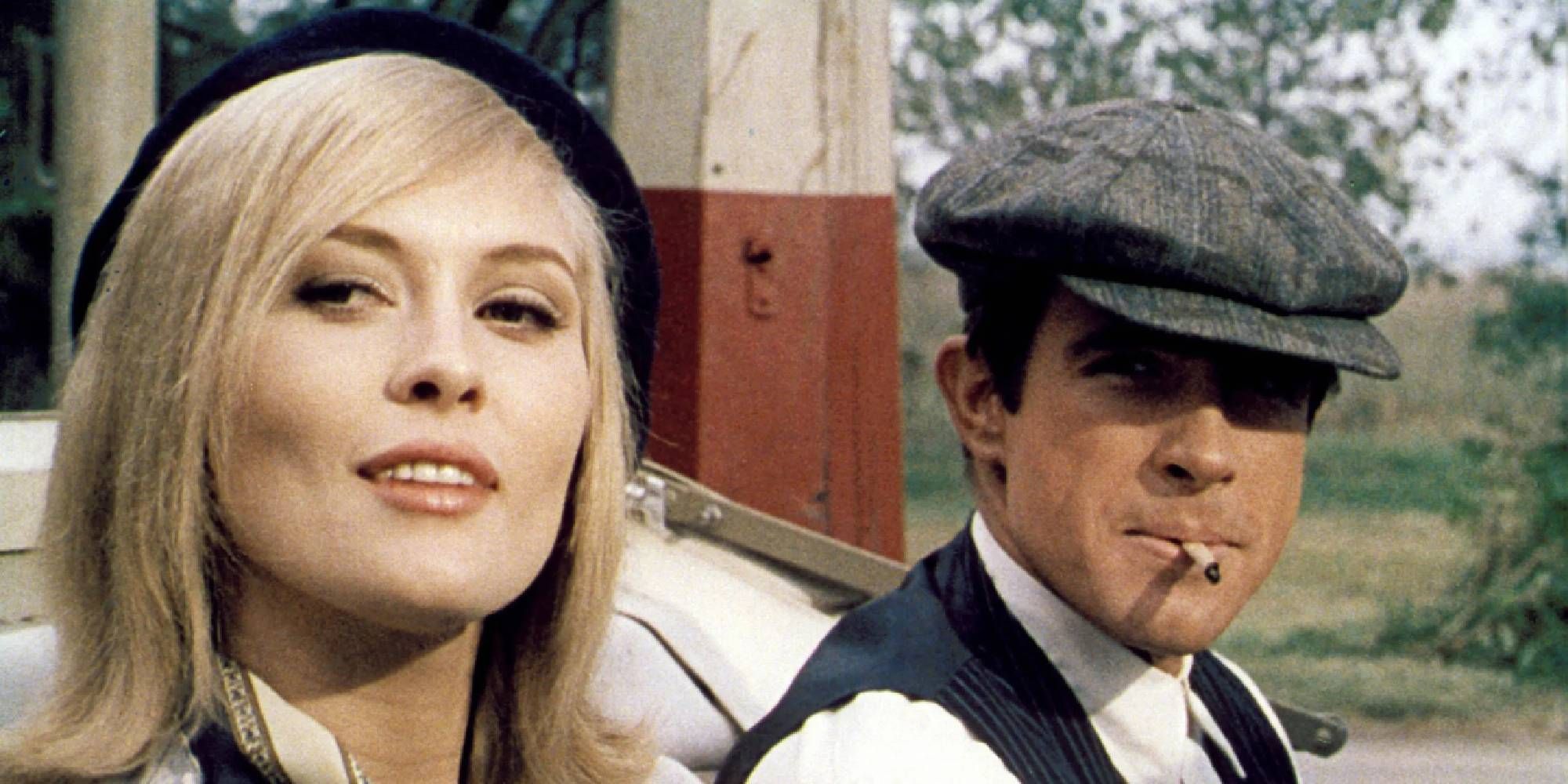
It obviously always helps when a period movie aims for historical accuracy, but peculiarly enough, it’s not actually a requirement for such a film to be an absolute masterpiece. In fact, throughout history, many of the best historical movies ever have happened to be historically inaccurate to varying degrees, proving that as long as there’s passion and dedication to the way a motion picture is made, it can always be exceptional.
Perhaps the movie skims over certain parts of a historical figure’s life, or it dramatizes events from a particular historical event, or it presents some anachronisms in the way characters talk and dress. Regardless of how they’re historically inaccurate, these ten films are nevertheless some of their respective genre’s biggest masterpieces, ranked from worst to best.
10
‘The Last Samurai’ (2003)
Tom Cruise as Nathan Algren charging into battle with Samurai warriors in ‘The Last Samurai.’Image via Warner Bros. Pictures
Edward Zwick’s period action drama The Last Samurai was inspired by the Satsuma Rebellion of 1877, a revolt of disaffected samurai against the new imperial government. It stars Tom Cruise as Civil War veteran Nathan Algren, an entirely fictional character, since no American soldiers participated in the Satsuma Rebellion. He was, however, inspired by the real French Army officer Jules Brunet, who did train the Tokugawa Shogunate’s army. The Last Samurai is one of the most perfect epic movies of the 2000s, an intense character study full of breathtaking action set pieces and bolstered by Hans Zimmer’s sweeping score. It is also, however, a film that’s not particularly committed to historical accuracy. Aside from Algren not being a real person, the movie blends several historical eras, depicts samurai as technologically delayed (even though they’d been using firearms for centuries), and mistakenly shows the samurai riding into battle wearing traditional armor instead of modern uniforms.
9
‘Braveheart’ (1995)
Mel Gibson with long hair and blue face paint on a battlefield in Braveheart.Image via Paramount Pictures
Winner of five Academy Awards, including Best Picture and Best Director for Mel Gibson (who also starred in and produced the film), Braveheart is the story of Scottish warrior Sir William Wallace, who was one of the main leaders during the First War of Scottish Independence. It’s one of the most perfect action movies based on true stories, even if the way it goes about telling that true story sacrifices some of the elements of truth in favor of action-packed drama. The film is packed with adrenaline-pumping action sequences, wonderful production values, memorable acting performances, and even surprisingly emotional moments. It’s also, however, loaded with historical inaccuracies. Nearly every major character, timeline, and event related to this period of Scottish history is heavily dramatized and fictionalized; William Wallace is depicted as an impoverished commoner when he was actually a nobleman; primae noctis was never actually a thing; and Scottish warriors are depicted sporting killer kilts centuries before they were actually invented. This may very well be the most historically inaccurate masterpiece in film history.
8
‘JFK’ (1991)
Kevin Costner and Donald Sutherland sit on a park bench in Oliver Stone’s ‘JFK’Image via Warner Bros. Pictures
There are plenty of great movies based on American history, one of the best being Oliver Stone’s JFK. This epic political thriller runs for more than three hours, examining the investigation into the assassination of John F. Kennedy by New Orleans district attorney Jim Garrison, who believed the whole thing was a government conspiracy. Led by Kevin Costner in top-form, the movie benefits from having several of the best performances in Stone’s filmography, as well as some of the strongest editing and visuals. As excellent of an epic as it is, though, JFK was also the subject of controversy for its significant dramatization of the story and its embracing of conspiracy theories. In fact, one could arguably deem the whole movie to be more historical fiction than an actual docudrama.
7
‘The Imitation Game’ (2014)
Joan Clarke and Alan Turing dancing and laughing in ‘The Imitation Game’.Image via The Weinstein Company
The Imitation Game is one of the most perfect movie biopics of the 2010s, following the work of computer scientist and cryptanalyst Alan Turing during World War II, where he came up with new methods for decrypting German intelligence messages for the British government. Starring Benedict Cumberbatch and Keira Knightley, both delivering some of the strongest work of their respective careers, it’s one of the must-see biopic war thrillers of the 21st century. The movie also took plenty of creative license with its subject matter, however, beginning with its depiction of Turing as a lone genius, when the reality was that his machine was the product of tremendous teamwork that the film largely ignores. The movie changes timelines, invents characters, and creates conflict that wasn’t actually there. Though the result is admittedly one of the best war thrillers in recent memory, there’s no denying that it’s not all that true to reality.
6
‘Gladiator’ (2000)
Image via Universal Pictures
Winner of five Oscars, including Best Picture, Sir Ridley Scott’s Gladiator was the perfect way for the English master filmmaker to bid farewell to the 20th century. This epic action period piece is the tale of the fictional Maximus Decimus Meridius, a Roman general betrayed by Commodus and sent into slavery, where he becomes a gladiator and rises through the ranks of the arena. What ensues is one of the most engrossing revenge movies that the big screen has ever seen. From Russell Crowe’s Oscar-winning powerhouse performance, to Hans Zimmer’s unforgettable score, to one of the best movie endings of the 2000s, Gladiator is undeniably one of the most deliriously entertaining and emotionally riveting movies that Scott has ever made. It is not, however, a film designed for people so fervently passionate about Roman history that they feel upset when movies depict the period with plenty of creative license. The aesthetic of the era is generally fantastic, but the politics aren’t depicted with all that much accuracy, and neither are the stories of Marcus Aurelius nor Commodus.
Collider Exclusive · Oscar Best Picture Quiz
Which Oscar Best PictureIs Your Perfect Movie?
Parasite · Everything Everywhere · Oppenheimer · Birdman · No Country
Five Oscar Best Picture winners. Five completely different visions of what cinema can be — and what it can do to you. One of them is the film that was made for the way your mind works. Ten questions will figure out which one.
Parasite
Everything Everywhere
Oppenheimer
Birdman
No Country for Old Men
FIND YOUR FILM →
01
What kind of film experience do you actually want?
The best movies don’t just entertain — they leave something behind.
ASomething that pulls the rug out — that makes me think I’m watching one kind of film and then reveals I’m watching another entirely.
BSomething overwhelming — funny, sad, absurd, and genuinely moving, all at once.
CSomething grand and weighty — a film that makes me feel the full scale of what I’m watching.
DSomething formally daring — a film that pushes what cinema can even do.
ESomething lean and relentless — pure tension with no wasted frame.
NEXT QUESTION →
02
Which idea grabs you most in a film?
Great films are driven by a central obsession. What’s yours?
AClass, inequality, and what people are willing to do when desperation meets opportunity.
BIdentity, family, and the chaos of trying to hold your life together when everything is falling apart.
CGenius, moral responsibility, and the catastrophic weight of a decision you can never take back.
DEgo, legacy, and the terror of becoming irrelevant while you’re still alive to watch it happen.
EEvil, chance, and whether moral order actually exists or if we just tell ourselves it does.
NEXT QUESTION →
03
How do you like your story told?
Form is content. The way a story is shaped changes what it means.
AGenre-twisting — I want it to start in one lane and migrate into something completely different.
BMaximalist and genre-blending — comedy, action, drama, sci-fi, all in one ride.
CEpic and non-linear — cutting between timelines, building a mosaic of cause and consequence.
DA single unbroken flow — I want to feel like I’m living it in real time, no cuts to safety.
ESpare and precise — every scene doing exactly what it needs to do and nothing more.
NEXT QUESTION →
04
What makes a truly great antagonist?
The opposition defines the protagonist. What kind of opposition fascinates you?
AA system — invisible, structural, and almost impossible to fight because it has no single face.
BThe self — the ways we sabotage, abandon, and fail the people we love most.
CHistory — the unstoppable momentum of events that no single person can stop or redirect.
DThe industry — the machinery of culture that chews up talent and spits out irrelevance.
EPure, implacable evil — a force so certain of itself it becomes almost philosophical.
NEXT QUESTION →
05
What do you want from a film’s ending?
The final note is the one that lingers. What do you want it to sound like?
AShock and inevitability — a conclusion that recontextualises everything that came before it.
BEarned emotion — I want to cry, laugh, and feel genuinely hopeful, even if the world is a mess.
CDevastation and grandeur — an ending that makes me sit in silence for a few minutes after.
DAmbiguity — something that leaves enough open that I’m still thinking about it days later.
EBleakness — an honest refusal to pretend the world is tidier than it actually is.
NEXT QUESTION →
06
Which setting pulls you in most?
Where a film takes place shapes everything — mood, stakes, what’s even possible.
AA gleaming modern city with a hidden underside — beauty masking rot, wealth masking desperation.
BA collapsing suburban life that opens onto something infinite — the multiverse of a single ordinary person.
CThe corridors of power and science at a world-historical turning point — where decisions echo for decades.
DThe grimy, alive chaos of New York and Hollywood — fame as both destination and trap.
EVast, indifferent landscape — desert and highway where violence arrives without warning or reason.
NEXT QUESTION →
07
What cinematic craft impresses you most?
Every great film has a signature — a technical or artistic element that makes it unmistakable.
AProduction design and mise-en-scène — every frame composed to carry meaning beneath the surface.
BEditing and tonal control — the ability to move between registers without losing the audience.
CScore and sound design — music that becomes inseparable from the dread and awe of what you’re watching.
DCinematography as performance — the camera not recording events but participating in them.
ESilence and restraint — what’s left unsaid and unshown doing more work than any dialogue could.
NEXT QUESTION →
08
What kind of main character do you root for?
The protagonist is the lens. Who you choose to follow says something about you.
ASomeone smart and resourceful who makes increasingly dangerous decisions under pressure.
BSomeone overwhelmed and ordinary who turns out to be capable of something extraordinary.
CA brilliant, tortured figure whose gifts and flaws are inseparable from each other.
DA self-destructive artist whose ego is both their superpower and their undoing.
EA quiet, principled person trying to make sense of a world that has stopped making sense.
NEXT QUESTION →
09
How do you feel about a film that takes its time?
Pace is a choice. Some films sprint; others let tension accumulate slowly, deliberately.
AI love a slow build when I know the payoff is going to be seismic — patience for a devastating reveal.
BGive me relentless momentum — I want to feel breathless and emotionally spent by the end.
CEpic runtime doesn’t scare me — if the material demands three hours, give me three hours.
DI want it to feel propulsive even when nothing is technically happening — restless energy throughout.
EDeliberate and unhurried — I want dread to accumulate in the spaces between the action.
NEXT QUESTION →
10
What do you want to feel walking out of the cinema?
The best films leave a mark. What kind of mark do you want?
AUnsettled — like I’ve just seen something I can’t fully explain but can’t stop thinking about.
BMoved and energised — like the film reminded me what actually matters and gave me something to hold onto.
CHumbled — like I’ve been in the presence of something genuinely important and overwhelming.
DExhilarated — like I’ve just seen cinema doing something it’s never quite done before.
EHaunted — like a cold, quiet dread that stays with me for days.
REVEAL MY FILM →
The Academy Has Decided
Your Perfect Film Is…
Your answers have pointed to one Oscar Best Picture winner above all others. This is the film that was made for the way your mind works.
Parasite
You are drawn to films that operate on multiple levels simultaneously — that begin in one genre and quietly, brilliantly migrate into another. Bong Joon-ho’s Parasite is a film about class, desire, and the architecture of inequality that manages to be darkly funny, deeply suspenseful, and genuinely shocking across a single extraordinary running time. Your instinct is for cinema that hides its true intentions until the moment it’s ready to reveal them. Parasite is exactly that — a film that rewards close attention and punishes assumptions, right up to its devastating final image.
Everything Everywhere All at Once
You want it all — and this film gives you all of it. The Daniels’ Everything Everywhere All at Once is one of the most maximalist films ever made: action comedy, multiverse sci-fi, family drama, existential crisis, and a genuinely earned emotional core that sneaks up on you amid the chaos. You are someone who responds to ambition, who doesn’t want cinema to choose between being entertaining and being meaningful. This film refuses that choice entirely. It is overwhelming by design, and its overwhelming nature is precisely the point — because the feeling of being crushed by infinite possibility is exactly what it’s about.
Oppenheimer
You are drawn to cinema on a grand scale — films that understand history not as a backdrop but as a force, and that place their characters inside that force and watch what happens. Christopher Nolan’s Oppenheimer is a film about the terrifying gap between what we can do and what we should do, told with the full weight of one of the most consequential moments in human history behind it. You want your films to feel important without feeling self-important — to earn their ambition through sheer craft and the gravity of their subject. Oppenheimer does exactly that. It is enormous, complicated, and refuses easy comfort.
Birdman
You are drawn to films that foreground their own construction — that make the how of the filmmaking part of the what it’s about. Alejandro González Iñárritu’s Birdman, shot to appear as a single continuous take, is cinema examining itself through the cracked mirror of a fading actor’s ego. You respond to formal daring, to the feeling that a film is doing something that probably shouldn’t be possible. Michael Keaton’s performance and Emmanuel Lubezki’s restless camera create something genuinely unlike anything else — a film that is simultaneously about creativity, relevance, self-destruction, and the impossibility of ever truly knowing if your work means anything at all.
No Country for Old Men
You are drawn to cinema that trusts silence, that refuses to explain itself, and that treats dread as a form of meaning. The Coen Brothers’ No Country for Old Men is a film about the arrival of a new kind of evil — implacable, arbitrary, and utterly indifferent to the moral frameworks we use to make sense of the world. It is one of the most formally controlled films ever made, and its controlled restraint is what makes it so terrifying. You want your films to haunt you, not comfort you. You are not interested in resolution if resolution would be dishonest. No Country for Old Men is honest in a way that most cinema never dares to be.
↻ RETAKE THE QUIZ
5
‘My Darling Clementine’ (1946)
John Ford was an absolute legend of Hollywood’s Golden Age, the mind behind several of the greatest Westerns in film history. One of them is undoubtedly My Darling Clementine, one of those great Westerns worth watching over and over again. It follows Henry Fonda as Wyatt Earp during the period leading up to the infamous gunfight at the O.K. Corral in 1881. Tombstone may be the most popular big-screen depiction of those events, and it also largely mythologizes the story and its characters; but My Darling Clementine is arguably the superior film, even if it is arguably even more historically inaccurate. Ford’s approach to the story is grand, poetic, and quasi-mythical, but not exactly documentary-like. Characters and conflicts are invented, timelines are shifted around, and the setting (which was shot in Monument Valley) is visibly not at all like Tombstone, Arizona.
4
‘Butch Cassidy and the Sundance Kid’ (1969)
Butch Cassidy (Paul Newman) and the Sundance Kid (Robert Redford) sitting on a cave in ‘Butch Cassidy and the Sundance Kid’Image via 20th Century Studios
The Western genre changed drastically following the end of Hollywood’s Golden Age, and sometime between the late ’60s and early ’70s, it was violently pushed to the background. Butch Cassidy and the Sundance Kid came as one of the final relics of the Golden Age of Westerns, and what a wonderful swan song to the genre it is. It’s loosely based on the story of Wild West outlaws Butch Cassidy and his partner, the Sundance Kid. The film is perhaps best-remembered for Robert Redford and Paul Newman’s electric on-screen chemistry, though not for being particularly true to history. Screenwriter William Goldman openly admitted that he wrote the movie more as a buddy story than a strict historical document, and it shows. The Pinkerton posse’s chase of Butch and Sundance wasn’t actually nearly as tireless and aggressive as the film shows, and there are several moments and elements from the duo’s life that Goldman skips over. Even still, this is one of the best crowd-pleasing Westerns of all time.
3
‘Bonnie and Clyde’ (1967)
Image via Warner Bros. Pictures
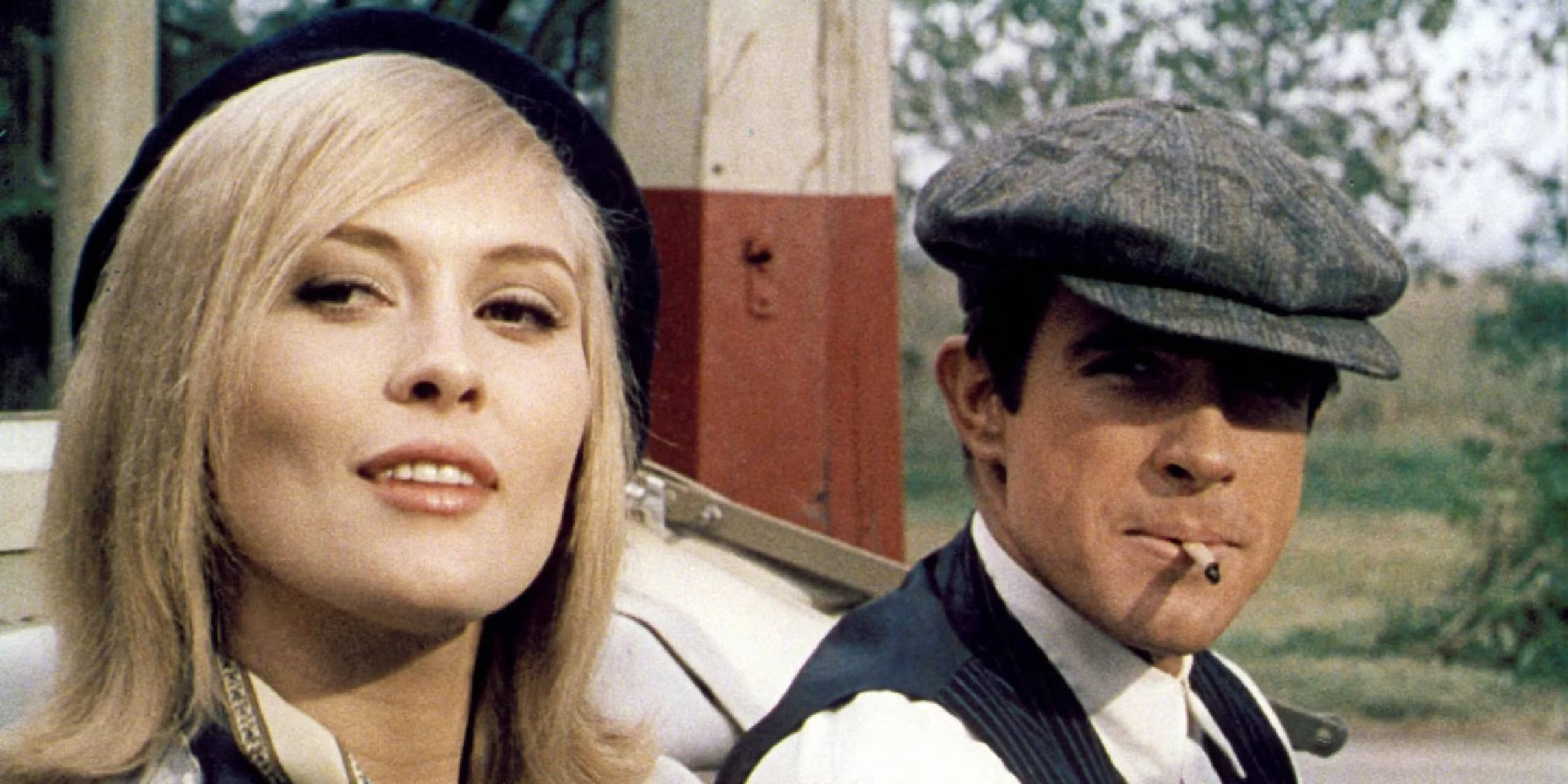
Film historians widely regard the release of Arthur Penn’s Bonnie and Clyde as the start of the New Hollywood film movement. Following the titular outlaws and romantic partners through the Great Depression-era American South, the film challenged censorship boards and inspired countercultural movements with its unprecedented depiction of violence and other taboo subjects.
Indeed, it’s one of the most intense movies of the 1960s, and it’s still essential viewing all these many years later. This is not, however, a biopic that’s all that faithful to historical events. The movie is heavily romanticized, and biographer Jeff Guinn went so far as to claim that the movie is only less than 5% accurate. Events are changed, Bonnie and Clyde’s personalities are changed, and the depiction of the duo as glamorous Robin Hood types isn’t at all true to reality, where they were more so small-time crooks.
2
‘Amadeus’ (1984)
Image via Orion Pictures
Miloš Forman’s Amadeus is widely regarded as not only one of the greatest biopic epics ever made, but perhaps even one of the greatest American films of the 20th century. Based on the 1979 stage play, itself inspired by the 1830 play Mozart and Salieri, Amadeus tells the story of the bitter, decades-spanning rivalry between Wolfgang Amadeus Mozart and Antonio Salieri. Here’s the thing, though: Mozart and Salieri were never actually rivals. It’s historically documented that though they displayed normal levels of professional competition, Mozart and Salieri actually deeply admired each other’s work, and even collaborated on a composition. Then again, Amadeus never actually pretends to be any sort of biopic, and instead openly displays its intentions of functioning as more of a psychological drama with historical elements. As such, it’s very much still one of those perfect period movies that have aged like fine wine.
1
‘Lawrence of Arabia’ (1962)
Three men looking in the same direction in Lawrence of ArabiaImage via Columbia Pictures
There has never been more of a master of the epic film genre than David Lean, and never did Lean make a movie more timeless or engrossing than the epic war biopic Lawrence of Arabia. British Army officer T. E. Lawrence was one of the most complicated and nuanced, yet undeniably important figures in the history of World War I. As such, it’s no surprise that Lean spends a whopping four hours studying the archaeologist’s life and work in the Ottoman provinces of Hejaz and Syria. It’s one of the best 1960s epics of all time, or perhaps even the very best. It’s astonishing how vast it feels in scale, full of some of the most stunning set pieces in the history of war films; yet so intimate in scope, diving deep into Lawrence’s psychology and deep flaws. There are many reasons to praise Lawrence of Arabia, but historical accuracy isn’t one of them. Some events are aggrandized for dramatic effect, some characters are drastically changed or omitted altogether, and elements of Lawrence’s psychology are merely skimmed past. Even still, there’s no denying that Lawrence of Arabia is one of the greatest motion pictures in history.
Lawrence of Arabia
Release Date
December 11, 1962
Runtime
228 minutes
Director
David Lean
Writers
Robert Bolt, Michael Wilson
تم النشر: 2026-07-07 01:41:00
مصدر: collider.com