
10 Perfect Thriller Movies That Are Pure Cinema
There are plenty of thrillers that keep people entertained for two hours. The harder thing is finding one that stays in your head for more than 2 years. Most of us have watched films where we can barely remember the details a few months later, even though we enjoyed them at the time. Then there are the rare ones where a single image, a line of dialogue, or even a particular scene remains easy to recall years afterward and becomes a part of our core memory.
That is usually what people mean when they call something “cinema.” The ten thriller movies on this list did far more than tell a good story. They created experiences that still feel distinctive decades later. Scroll down and see for yourself.
10
‘The Third Man’ (1949)
Image via StudioCanal
Holly Martins (Joseph Cotten) arrives in postwar Vienna expecting to meet his old friend Harry Lime (Orson Welles), only to learn that Harry has supposedly died in an accident just before his arrival. The explanation sounds straightforward at first, though small details immediately begin causing problems. Witnesses disagree about what happened, people become strangely nervous whenever Harry’s name comes up, and Holly gradually realizes he knew far less about his friend than he once believed. Vienna still looks damaged by the war, with broken buildings, dark streets, and entire sections that seem to exist outside normal life. Holly spends most of the film moving through that uncertainty, trying to understand who Harry really was and why so many people appear afraid of the truth. Then Harry finally appears in one of the most famous entrances in cinema, and suddenly the entire story changes direction.
9
‘Blow Out’ (1981)
Image via Filmways Pictures
In Blow Out, Jack Terry (John Travolta) makes his living recording sound effects for low-budget movies. One night, while collecting audio near a bridge, he accidentally records a car plunging into the water. At first it looks like a tragic accident involving a political figure, but when Jack listens carefully to the tape afterward, he becomes convinced he heard a gunshot before the crash. That single detail turns a routine night into something far more dangerous. The film becomes fascinating because Jack’s evidence exists almost entirely in fragments. A sound recording here, a photograph there, and tiny pieces of information that never seem complete on their own. While he tries putting everything together, Sally (Nancy Allen) becomes caught in the middle of the situation as well. Brian De Palma keeps returning to the idea that technology can reveal the truth while still failing to save people. By the time the story reaches its final sequence, Jack understands exactly what happened, though that knowledge arrives far too late to change anything.
8
‘Zodiac’ (2007)
Robert Graysmith (Jake Gyllenhaal) hunchesover his desk while Paul Avery (Robert Downey Jr.) loiters casually behind him in ‘Zodiac’ (2007).Image via Paramount Pictures
When the Zodiac Killer begins sending letters to newspapers across Northern California, the case quickly grows beyond a normal murder investigation. Detectives Dave Toschi (Mark Ruffalo) and Bill Armstrong (Anthony Edwards) spend years chasing leads that never fully connect, while reporter Paul Avery (Robert Downey Jr.) and cartoonist Robert Graysmith (Jake Gyllenhaal) become increasingly obsessed with identifying the killer themselves. One reason the film remains so unsettling is that it refuses to provide easy answers. Suspects emerge, evidence appears, and certain theories begin looking convincing before another contradiction suddenly appears. As the years pass, marriages suffer, careers change, and people gradually move on from the investigation. Graysmith does the opposite. The deeper he goes into the case, the more it starts consuming his life. Instead of focusing only on murder, the film becomes a portrait of obsession and the strange hold an unanswered question can have over somebody for decades.
7
‘The Conversation’ (1974)
Image via Paramount Pictures
Harry Caul (Gene Hackman) is one of the best surveillance experts in the country, which means he spends most of his life listening to other people while revealing almost nothing about himself. Early in the film, Harry records a conversation between a young couple in a crowded public square. The assignment seems ordinary until he reviews the tape later and starts believing the people he recorded may be in danger. Harry listens to the same recording repeatedly, searching for meaning in every pause, every word, and every change in tone. Because Harry’s entire career depends on observation, he becomes trapped by his own uncertainty once he realizes he may have misunderstood what he heard. The film spends long stretches inside Harry’s paranoia, and that approach makes even small moments feel uncomfortable. By the end, he no longer knows who is watching whom.
6
‘Vertigo’ (1958)
Kim Novak and James Stewart as Madeline and John standing in the woods in VertigoImage via Paramount Pictures
After a rooftop chase leaves him with a severe fear of heights, former detective Scottie Ferguson (James Stewart) steps away from police work. His quiet retirement does not last long. An old acquaintance asks him to follow his wife Madeleine (Kim Novak), who has begun behaving strangely and seems increasingly drawn toward a tragic figure from the past. Scottie accepts the job and soon becomes fascinated by Madeleine in ways that go far beyond professional curiosity. The film changes dramatically once Scottie becomes emotionally attached to her. What begins as surveillance gradually turns into obsession, and that obsession drives nearly every decision he makes afterward. Hitchcock allows scenes to unfold patiently, giving Scottie plenty of time to project his own ideas onto Madeleine rather than seeing her clearly. Later developments completely reshape what came before, though the emotional damage has already been done. Long after the mystery is solved, the film remains focused on Scottie’s inability to let go of the version of Madeleine he created in his own mind.
5
‘No Country for Old Men’ (2007)
Josh Brolin as Llewelyn Moss in No Country for Old Men.Image via Miramax Films
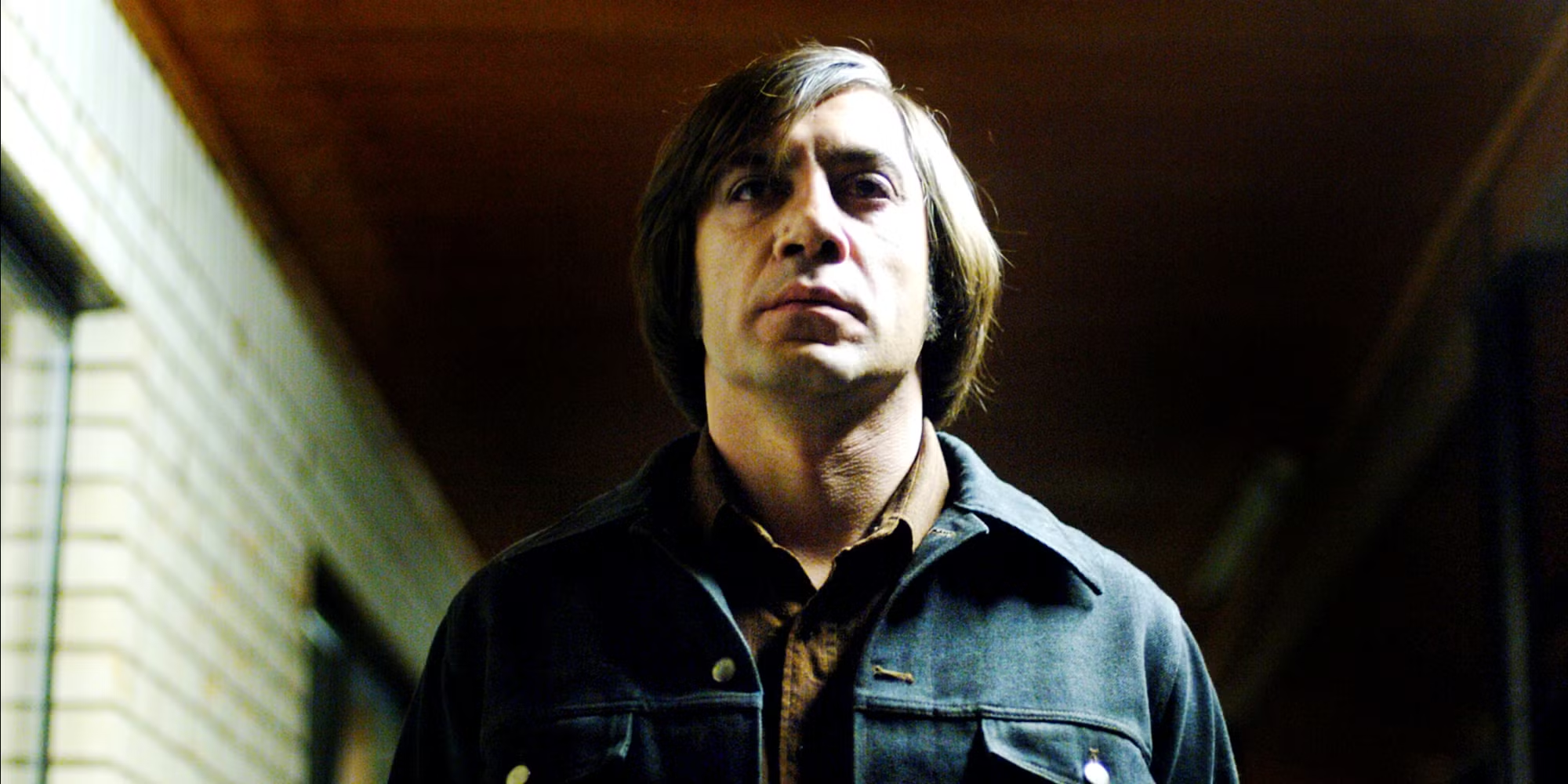
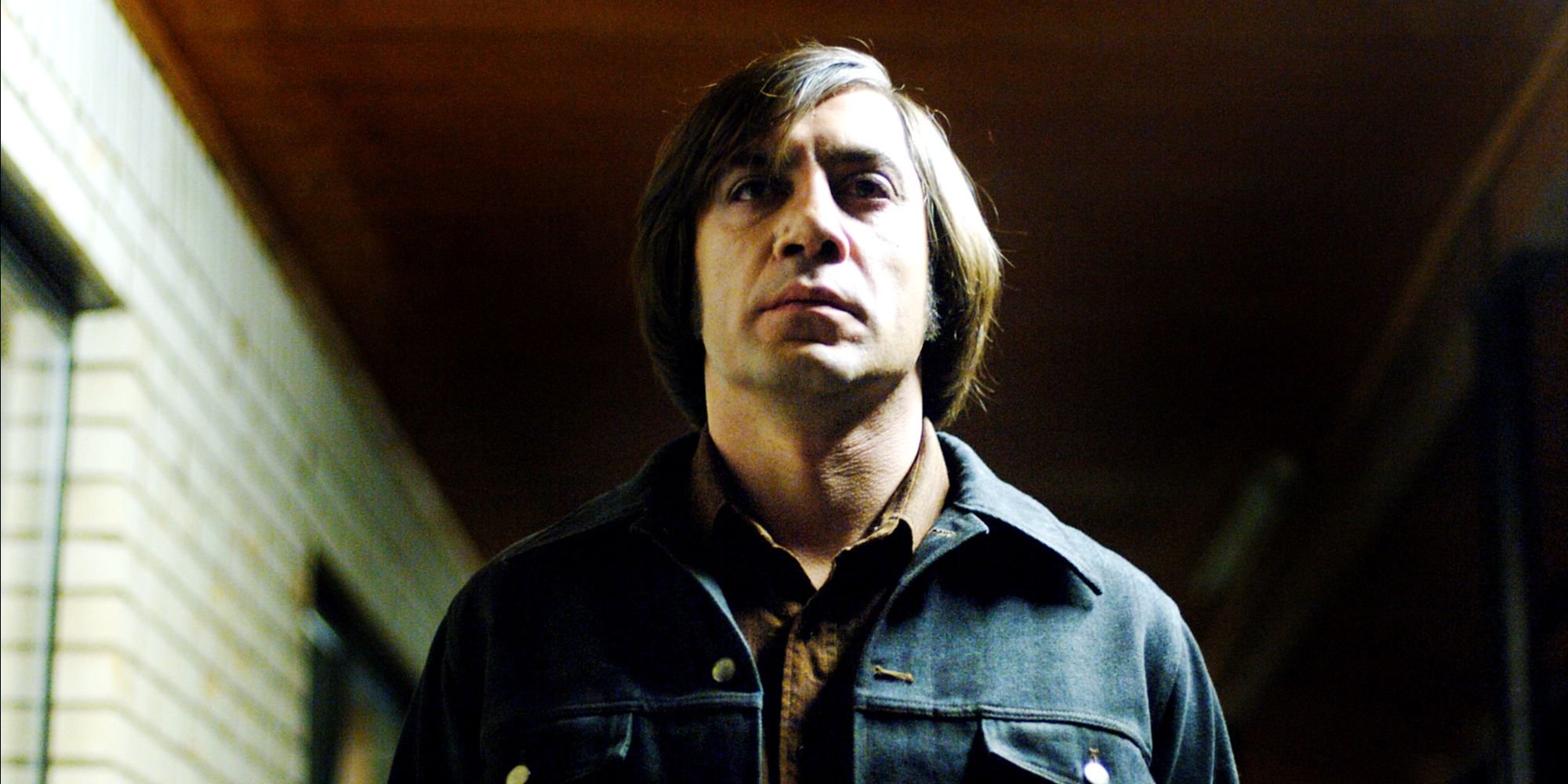
While hunting in the Texas desert, Llewelyn Moss (Josh Brolin) stumbles across the aftermath of a drug deal gone wrong. Bodies are scattered across the landscape, drugs are missing, and a suitcase filled with cash has been left behind. Llewelyn takes the money and walks away. It is a simple decision, though the film immediately makes it feel like something that cannot be undone. From that point onward, every choice he makes is really an attempt to stay alive. Anton Chigurh (Javier Bardem) enters the story as the man sent to recover the money, though he quickly becomes something far more unsettling than a typical hitman. People try bargaining with him, threatening him, or reasoning with him, and none of it seems to matter. Meanwhile, Sheriff Bell (Tommy Lee Jones) keeps arriving after the violence rather than before it. The film gradually becomes a story about people realizing the world around them no longer operates according to the rules they once understood.
4
‘Chinatown’ (1974)
Jack Nicholson as Jake Gittes with a bandaged nose in sunglasses and a hat driving and smoking in Chinatown.Image via Paramount Pictures
Jake Gittes (Jack Nicholson) earns his living investigating adultery cases in Los Angeles, so when a woman hires him to follow Hollis Mulwray (Darrell Zwerling), the assignment appears routine. Then the real Evelyn Mulwray (Faye Dunaway) arrives and reveals that Jake has been manipulated. What initially looked like a small deception quickly opens the door to something much larger involving land, water, money, and people willing to do almost anything to protect their interests. One reason the film remains so gripping is that Jake never stays ahead of the story for very long. Every answer leads to another question, and every new discovery makes the situation more disturbing. The deeper he digs, the clearer it becomes that powerful people have been shaping events from a distance the entire time. Even when Jake begins understanding pieces of the truth, he still cannot control what happens next. The final scenes leave such a lasting impression because they refuse to offer comfort, justice, or easy resolution.
3
‘Se7en’ (1995)
A close-up of Detective Mills (Brad Pitt) crying while holding a gun in Se7en.Image via New Line Cinema
Detective William Somerset (Morgan Freeman) is preparing for retirement when he is partnered with David Mills (Brad Pitt), a younger detective who still believes determination can solve almost anything. Their first case together involves a murder linked to gluttony. Soon afterward, another killing connected to greed appears. Before long, they realize somebody is using the seven deadly sins as the blueprint for a series of crimes.
The investigation becomes increasingly disturbing because the killer is always thinking several steps ahead. Somerset studies old books, crime scenes, and religious references in search of patterns, while Mills often approaches situations through instinct and frustration. Those differences create tension throughout the case, especially as the murders become more elaborate. The city itself feels permanently exhausted, with rain, noise, and decay hanging over nearly every scene. Then the film reaches its final act and shifts into something even darker, turning one of cinema’s most famous endings into the moment everybody remembers.
2
‘Mulholland Drive’ (2001)
Naomi Watts and Laura Harring looking upward in Mulholland Drive.Image via Universal Pictures
A woman survives a car accident on Mulholland Drive and wanders into Los Angeles with no memory of who she is. Shortly afterward, aspiring actress Betty Elms (Naomi Watts) arrives in the city full of optimism and plans for the future. When Betty discovers the mysterious woman hiding inside her aunt’s apartment, the two begin searching for clues about her identity. At first, the story resembles a mystery built around missing memories and hidden connections. As the film continues, certainty becomes harder and harder to hold onto. Characters appear in unexpected places, conversations take strange turns, and events stop fitting together in familiar ways. David Lynch never treats Los Angeles like an ordinary city either. The film constantly moves between glamorous dreams and something much more unsettling beneath the surface. Rather than guiding viewers toward one clear answer, it creates the feeling of stepping deeper into somebody else’s subconscious. Even years later, people still debate individual scenes because the film leaves so much open to interpretation.
1
‘Rear Window’ (1954)
Grace Kelly and James Stewart look in the same direction in Rear Window.Image via Paramount Pictures
After breaking his leg, photographer L.B. Jeffries (James Stewart) finds himself stuck inside his apartment with little to do except watch the people living across the courtyard. He begins observing arguments, romances, routines, and small everyday moments from his window. Most of it is harmless curiosity at first. Then one neighbor’s behavior starts looking increasingly suspicious, and Jeff becomes convinced he may have witnessed the aftermath of a murder. The entire film is built around observation. Jeff never has complete information, which means every conclusion comes from pieces he has managed to see from a distance. Lisa Fremont (Grace Kelly) initially treats his theory with skepticism, though she gradually becomes involved in the investigation herself. Hitchcock creates suspense from remarkably ordinary situations: a person looking through a window, a missed detail, a light turning on in another apartment. The film never needs large action sequences because the audience is trapped in the same position as Jeff, trying to determine what is really happening while never being able to see the whole picture.
Collider Exclusive · Oscar Best Picture Quiz
Which Oscar Best PictureIs Your Perfect Movie?
Parasite · Everything Everywhere · Oppenheimer · Birdman · No Country
Five Oscar Best Picture winners. Five completely different visions of what cinema can be — and what it can do to you. One of them is the film that was made for the way your mind works. Ten questions will figure out which one.
Parasite
Everything Everywhere
Oppenheimer
Birdman
No Country for Old Men
FIND YOUR FILM →
01
What kind of film experience do you actually want?
The best movies don’t just entertain — they leave something behind.
ASomething that pulls the rug out — that makes me think I’m watching one kind of film and then reveals I’m watching another entirely.
BSomething overwhelming — funny, sad, absurd, and genuinely moving, all at once.
CSomething grand and weighty — a film that makes me feel the full scale of what I’m watching.
DSomething formally daring — a film that pushes what cinema can even do.
ESomething lean and relentless — pure tension with no wasted frame.
NEXT QUESTION →
02
Which idea grabs you most in a film?
Great films are driven by a central obsession. What’s yours?
AClass, inequality, and what people are willing to do when desperation meets opportunity.
BIdentity, family, and the chaos of trying to hold your life together when everything is falling apart.
CGenius, moral responsibility, and the catastrophic weight of a decision you can never take back.
DEgo, legacy, and the terror of becoming irrelevant while you’re still alive to watch it happen.
EEvil, chance, and whether moral order actually exists or if we just tell ourselves it does.
NEXT QUESTION →
03
How do you like your story told?
Form is content. The way a story is shaped changes what it means.
AGenre-twisting — I want it to start in one lane and migrate into something completely different.
BMaximalist and genre-blending — comedy, action, drama, sci-fi, all in one ride.
CEpic and non-linear — cutting between timelines, building a mosaic of cause and consequence.
DA single unbroken flow — I want to feel like I’m living it in real time, no cuts to safety.
ESpare and precise — every scene doing exactly what it needs to do and nothing more.
NEXT QUESTION →
04
What makes a truly great antagonist?
The opposition defines the protagonist. What kind of opposition fascinates you?
AA system — invisible, structural, and almost impossible to fight because it has no single face.
BThe self — the ways we sabotage, abandon, and fail the people we love most.
CHistory — the unstoppable momentum of events that no single person can stop or redirect.
DThe industry — the machinery of culture that chews up talent and spits out irrelevance.
EPure, implacable evil — a force so certain of itself it becomes almost philosophical.
NEXT QUESTION →
05
What do you want from a film’s ending?
The final note is the one that lingers. What do you want it to sound like?
AShock and inevitability — a conclusion that recontextualises everything that came before it.
BEarned emotion — I want to cry, laugh, and feel genuinely hopeful, even if the world is a mess.
CDevastation and grandeur — an ending that makes me sit in silence for a few minutes after.
DAmbiguity — something that leaves enough open that I’m still thinking about it days later.
EBleakness — an honest refusal to pretend the world is tidier than it actually is.
NEXT QUESTION →
06
Which setting pulls you in most?
Where a film takes place shapes everything — mood, stakes, what’s even possible.
AA gleaming modern city with a hidden underside — beauty masking rot, wealth masking desperation.
BA collapsing suburban life that opens onto something infinite — the multiverse of a single ordinary person.
CThe corridors of power and science at a world-historical turning point — where decisions echo for decades.
DThe grimy, alive chaos of New York and Hollywood — fame as both destination and trap.
EVast, indifferent landscape — desert and highway where violence arrives without warning or reason.
NEXT QUESTION →
07
What cinematic craft impresses you most?
Every great film has a signature — a technical or artistic element that makes it unmistakable.
AProduction design and mise-en-scène — every frame composed to carry meaning beneath the surface.
BEditing and tonal control — the ability to move between registers without losing the audience.
CScore and sound design — music that becomes inseparable from the dread and awe of what you’re watching.
DCinematography as performance — the camera not recording events but participating in them.
ESilence and restraint — what’s left unsaid and unshown doing more work than any dialogue could.
NEXT QUESTION →
08
What kind of main character do you root for?
The protagonist is the lens. Who you choose to follow says something about you.
ASomeone smart and resourceful who makes increasingly dangerous decisions under pressure.
BSomeone overwhelmed and ordinary who turns out to be capable of something extraordinary.
CA brilliant, tortured figure whose gifts and flaws are inseparable from each other.
DA self-destructive artist whose ego is both their superpower and their undoing.
EA quiet, principled person trying to make sense of a world that has stopped making sense.
NEXT QUESTION →
09
How do you feel about a film that takes its time?
Pace is a choice. Some films sprint; others let tension accumulate slowly, deliberately.
AI love a slow build when I know the payoff is going to be seismic — patience for a devastating reveal.
BGive me relentless momentum — I want to feel breathless and emotionally spent by the end.
CEpic runtime doesn’t scare me — if the material demands three hours, give me three hours.
DI want it to feel propulsive even when nothing is technically happening — restless energy throughout.
EDeliberate and unhurried — I want dread to accumulate in the spaces between the action.
NEXT QUESTION →
10
What do you want to feel walking out of the cinema?
The best films leave a mark. What kind of mark do you want?
AUnsettled — like I’ve just seen something I can’t fully explain but can’t stop thinking about.
BMoved and energised — like the film reminded me what actually matters and gave me something to hold onto.
CHumbled — like I’ve been in the presence of something genuinely important and overwhelming.
DExhilarated — like I’ve just seen cinema doing something it’s never quite done before.
EHaunted — like a cold, quiet dread that stays with me for days.
REVEAL MY FILM →
The Academy Has Decided
Your Perfect Film Is…
Your answers have pointed to one Oscar Best Picture winner above all others. This is the film that was made for the way your mind works.
Parasite
You are drawn to films that operate on multiple levels simultaneously — that begin in one genre and quietly, brilliantly migrate into another. Bong Joon-ho’s Parasite is a film about class, desire, and the architecture of inequality that manages to be darkly funny, deeply suspenseful, and genuinely shocking across a single extraordinary running time. Your instinct is for cinema that hides its true intentions until the moment it’s ready to reveal them. Parasite is exactly that — a film that rewards close attention and punishes assumptions, right up to its devastating final image.
Everything Everywhere All at Once
You want it all — and this film gives you all of it. The Daniels’ Everything Everywhere All at Once is one of the most maximalist films ever made: action comedy, multiverse sci-fi, family drama, existential crisis, and a genuinely earned emotional core that sneaks up on you amid the chaos. You are someone who responds to ambition, who doesn’t want cinema to choose between being entertaining and being meaningful. This film refuses that choice entirely. It is overwhelming by design, and its overwhelming nature is precisely the point — because the feeling of being crushed by infinite possibility is exactly what it’s about.
Oppenheimer
You are drawn to cinema on a grand scale — films that understand history not as a backdrop but as a force, and that place their characters inside that force and watch what happens. Christopher Nolan’s Oppenheimer is a film about the terrifying gap between what we can do and what we should do, told with the full weight of one of the most consequential moments in human history behind it. You want your films to feel important without feeling self-important — to earn their ambition through sheer craft and the gravity of their subject. Oppenheimer does exactly that. It is enormous, complicated, and refuses easy comfort.
Birdman
You are drawn to films that foreground their own construction — that make the how of the filmmaking part of the what it’s about. Alejandro González Iñárritu’s Birdman, shot to appear as a single continuous take, is cinema examining itself through the cracked mirror of a fading actor’s ego. You respond to formal daring, to the feeling that a film is doing something that probably shouldn’t be possible. Michael Keaton’s performance and Emmanuel Lubezki’s restless camera create something genuinely unlike anything else — a film that is simultaneously about creativity, relevance, self-destruction, and the impossibility of ever truly knowing if your work means anything at all.
No Country for Old Men
You are drawn to cinema that trusts silence, that refuses to explain itself, and that treats dread as a form of meaning. The Coen Brothers’ No Country for Old Men is a film about the arrival of a new kind of evil — implacable, arbitrary, and utterly indifferent to the moral frameworks we use to make sense of the world. It is one of the most formally controlled films ever made, and its controlled restraint is what makes it so terrifying. You want your films to haunt you, not comfort you. You are not interested in resolution if resolution would be dishonest. No Country for Old Men is honest in a way that most cinema never dares to be.
↻ RETAKE THE QUIZ
Rear Window
Release Date
September 1, 1954
Runtime
112 minutes
Writers
John Michael Hayes
James Stewart
L.B. ‘Jeff’ Jefferies
تم النشر: 2026-06-12 11:15:00
مصدر: collider.com